Noticias

The Little Book of Trees

The Little Book of Trees

What is a tree and how does it actually grow? How does a tree change over the course of the seasons and what phases does it go through during its entire life? What happens in its crown, trunk or roots if we look closely? Which animals live there and which forests have developed in the different regions of the world where many trees grow close together? The Little Book on Trees takes children into the world of these fascinating plants.
This stunning book for younger readers is a wonderful introduction to trees around the world.
No matter how much you think you may know about trees, you will almost definitely find something new to add to your store of knowledge! Aimed at younger readers and learners, this book is the perfect starting place for budding arboriculturists as well as those with just a passing interest in trees.
Illustrated by
Caroline Attia
with text by
Claire Philip
this is an book should be an essential addition for elementary collections in classrooms and libraries.

Thirst

Thirst

Nobody talks about the strange happenings in Maimsbury. No one speaks of the hooded figures glimpsed in the woods, nor the children’s game that went so horribly wrong. But most of all, nobody dares whisper their doubts about the river they have worshipped for centuries.
Like everyone in Maimsbury, Gorse is used to the sacrifices made every spring to the River Yeelde. The life of a farm animal – in return for a year of plenty – seems a fair trade. That is, until a tragedy leads Gorse to a blood-curdling discovery.
Because this year is a Brim Year, and after giving so much, the river needs more than an animal’s life to sate its thirst…
Pushkin Press
Cover illustration by Natalie Smilie
This was actually the first book by Darren Simpson I’ve read, though I’m not sure why because I’ve seen lots of praise on social media from teachers and librarians for him on social media. I think he might be one of those authors I avoided because where others rave I’m often ‘meh’…but I was certainly biting my nose off to spite my face because, when I sat down to read this, I was hooked from the first page and had to finish it the same day. It raises some big thoughts about whether it can be justifiable to do a bad thing, how decisions affect more than just your own loved ones, and having the courage to say no. All wrapped up in a wonderfully gruesome folklore-ish tale set in the vividly imagined world of a small village.
I asked Darren a few questions:
You write dark but hopeful stories. Do you start with a theme or the world or a character…or something else?
Each book seems to have started with a different thing.
Scavengers
was inspired by the sight of cats scrapping over a sandwich at a recycling centre, which got me thinking about animals and humans living on landfill.
The Memory Thieves
was driven by the desire – prompted by the time I crashed my car and went through a rough patch – to encourage emotional openness in young people. In contrast,
Furthermoor
evolved from the conundrum of how to use a vivid, fantastical setting in an urban, realist story. And my latest book,
Thirst
, came from an itch to write horror (leaning into that darkness, I guess), and from a growing appreciation of folklore and the part it still plays in our lives today.
As you can see, I have worryingly little control over where my inspiration comes from. But one thing I do have is the instinct to spot it, grab it and see where it takes me.
Without spoilers, are there any bits that you thought might be too scary or that editors asked you to tone down?
There are a couple of scenes I thought I’d have to tone down or take out altogether. But it turned out I didn’t have to do any of that.
As much as
Thirst
has its grisly moments, they’re never excessive or gratuitous. There’s one scene in particular I thought I’d never get away with in young fiction. But my editor, Sarah Odedina of Pushkin Press, didn’t bat an eyelid. When I quizzed her over this, she said the scene plays a …

Black History Month UK

Black History Month UK

October is Black History Month in the UK, this year the theme is
Standing Firm in Power and Pride
and there are some brilliant resources and articles on the official website.
I used to do a thread on twitter of the best books by (mainly) Black British creators I’d read in the preceding year, then 2 years ago wrote
this blog post
, then somehow last year passed me by…In November last year CLPE released their
7th Reflecting Realities survey
about publishing in the UK in 2023 demonstrated what I thought I’d noticed: that the uptick in publishing of diverse voices was faltering:
For the first time in its history, the annual CLPE Reflecting Realities survey
reports an overall drop in the percentage of racially minoritised characters featured in published children’s books reviewed – from 30% in 2022 to 17% in 2023.
The report shows the number of racially minoritised main characters has dropped by half to
7% in 2023, compared to 14% in 2022
.
The more recent
IBC Excluded Voices
report makes a similarly dispiriting observation. So, I thought it important to highlight some amazing books published over these 2 years!

Eight Questions With… Ben Dean

Eight Questions With… Ben Dean

Hi Ben welcome to TeenLibrarian and thank you for giving up your time to answer some questions about
Bury Your Friends
!
Thank you for having me!
Can you introduce yourself to those in the audience who may not know who you are?
Of course! My name’s Ben and I’m a bestselling author of (mostly) thriller books that centre queer characters of colour. I have a background in celebrity interviewing and journalism, so I love scandal and gossip, which is often a core theme in my books. What can I say – I love the drama! So, if you’re picking up a Benjamin Dean book, buckle up for a ride with plenty of twists and turns.
What is the elevator pitch for
Bury Your Friends
?
Bury Your Friends
is a nepo baby slasher where the fractured friendships of a privileged group of teens is put to the test by a deranged serial killer who locks them inside a country manor and demands that they evict one person from the house every hour starting from midnight…
When writing, in general what usually inspires you (and what inspired BYF)?
I’m usually inspired by some kind of scandal and mess, and I flesh the story out from there. For this book, I had been away for a weekend with friends in the countryside and I’m unfortunately just reeeeeally not a countryside kind of person – I think it’s beautiful in the day, but the moment the sun sets, I think the vibes are terrifying! So, there we were in this huge house mostly made of glass, and in the dark, all you could see was your own reflection. I just couldn’t stop imagining someone hiding in the dark and watching us – it really creeped me out! So that was the first seed, which was quickly followed by the idea of two boys going missing and only one of them coming back to crash their own vigil. I thought that posed a lot of interesting questions and gave me the chance to try my hand at an unreliable narrator, which was really exciting for me as a writer.
For readers new to your work, where would you recommend they begin?
Ooooh, I’ve never actually thought about that before! I think you can start with any of my books and whichever one interests you the most, but if you wanted one book that really gives you an introduction to me as an author…I’d maybe say How to Die Famous. It brings together so many of my favourite things – fame, pop culture, scandal and secrets – and it gives readers a good insight into what to expect from me in my other YA books.
What are you currently reading?
I’m currently in the middle of reading
Silvercloak
by L. K. Steven, which is an adult fantasy book with a magic system fuelled by pleasure and plain. I really love reading books set in fantasy worlds and this one has me hooked!
I know this one is a bit unfair to ask as you have just had a book published, but can you drop any hints about what you are currently working on?
Haha! You know what, I hate to disappoint but I’ve actually been taking a small writing break to refill the well and enjoy various hobbies without …

Finding a Replacement for Microsoft Publisher

Finding a Replacement for Microsoft Publisher

Perhaps the hardest news I have had to face in my (admittedly tiny) digital creation sphere was the news that our tech overlords at Microsoft decided that their venerable Publisher program will no longer be supported from
October 2026
. For over a year I ignored the news and indulged in wishful thinking, denial and hope that they would change their minds. Somewhere along the line I decided that this is no way to live my life and for a while now I have been poking alternatives to Publisher so that when October arrives I will be set up on a usable alternative.
It is not easy to say goodbye, many of my library posters were cobbled together in Publisher. You can view my downloadable posters
here
. Over the years I have flirted with
Adobe Express
(back when it was still Adobe Spark), I tried Canva briefly and a few other online tools whose names escape me. None of them could take the place of Publisher, at the height of my creative prowess I could slap together a poster, flier or related thing in a matter of minutes, when I had time and inspiration I happily spent hours making eye-catching posters using a variety of tools to tweak the parts that I would put together of a Publisher page, the control I had during my creative process was total. I have colleagues and friends who swear by Canva, when I used it I eventually swore at Canva. It is a perfectly decent tool I am sure, but I do not like ceding control of functions, or having to be online to use it or the many other cloud-based tools that are now available.
If you, like me are fans of Publisher, you may be interested in trying out one, or both of these open source tools that are close to Publisher:
LibreOffice Draw
Part of the
LibreOffice
Suite of Tools developed by
The Document Foundation
, Draw is a free and open source vector graphics editor that I have found easy to transition to and use. LibreOffice is available to download and install on Linux, Windows and macOS platforms. Honestly if you are trying to get out from under the thumb of tech companies, why not start trying out LibreOffice, it won’t cost you a thing!
Download here:
https://www.libreoffice.org/download/download-libreoffice/
The Document Foundation also has an official user guide for Draw that can be downoalded or read online
here
.
Scribus
Scribus is an open source desktop publishing tool developed by The Scribus Team, who have been shepherding it’s design since 2001. It is available on a variety of platforms including Unix, Linux, BSD, macOS, Haiku, Microsoft Windows and more!
I am still kicking the tyres and getting used to how it works, but I feel that it does have potential as a Publisher replacement although I currently prefer LibreOffice Draw, but that may change as I ttes out Scribus more.
Scribus is also free to download and use. You can find official download links here:

Get Scribus


Scribus has an online
tutorial for beginners
which forms p…

Open as in dangerous

Open as in dangerous

Below is the modified text of my keynote talk at the
2018 Creative Commons Global Summit
. Video also
available
.
Sticking with the goal of talking about things I know, I figured I might start by talking a bit about why open access is important to me, a bit about the history and more importantly the future of OA at MIT, and then spend some time unpacking this “open as in dangerous” title I chose for my talk.
Working towards more open access to the scholarly record is a pretty core part of my professional motivation and identity. I took my current job because of my desire to work on open access issues, and in a rare (and admittedly crude) attempt at artistic creativity, I dyed only one egg this easter.
Open access easter egg
In the early days of the open access movement in libraryland, I think many folx came to open access via the scholarly communications financial crisis – the ballooning costs of journal subscriptions from commercial publishers who rake in 40% profit margins has crippled library budgets; and that has prompted many library administrators to embrace open access as a potential path out of this crisis in scholarly communications (#NotAllScholCommies).
I have to be honest that has not been my primary motivation. I have been privileged to work at Stanford Libraries and MIT Libraries – two elite and relatively well-funded institutions; so I have had the luxury of embracing OA from an admittedly moral and idealistic perspective, and a better science perspective. Echoing what
Katherine Maher and others said yesterday,
I’m also trying to be very conscious about the fact that working on open is a passion and an avocation for me.  It is not an economic imperative as it is for many individuals and institutions, and it is not a matter of survival as it is for many in severely under resourced parts of the world.
I pursue open access for the simple reason that I am convinced that when more people around the globe have free and open access to research and to the scholarly record, we do better science, and the world is a better place. It is a better place because individuals who have access to knowledge can live more informed and empowered lives; and it is a better place because societies and communities in which more people have access to research will be better and quicker at solving big challenges – challenges like ensuring everyone has access to clean water, adequate food, decent health care, and quality education. Challenges like climate change, clean energy, ethical application of algorithms and more.
When Jennie Rose Halperin
interviewed me
a few days ago for the Creative Commons blog, she asked a bunch of great questions about the future of the open movement, and part of what I said was
There are compelling stories to be told about the harms of information scarcity and knowledge monopolies, and there are equally compelling stories about ways in which open access to knowledge and culture helps us solve big …

hiatus

hiatus

Dear ____ ,
Thank you for the kind invitation to speak at ________, but I am afraid I will have to decline.
I am taking a hiatus from all external commitments, including speaking engagements, for at least a year, so that I can concentrate more fully on important work here at MIT.  Given the topic, I think _______ or _______ (names of relevant folx who don’t usually get these invites, but should) might be excellent choices for a keynote at your event.
Best of luck,
Chris
Copy, paste, send.

Libraries in a computational age

Libraries in a computational age

(After a year long
hiatus
from external speaking engagements, I accepted an invitation to speak in Madrid at an event celebrating the 20th anniversary of the
Madrono Consorcio
.  Below is the text of my talk.)
It is a privilege to be able to speak with you and to share with you my thoughts on the future of libraries, and some of what we are doing at MIT to reimagine what a research library can and should be and do in a computational age.
I am particularly happy to be talking to you on the 20
th
anniversary of this consortium, which is committed to the same kind of sharing and collaboration across libraries and universities that we will need to do even more of now and into the future.
I think that the best ways research libraries can meet the challenges of the future, and support our universities in educating students and producing research that will allow us to face the future and solve some of the big global problems that are looming is by working together and sharing our experiences.
So let me follow my own advice and share my experience at MIT and tell you a bit about our context.
MIT is probably best known as one of the world’s leading technology and engineering schools. We are ranked
#1 in the world
, but paradoxically only
#3 in the US
.
MIT
has just over 1000 tenure-track faculty, nearly 5000 undergrads (almost ½ women), and 7000 graduate students. Faculty and students are spread out over 5 schools – Architecture and Planning; Engineering; Humanities, Arts and Social Sciences; Management; and Science.
Probably more important than the facts and numbers, MIT is known culturally for at least 3 things: a hands-on approach to learning, openness, and a relentless pursuit of innovation.
The hands-on approach (learning by doing) is reflected in the
MIT motto
– mens et manus; mind and hand. There is a very real emphasis at MIT on learning by doing – reflected both in the project-based teaching approach across the curriculum and by fact that 90% of MIT undergrads participate in a research project before they graduate.
Openness is a also a very important part of our culture and widely-shared value at MIT. We are one of the few private universities in the US with an open campus, including libraries that are open to all visitors. We are also committed to openly sharing our educational and research materials with the world.
MIT created
Open Courseware
in 2000, “a simple but bold idea that MIT should publish all of our course materials online and make them widely available to everyone.” To date Open Courseware has over 2 million visitors/month, and hosts 2400 courses.
In 2009, MIT passed one of the first campus-wide
open access policies
in the US, passed by a unanimous vote of the faculty. MIT turned to the libraries to implement the policy, and because of a commitment to provide adequate staffing and resources to collecting faculty research, we now share 45% of MIT faculty journal articles written since 2009…

Close the library

Close the library

I trust that my peers directing libraries across the country and across the world are trying to do the right thing in an unprecedented time, with incomplete and ever-changing information and directives from above, and in a situation that we were largely not trained or educated for.  I offer the following notes in support of directors trying to make the right decision. These are rough and incomplete notes, so if this doesn’t address something you think is important, please feel free to address it yourself.
In the early morning hours of Friday, March 13, I made the decision to close the libraries, and suspend all in-person services, including any service that could not be done remotely. In retrospect, I wish I had made that decision earlier, and avoided putting my staff through the unthinkable anxiety of trying to plan for limited services and inequitable demands. I ultimately got support from above to close totally, and I was prepared to keep arguing until I got that support, and/or to close the libraries without that support and deal with the personal/professional fallout later. I am grateful that I did not have to do that, and I realize there’s all kinds of privilege at work in the willingness to do so.
Later, we can all share details of how we operationalized the planning and preparation for all this, but suffice it to say that the MIT Libraries’ staff were nothing short of amazing. For the last week and a half, they took care of each other and took care of business and operational planning with creativity, compassion, and urgency. Knowing they were doing all the things freed me up to work at the MIT-level.
Some local context that might be helpful is that the libraries are not considered Emergency Essential services at MIT, so for example, during snow closures we shut down. I owe a huge debt of gratitude to the late Anne Wolpert, my predecessor, for making that so. With that context, I was able to make the argument that “None of us want to be in the position of insisting that staff who are not considered essential come to work anyway. If they are not in roles considered essential, they did not sign up for this.”
Some libraries are considered Essential services, but/and I hope leaders will see that what is Essential in some kinds of emergencies, may not be essential in a global pandemic where our best chances as a global community of mitigating the impact is to immediately practice social distancing.
There are many folks who laudably want to keep the libraries open for equity reasons to support those students who have no access to computers, wifi, or textbooks except for at their libraries. I get that, but making some students use shared spaces and resources while other students can safely participate in remote classes from well-equipped and safe homes is not equitable either. For schools that can, I hope they are getting laptops and wifi hotspots in the hands of every student who needs them, whether they are stayi…

Sign Up Today For The NEW Follett Software Webinar, What ROI Means to a Librarian (and How AI Hel…

Sign Up Today For The NEW Follett Software Webinar, What ROI Means to a Librarian (and How AI Helps Me Achieve It)!

I am excited for a NEW webinar I am hosting with
Follett Software,
What ROI Means to a Librarian (and How AI Helps Me Achieve It).
This one is on Wednesday, February 11, 2026 at 2:00pm CST.
When school leaders talk about ROI, they usually mean dollars and data. But for librarians like me, return on investment means something different: more time with students, a more engaging library experience, and stronger support for classroom instruction.
In this webinar, join me as I share how we use emerging AI tools to save time, stay organized, and stay focused on the work that really matters. I’ll offer real-life strategies to help librarians:
Cut through the clutter and spend more time with students
Use AI to simplify scheduling, collection development, and communication
Discover new ways to personalize the library experience
We’ll also explore how
AI-powered tools
are helping school libraries become more responsive, student-centered spaces—without adding more to your plate.
You can
register for this webinar here, friends.
And don’t worry if you can’t attend live.  Everyone who registers will receive the links and resources after the webinar too.

You’ve Been Book’d With The 2026 ALA YMA Winners! Find Them Here In Follett Content’s Titlewave!

You’ve Been Book’d With The 2026 ALA YMA Winners! Find Them Here In Follett Content’s Titlewave!

The 2026 ALA Youth Media Award Winners were announced yesterday on January 26th.
There were so many amazing books this year that we celebrated on this day. Our friends at Follett Content brought them together in this special Titlewave® list
here
.
Congrats to all of the winners!

New Survey Report Shows How Library Workers Use AI in Ontario

New Survey Report Shows How Library Workers Use AI in Ontario

A new report shows how Ontario library professionals are using AI tools in their day-to-day work and their perspectives on these burgeoning technologies. See the press release and access the 8-page PDF at
https://ocul.on.ca/ai-machine-learning-2025-survey-report
Surely Ontario isn’t unique?
This is one of the first reports I recall seeing that includes at least a few specifics on
how
Library Workers are
using
AI tools, and
which
tools they’re using, though there still aren’t many specific cases outlined. Still worth the time to read.
If I’d answered the survey, my responses would’ve shown the following tools used, in roughly this order: Perplexity, ChatGPT, Claude, Microsoft Copilot (our institutionally-supplied tool). And using the categories from the survey, I use these tools in this order: To fill gaps in disciplinary knowledge (including replacing traditional web searching with Perplexity), brainstorming, and coding.
Not obviously addressed in the survey, I have paid out of pocket to use some of these tools, though have not taken out an annual subscription yet. In fact, I just hit a limit on Claude that makes me think I’ll have to toss them another month’s revenue ($28 Cdn in this case) to finish a project I’m working on. I have also paid out of pocket for API access to a number of LLMs – probably sitting at $50-$60 Cdn in total for those.
What are YOU actually using, and for what purpose(s). Is work paying for it, or are you?
Oh, and what would you call someone who experiments with multiple models/tools? The best I’ve come up with is
polyAImorous

Typepad Shutdown Announcement

Typepad Shutdown Announcement

Yikes! I can’t say I’m surprised, but I just received the following email from Typepad support (this blog is hosted on Typepad):
We want to inform you that we have made the difficult decision to discontinue Typepad, effective September 30, 2025.
What Does This Mean for You?
After
September 30, 2025
, access to Typepad – including account management, blogs, and all associated content – will no longer be available. Your account and all related services will be permanently deactivated.
Please note that after this date, you will no longer be able to access or export any blog content.
What Do You Need to Do?
If you need to retain your content, please export your content
before September 30, 2025
. After this date, your content will no longer be accessible to you and will not be available for export.
You can find more information on exporting
here
.
Refunds & Final Billing
Effective August 31, 2025, we will no longer charge you for services.
If you have made a recent payment, we will attempt to issue a
prorated refund
to the payment method on file.
Please
verify that your payment method on file is up to date
to ensure successful refund processing.
Have Questions or Need Assistance?
If you have any questions, please refer to our Frequently Asked Questions page
here
.
If you have any additional questions or need help, please open a ticket at Help > New Ticket from your Typepad account.
We truly appreciate your business and apologize for any inconvenience this may cause. Thank you for being a valued customer.
Sincerely,
Typepad
Right now, there’s no confirmation on the actual site, but I guess I’ll be looking for a new home, and possibly a new domain! Stay tuned.

How are information professionals in the UK using Generative AI?

How are information professionals in the UK using Generative AI?

A recent report from CILIP, the Library and Information Association in the UK, provides results from a small survey of 162 “information professionals” in the UK from late 2024.
AI and the UK Library Profession: Survey Report 2025
runs 33 pages long, but much of that consists of selected open-text responses to the survey.
I found that the results closely mirrored what I’m seeing at MPOW and in North America, except for reference chatbots, which are an important thing in my library, but apparently not so much over there or
over here
, generally.
I always like to hear specifically what tools others are using, and here the top three were ChatGPT, Copilot and Claude, but very closely followed by Gemini.
Two quotes that stuck out:
The commonest activity that there is in the area of AI literacy, is training users to understand AI as an aspect of information literacy, rather than direct uses on AI services.
Again, that’s just like here, and:
It may be significant that fears about job displacement among librarians did not appear frequently in comments. There was no direct question in the survey about this but it did not appear as an issue in open text questions.

Science journalists find ChatGPT is bad at summarizing scientific papers (but are they, really?)

Science journalists find ChatGPT is bad at summarizing scientific papers (but are they, really?)

As
reported by Ars Technica
, with many more details in the
White Paper
(PDF) written by the Science Press Package team, SciPak.
I have no reason to doubt the findings, but do note the caveats that appear in the paper itself, that,
This does not mean that the LLM has no potential value as a tool for other science communication
outlets. The findings of this project are specific to ChatGPT Plus’ adherence to SciPak style and
standards. Moreover, this assessment could not account for human biases…
Regarding that last point, Ars Technica points out,
…which we’d argue might be significant among journalists evaluating a tool that was threatening to take over one of their core job functions.
The actual prompts used by the evaluators are listed in the appendix of the paper (pg. 9), and are a nice illustration of how one should write a prompt if one is looking for a specific type of response. Sadly, the paper doesn’t indicate whether the results of that most-specific prompt were generally better than the less-specific ones:
In early April 2024, the team revised the writer survey to include more specificity. Before then, each
writer who nominated a paper reviewed the overall ability of ChatGPT Plus, assessing its collective
performance across the three generated summaries. After the revision, writers evaluated the LLM’s
performance for each individual summary instead. This led to a more detailed interpretation of the
LLM’s skills. Because this data is qualitative and anecdotal, it does not lend itself to graphs.
It’s important to do your own testing, I think, because one of the ways we’re seeing students, especially, use LLMs is for exactly this purpose – summarizing longer and more difficult papers. If the summarizations are
wrong,
that’s obviously concerning, but if the summarizations are right, but don’t conform to a particular style, that’s much less concerning, IMHO, and could possibly be corrected through better prompting.

Are you getting your news from AI? You might want to reconsider that…

Are you getting your news from AI? You might want to reconsider that…

New research
coordinated by the European Broadcasting Union (EBU) and led by the BBC has found that AI assistants – already a daily information gateway for millions of people – routinely misrepresent news content no matter which language, territory, or AI platform is tested. The CBC and Radio-Canada were participating organizations.
The actual report is a 69-page PDF
, and includes lots of graphs and examples. It’s actually a good read! Interesting to note that this study only focussed on Public Service Media organizations (PSM), not any commercial news outlets.
Here’s your jaw-dropper:
Overall, 45% of all AI responses were found to have at least one ‘significant’ issue. When including ‘some issues’, 81% of responses have an issue of some form.

Free Course – RDMLA: AI for Librarians

Free Course – RDMLA: AI for Librarians

From a press release:
The RDMLA team is thrilled to announce the launch of our newest course:
RDMLA: AI for Librarians!
Artificial Intelligence is rapidly transforming the landscape of data and information services—and librarians are at the forefront of this change. That’s why we created
AI for Librarians
: a practical, hands-on course designed to help you build AI competencies in ways that directly support library services and workflows. No prior RDMLA coursework is required—this course is free and open to all learners around the world!
What’s Inside?
RDMLA: AI for Librarians
introduces you to the fundamentals of AI while emphasizing ethical, responsible, and library-focused applications. The content is rooted in real-world scenarios you’ll encounter in library practice.
We’re launching today with
multiple brand-new units
:

AI Tools for Library Research
– Explores how generative AI tools can support library research questions in innovative ways.

AI Ethics
– Examines key ethical challenges, applies frameworks for responsible AI use, and outlines policy recommendations for AI integration in libraries.

AI Use Cases
– Showcases how AI can streamline library workflows and enhance user services.
And this is just the beginning, stay tuned for more
AI Use Cases
to be added in 2026!
Thanks to the generous sponsorship of
Elsevier
,
RDMLA: AI for Librarians
is
completely free
and available worldwide. All materials are hosted on the Canvas Network under a CC-BY-NC-SA license.
To access the course, please enroll via:
https://www.canvas.net/browse/simmonsu/courses/rdmla-ai-for-librarians
Note
: RDMLA is the Research Data Management Librarian Academy. More info at
https://rdmla.github.io/

ScienceDirect is marketing AI directly to students and researchers?

ScienceDirect is marketing AI directly to students and researchers?

Very interesting – I just found myself looking at
an article
in ScienceDirect, and was presented with a large panel touting an AI Reading Assistant, something I know we don’t subscribe to at the U of Calgary. I wondered if maybe we DID subscribe to it, but it hadn’t yet been announced. After signing in to my personal account, I noticed I was already down to 4 articles remaining until December 19, which certainly wasn’t a behaviour consistent with a subscription! I was then led to
https://researcher.elsevier.com/
, which was
first captured by the Wayback Machine
last month, on October 7, 2025.
There, I find that I can personally subscribe to ScienceDirect AI for US $25 / month or US $249 / year. There’s also a link to get in touch with sales for institutional access; I wonder how many hits that gets.
The FAQs go on to explain that purchasing SDAI won’t actually get you access to any additional content you don’t currently have. “Access to underlying content depends on your institution’s existing ScienceDirect subscriptions or any individual content purchases you make.” And, “…you can use ScienceDirect AI’s features regardless of your institution’s content access. However, the Reading Assistant tool is only available on documents you are entitled to access.” So that’s a strange potential mish-mash of institutional and personal accounts.
Do any other academic vendors market services directly to the end user? I can’t recall seeing anything like this before!

Mita’s observations on gatekeeping

Mita’s observations on gatekeeping

When I saw the title of Mita’s most recent post,
The internet was designed to route around gatekeepers
, I was expecting and hoping for a cool example or tool along the lines of
Jump the Paywall
. Alas, her post is actually a sober reminder that “publishers don’t need academic libraries to reach faculty or students anymore.” This, of course, isn’t new, but I have to admit, even after posting
one of her examples
, I hadn’t really put all of what she describes together for myself.
She goes on to suggest that libraries might consider subsidizing reviewers rather than covering article processing fees for open-access titles. The idea is that if professionals were paid rather than volunteering, the whole peer-review process might move a little faster. I like that idea
But what I *really* took away from her post was the reminder of something those outside the profession probably don’t know about us; how strongly we take patron privacy, and how, in going directly to the consumer (student, faculty), publishers can learn an awful lot more about users than they ever could when users were consistently anonymized behind a proxy server.
Ehh, I’m sure that’s
just
fine
.

Will that be Cash or Beef?

Will that be Cash or Beef?

When Hanover decided to erect a new meeting-house in 1794 it needed to find a way to pay for it. The meeting-house would serve many uses: a church, a place for important speakers visiting town, a venue for political debate. It was to be the focal point for the life of the town separate from the College that had come to dominate. In classic New England fashion, they allowed select pews to be claimed for a set amount of money or goods. Pledging to purchase a pew would let you assert your family’s status at every church service and every town event.
What struck us were the options for how to express your support. Cash was always welcome but, if you were a person with forested land, you could also pay with lumber or, if you were without means, each day’s labor on the building went into your account. And, well naturally, there was the option to pay with commodities: beef, pork, and grain were welcome payment. This broadside issued in 1794 by Dartmouth’s first librarian, Bezaleel Woodward (who was on the select board at the time) spells out the payment options so Hanover’s citizens could pledge their resources. And a select few could claim their pews of distinction.
To see it, ask for
Broadside 001501
.

Censoring the Censor

Censoring the Censor

Anthony Comstock was a man with an obsession and that obsession was vice. He started the New York Society for the Suppression of Vice (N.Y.S.S.V.) in 1873, which acted more or less as you might guess, lobbying for laws that would enforce a specific moral code for the public and then making sure that code was followed. Not long afterwards, the Comstock Act was passed, which made it explicitly illegal to distribute obscene matter via the U.S. postal service or other carriers. Comstock himself had a broad view of what should be considered obscene and so his targets ranged from literary works like
The Decameron
to nude paintings like Chabas’ «September Morn» to even medical texts with remote references to sexuality and sexual health. During his career, he claimed to have arrested at least 3,800 people and to have driven at least fifteen to suicide.
Why are we bringing up such a truly unpleasant man, who saw immorality everywhere and thought that the arts were often just a cover for filth that would corrupt the public? Well, it’s because we have a letter of his in the collections. In it, he addresses the
Brooklyn Eagle
, a daily newspaper which ran from 1841 to 1955, which apparently ran a piece stating that Comstock considered himself entitled to open people’s mail and to enter the houses of citizens in the course of his duties. This seems to have made Comstock rather mad and, as this letter looks like a draft rather than a final product, we can see him self-censoring his cattier remarks. A digression is struck out in which he asks if there has been any change in management at the
Eagle
, as has the inquiry «Now sir, why cannot I be accorded fair play in your paper?» About a quarter of the text ends up being crossed out.
He leaves in his assertion that the editor will surely agree that «we have enough impure and unclean men and women at the present time» and that it is «not improper to repress, and keep from debauching the minds of the children» the materials which make them unclean. And the letter itself is typed on the N.Y.S.S.V. letterhead which presents an image summarizing his general position tidily: a man in simple clothes, being handcuffed and led away while another, dressed as a gentleman, tosses books into a fire.
To read Comstock’s drafted letter, ask for
Mss 886271
.

Exhibit: «From Vision to Reality: The Appalachian Trail from Then to Now»

Exhibit: «From Vision to Reality: The Appalachian Trail from Then to Now»

One hundred years ago, the first Appalachian Trail Conference was convened by the Federated Societies on Planning and Parks in Washington DC. According to the proceedings, the goal was to organize a «body of workers» to complete the construction of the Appalachian Trail. During the meeting, the Appalachian Trail Conference, later known as the Appalachian Trail Conservancy (ATC), was made a permanent body. Its purpose? To guide the completion and continuing care of the Appalachian Trail, an idealistic dream of Benton MacKaye in 1921 that had now become an improbable reality: 2,000 miles of nature trail that stretched across fourteen states as it hugged the Appalachian mountain range from Georgia to Maine. Over the last century, the ATC has provided stable leadership and a rallying point for those who agreed and still agree with MacKaye’s long-held conviction that time spent in the outdoors could serve as a «sanctuary and a refuge from the scramble of everyday worldly commercial life».
«From Vision to Reality: The Appalachian Trail from Then to Now» looks back at the beginnings of both the AT and the ATC, explores the growth and change that have occurred along the Trail over the last one hundred years, and highlights the commitment and accomplishments of the Dartmouth Outing Club, one of many volunteer organizations that continue to keep the dream of a shared outdoors alive by protecting their portion of the Trail.
The exhibit will be on display in Rauner Special Collections Library’s Class of 1965 Galleries in Webster Hall from September 15th through December 12th, 2025. It was curated by Dakota Jackson, Senior Director of Visitor Engagement at the Appalachian Trail Conservancy, and Morgan Swan, Special Collections Librarian for Teaching and Scholarly Engagement at Dartmouth Libraries, with help from Kim Wheeler, Research & Learning Librarian at Dartmouth Libraries. The poster was designed by Max Seidman, Exhibits and Graphic Arts Designer at Dartmouth Libraries.

Bloodletting for a Dim Future

Bloodletting for a Dim Future

When people think of the invention of moveable type and the start of commercial printing in the West, their minds usually go to monumental works like the Gutenberg Bible or the Nuremberg Chronicle, but the bread and butter for printers was in the production of more ephemeral documents. Single sheet broadsides far outnumbered weighty tomes, they just aren’t the things that survived. One of the more common printing jobs was almanacs–handy guides that you could pin up on wall and then toss out at the end of the year. But these almanacs were not for farmers planning when to bring in the crops, they were usually more focused on a harvest of blood.
You see, medical bloodletting was an art directly tied to the astrological calendar and the movement of the planets. You couldn’t just bleed someone any old time you felt like it–the stars had to align! This German almanac from 1484 gives you all the details. Just the top fourth of the page was a calendar. The rest prescribed the best times to let blood.
While the bleeding might help you keep healthy this year, things didn’t look so good in the long run. Saturn and Jupiter were in an unusual alignment, an omen for sixty years of pestilence, wars and even the birth of a false prophet. Actually, thinking about that era, it was probably a pretty safe bet…
To see it, come to Rauner and ask for
Incunabula 171
.

The Hammer of Witches

The Hammer of Witches

We’ve got an evil one this week, both in terms of a book’s subject matter and its impact in the world. Back in the fifteenth century, European Christians were developing a new understanding of how Satan worked on Earth: that he could bestow demonic powers onto humans so that they could commit harm through magic and undermine faith in God. This, among other factors, prompted the prosecution of those accused of practicing this diabolic witchcraft and the onset of the European witch hunts. Lasting from approximately 1420 to 1780 but concentrated most heavily in the period of 1560 to 1640, the trials led to the execution of somewhere between 40,000 and 60,000 individuals.
One influence on these witch hunts was the
Malleus Maleficarum
, or
The Hammer of Witches
. We have a first edition, published in 1486 or 1487 in Speyer, Germany. Its authorship is somewhat contested but generally attributed to Henricus Institorius and Jacobus Sprenger, two Dominican friars. Institorius is the one who had practical experience persecuting the accused — at one point in his life he claimed to have had 48 women executed. In terms of influence, it seems that the
Malleus
did a lot to formalize and disseminate the newer theories of diabolic witchcraft and structures for dealing with witches: its three sections are focused on 1) proving that witchcraft is real, 2) explaining how witchcraft operates and how it can be counteracted, and 3) how practitioners should be prosecuted. It also focused on witchcraft as something practiced by the lower classes and by women more frequently than men, which was certainly consistent with trends in who was prosecuted in most countries during the witch hunts.
Our copy is pretty tidy, save for some staining on the initial pages and a few handwritten notes in the second section. The marginalia is intriguing — we think we can pick out the words «exorcismus» and «rebaptismus.» Certainly it seems like the reader was considering proposed treatments for the accused or their victims.  Whether or not they bought in, it’s hard to say.
To look at the
Malleus Maleficarum
yourself, request
Incunabula 170
.

Not Noah’s Dictionary

Not Noah’s Dictionary

October 16th was «Dictionary Day,» so named because it is Noah Webster’s birthday. Sure, we have lots of editions of Webster’s dictionary, from his initial 1806 attempt to catalog American English to the final beast of a book published in 1828. But, while those are cool and all, they are not exactly hep to the times, so today we feature our suite of Cab Calloway lexicological lessons including the 1944
Cab Calloway’s Hepsters Dictionary: the Language of Jive
. Like Webster, Calloway was looking to define a specific form of English.
It is hard to tell if Calloway was trying to be a serious lexicographer when he started to write these or if he has just trying to cash in on the craze for the Harlem scene, but when the New York Public Library adopted his book as their official dictionary of Harlem slang, it was suddenly very legit. There is no question that he is taking it seriously by the 1944 edition. It is still very playful and super fun to read, but you can tell he is working hard to document a form of English he loved and helped to propagate. So hit that jive, Jack, and truck on in. It’ll blow your wig!
Ask for Rare ML102 .J3P76 1939
.

Cinderella, by any other name

Cinderella, by any other name

Charles Perrault (1628-1703) was a French writer and poet as well as a member of the Académie Française. In 1697, at the end of his illustrious career, Perrault published a collection of eight
Contes du temps passé
, literally “tales from times past” (Bouchenot-Déchin 2018). These included stories we know today as Sleeping Beauty, Little Red Riding Hood, Puss in Boots, and Cinderella, and all of them were written in prose. These stories have been told and retold so many times, and in so many ways, that they’ve become ingrained in our cultural imagination.
Searching Rauner’s collection for items using the keywords “(Cinderella OR Cendrillon) AND Perrault” yields 12 results. The earliest of these dates from 1697, the year the
Contes
was originally published in Paris, but Rauner’s copy is an unauthorized (pirated) edition that was likely printed in Amsterdam by Jacques Desbordes. In fact, the 1697 edition isn’t even attributed to Charles Perrault; its author is listed as “le Fils de Monsieur Perreault [sic] de l’Academie François” (the son of M. Perrault of the Académie Française). This minor literary mystery was resolved in short order, and it wasn’t long before new editions listed Charles Perrault as their author.
Thirty-two years later, in 1729, a British writer and translator named Robert Samber published the first English translation of Perrault’s
Contes
. Samber seems to have worked from the pirated Dutch edition of the text that we have in Rauner rather than the original Parisian edition, although that would not have made a substantive difference because the content is identical (Bottigheimer 2002, 5).
Samber gave Cinderella her English name (originally “Cinderilla”), and it stuck. I looked at ten English translations of Perrault’s Cendrillon in Rauner’s collection, ranging in date from 1785 to 1963, and every one of them refers to the protagonist as Cinderella/Cinderilla. (Note that this is just a small fraction of Rauner’s fairy tale collection!) Not one of them changes the name Samber gave her. I doubt Samber had any idea how much influence that one decision would have on readers, Disney viewers, and even college basketball.
But Cendrillon isn’t actually the protagonist’s name. It’s a nickname, and we never learn what her parents named her. In fact, it isn’t even the only nickname used for her in the story. According to the original, “Cucendron” was the name commonly used for her in the household, and it was the younger stepsister (described as less mean-spirited than the older one) who called her Cendrillon instead. Cucendron basically translates to “Cinder-butt” and relates to Cinderella’s habit of sitting in the hearth to take a break from her manual labor.
Given how consistent all of these English translations are about calling our protagonist “Cinderella,” it’s remarkable how widely their interpretations of “Cucendron” vary. These ten translations contain seven different versions of the mean-…

At the Late Night, Double-Feature Picture Show… by RKO

At the Late Night, Double-Feature Picture Show… by RKO

Trying to pick a scary movie to watch tonight? How about pulling some inspiration from Rauner’s script collection? We have a few great ones from RKO Pictures. For something really classic, take a look at our screenplay for the 1933
King Kong
, which is still spawning sequels and spin-offs today.
If you want something a little more off the beaten path, how about one of the films produced by Val Lewton? Lewton was hired by RKO in 1942 to make successful horror movies on shoestring budgets, particularly useful to the faltering studio after the financial failures of
Citizen Kane
and
The Magnificent Ambersons
. He would be given a sensational title, a small budget, and the task of making something that could emulate the monstrous successes of Universal Studios. Instead, Lewton tended to make quiet, unsettling psychological pictures with a deeply nihilistic edge. They were successful enough at the time, and some are now considered classics. We have the scripts for two big ones:
Cat People
(1942) and
I Walked With a Zombie
(1943). The latter, a very loose adaptation of Jane Eyre with the addition of a Haitian Vodou element, has a subtitle reading «Based on Scientific Information from Articles by Inez Wallace.» It also bears a handwritten note reading «Mr. Breen.» We can’t say for sure, but perhaps this copy passed through the hands of Joseph Breen, who enforced the Hays Production Code from the 1930s to 1950s. We’d be curious to hear what he thought of this particular picture, but we suspect it wasn’t his thing.
To take a look at the these spooky screenplays, check out
Scripts 2206
(
King Kong
),
Scripts 537
(
Cat People
), and
Scripts 1064
(
I Walked With a Zombie
).

Body-Snatching and Bad Luck

Body-Snatching and Bad Luck

In the winter of 1810, Doctor Nathan Smith wrote from Hanover to a fellow physician in Philadelphia. Smith apologized for not writing sooner to his friend and colleague, blaming the delay on a «little bad luck» back in December that had given him «great inquietude.» As the founder of Dartmouth’s medical school in 1797 and its only professor of medicine at the time, Smith was also the instructor of anatomy. The bad luck, it turned out, was that Smith had contracted with an untrustworthy individual to procure a fresh cadaver for the school’s anatomy lectures. Instead of going to Boston and purchasing a body there as instructed, the independent contractor instead snatched a newly deceased corpse from the Enfield graveyard only a few miles to the east of campus. It wasn’t long before a local officer of the peace appeared in the middle of an anatomy lab dissection and reclaimed the cadaver. At the time of the letter, Smith expressed confidence that «we shall survive the accident without material injury either personal or to the Institution.»
President John Wheelock was less optimistic a few months earlier when writing to Benjamin J. Gilbert, a local lawyer and influential member of the community. In his letter to Gilbert, dated December 18th, 1809, Wheelock suggests that it was Dartmouth medical students who had stolen the body. Speaking for the College administration, he affirmed that «We cannot express the detestation and abhorence [sic] which we feel on account of this inhuman & barbarous act, nor our ardent desire that the perpetrator or perpetrators may be found and brought to justice, as an example to deter others from the perpetration of such an infamous crime.» As evidence of the college’s commitment to re-establishing the «public confidence» in Dartmouth, he included with his letter a resolution that granted Gilbert and other prominent leaders of the Upper Valley community permission to inspect the rooms of the students whenever they wished. In the resolution, Wheelock acknowledges that the reputation of the medical school is inextricably linked to that of the college, and that «recent events» have damaged the entire institution’s reputation among the community.
Despite the earnest and swift response by Wheelock, body-snatching continued to be a problem for at least the next century, not just at Dartmouth but nationwide. To read Nathan Smith’s letter, request
MSS 810163
online. To read Wheelock’s letter to Gilbert and the entirety of the resolution, request
MSS 809668
and
MSS 809668.1
.

Different, the Same, then Different Again

Different, the Same, then Different Again

We have been doing some work to enhance access to our collection of ‘incunabula,’ the term used for books printed in the 15th century. We have around 165 of these books, and it is a fun period of book history because the printers were still figuring out this newfangled technology. They were doing some lovely work bringing the design and aesthetic of the manuscript world into a new era of print and every copy of every book has its own idiosyncrasies.
Oddly, we recently discovered that we have two copies of Saint Bonaventure’s commentary on Peter Lombard’s
Sentences
, both printed by Anton Koberger in 1491. This in itself isn’t that odd; the book was very popular, and issued multiple times. However, because they were so differently cataloged, we didn’t realize they were the same thing until we took a closer look at them. Also, although they are the same book, they are still two very different objects. One of our copies is made up from two issues so they are not the same in that way but, more interestingly, their decorative embellishments vary. Not willing to leave the past behind them completely, early modern printers would leave blank spaces for fancy initial letters to be drawn in by hand after the printing was done. Clearly our two copies went off to different artists to be finished off.
To see them ask for
Incunabula 31 and Incunabula 152
.

A Turn Up From the Books. Unanticipated discoveries from Early Printed Book Cataloguing.

A Turn Up From the Books. Unanticipated discoveries from Early Printed Book Cataloguing.

Congratulations to Sharon Corrigan from Dublin City University Library, whose blog post was highly commended in the CONUL Training and Development Library Assistant Blog Awards 2025.
There tends to be a smattering of surprises each week working in special collections, unexpected connections between the past and present that pop up and elicit a quiet ooh from me along my journey as a library assistant currently working with early printed books (EPBs) at DCU. In these collections each book has been on its own individual saga and it is the uniqueness of both items, (a handwritten dedication inside), and manifestation (the printer’s chosen dedicatee for that edition) that I am endeavouring to capture when cataloguing, together with the usual publication information and descriptions that will lead researchers to find the records in the first place.
Unanticipated considerations have included how long one can spend finding the apt term for a quirky binding or stamp, and how differently cities in Latin sound compared to their modern Anglicised names. Luckily
RBMS
have an invaluable table of Latin place names providing that all important consistency.
Local history hidden amid foreign texts.
Latin is not my first language, I have picked up a little on the job. I do, however, feel confident in saying that 800+ page tomes on ecclesiastical theory are not ‘light reading’. Inevitably even the most committed cleric needed study breaks. So, secreted in the pages of some EPBs are bookmarks, beautifully preserved, forgotten pages, that give a glimpse of 19th century Dublin. A Dublin, where you might have correspondence with shopkeepers on personalised stationery. These include a linen order from Webb’s wholesalers,
Upper Bridge-Street
, on the back of which are listed the necessities of the day, a grocery list, including mustard and beer. Hopefully used after ‘the messages’ had been fetched. A receipt for two baskets showcases the wares of the weavers of the Richmond Institution for Instruction of the Blind, on O’Connell Street. Finally a letter of reply to a query about a flute was found bearing a letterhead from
M. Gunn & Sons
at 61 Grafton Street; now home to the Disney store.
A receipt from James Webb, wholesale & retail linen draper and importer of English flannels, 15 and 16, Upper-Bridge Street, (Joining Corn-Market) dated 21st April 1826.
The reverse of the same receipt on which is a hand written list of groceries signed by a John Taylor.
An order slip for two baskets from the Richmond Institution for Instruction of Industrious Blind, located at 41, Upper Sackville Street,Dublin [Now O’Connell St] dated July 1855.
The letter head from a response to an enquiry for the costing of the repair of a flute showing the letterhead of M. Gunn & Sons, Music & Musical Instrument Warehouse. 61 Grafton Street, Dublin, dated January 2nd [18]71.
Folios don’t fool around, …

LIR Annual Seminar 2025: Communities of Practice

LIR Annual Seminar 2025: Communities of Practice

This guest post is written by Jenny O’Neill on behalf of the LIR Community.
Daniela Bultoc speaking at the LIR annual seminar. Picture credit: HEAnet User Group for Libraries, 2025.
Four Questions to Ask When Forming a Community of Practice
In April 2025, the LIR HEAnet User Group for Libraries held its annual seminar at the HEAnet offices in Dublin. This year’s theme focused on community engagement within the library sector, particularly through communities of practice and social media networks.
One of the keynote speakers was Dr. Daniela Bultoc, who delivered an insightful talk on Communities of Practice in Higher Education. Daniela outlined three key goals for her presentation:
To define what we mean by communities of practice
To understand their benefits in higher education
To identify opportunities for incorporating them into our work
What Are Communities of Practice?
The concept of communities of practice has its roots in the apprenticeship model, where learners would meet and learn from one another. This approach is supported by social learning theory, which suggests that around 70% of what we know is learned through others, through doing, and through experimentation.
In the complex organisational structures of universities, many professionals find themselves working in isolation or as the sole expert in a particular area within their department. Yet, others across the institution may be working on similar challenges. Communities of practice offer a way to break down these silos, enabling us to connect, share, and learn from each other.
Membership and Sustainability
There are several models for community membership. Members may self-select or be nominated based on their expertise. However, it is passion and commitment that truly sustain a community. Crucially, line management support—linked to appraisals, career development, or talent development—is essential.
Daniela made an important point: a community of practice will last only as long as there is interest, passion, and energy. When that fades, it’s perfectly okay for the community to come to a natural end. Flexibility is key to the lifecycle of a community.
Why Libraries?
In libraries, communities of practice can be transformative. They support professional development, encourage innovation, and ultimately enhance library services and student support.
Benefits of Communities of Practice
Daniela’s evaluations revealed compelling benefits:
80% of members said they were generating innovative ideas and solving problems
77% were sharing resources, information, and experience
72% felt a stronger sense of belonging and connection
Other benefits included:
Improved awareness of where and who to go to for information
Better communication across departments
A collective vision of excellence
Service alignment
A stronger sense of professional identity
Ready to Get Started? Ask Yourself These Four Questions
1. Purpose: Why Do We Exist?
Co…

Mentorship: Creating a fertile ground for character growth and academic advancement at DCU Library

Mentorship: Creating a fertile ground for character growth and academic advancement at DCU Library

Congratulations to Lorcan Cahill from Dublin City University Library, whose blog post was highly commended in the CONUL Training and Development Library Assistant Blog Awards 2025
Mentorship
involves the guidance of individuals or groups towards a common goal. Mentors are those in a position of influence who adopt an attitude of forward thinking. They achieve this outlook by placing value on an individual or group’s trajectory in life. They understand that confidence breeds competence. Mentors empower others by delegating opportunities for character growth and possess the skill of anticipating the future by setting forth a vision that is grounded in the realities of today.(Burnison. 2012. Chap 6)
At DCU Library, we are aware of the importance of mentoring students and staff. We hold the personal and academic development of our library users in equal measure. (DCU Library Strategy. 3) We endeavour to facilitate an engaging environment that simultaneously encourages people to academically succeed and grow in character. This culture is not born out of passive activity, but rather it is born through high-contact engagement and meaningful relationships with our users.
The front-facing library assistant, who assists in identifying educational resources, is fundamental to mentorship. The initial interaction at the front desk is crucial as it can either positively or negatively impact the individual’s future relationship with the library. Moreover, the library’s greatest asset is its staff, especially those who are front-facing. Library users must feel comfortable asking for help. To seek assistance is to make oneself vulnerable to a lesser-known concept. It is the library assistant’s job to be conscious of that and address the user’s needs. These include explaining the use of an online search catalogue, showcasing the use of an online journal database, providing advice on a reading list, resolving library account queries, or even giving directions to a lecture hall.
Patrick
Dennan,
DCU
Library
Assistant
at
Cregan
Library,
assisting
students
at
our
library
reception
Credit: Kyran
O’Brien
At Dublin City University, we value a shared mindset ‘to transform lives and societies.’ (DCU Strategy 2023 – 2028) This mindset permeates all positions within the library and is keenly felt at library assistant level as the help desk is where active engagement is most evident. The advantage of a front-facing role is that participation and interaction are inevitable. Similarly, the potential for authenticity and connectivity to flourish is paramount. Authenticity and connectivity, in this context, mean removing excessive individualism and favouring a shared sense of purpose. (Goffee & Jones.2015. Introduction) Once these conditions are evident, an environment is made fertile for not only academic advancement to occur, but for character growth to materialise.
To…

Libfocus Link-out for October 2025

Libfocus Link-out for October 2025

Welcome to the October edition of the Libfocus link-out, an assemblage of library-related things we have found informative, educational, thought-provoking and insightful on the Web over the past while.
Images from the articles featured in this month’s linkout
The Myth of Open: Academic Libraries’ Role in Open Movements and Its Contention with Capitalism.
Emma Beck and Tessa Withorn discuss in the inaugural issue of the
Journal of Open Initiatives in Academic Libraries
, an open-access, peer-reviewed, scholarly publication, the complex role of academic libraries in open-source software (OSS) and open access (OA) movements.
It’s ‘Absolutely Vital’ I Pursue My MLIS Now.
MLIS student Erica Sikma looks at her place as a school library volunteer and what ultimately convinced her to go back to college and earn an MLIS degree for School Library Journal.
Open educational resources should be central to the public mission of universities.
Niamh Tumelty and Caroline Ball argue on the LSE Impact blog that Open Educational Resources should form a central part of university strategies for public engagement.
Bob Geldof: Why We Gave The Live Aid Archives to the National Library of Ireland.
Bob Geldof speaks to Hotpress on the decision to donate the Live Aid archival collection to the National Library of Ireland, despite other institutional offers.
A tool in the fight against Amazon: independent bookshops to begin selling ebooks.
Ella Creamer’s article in The Guardian looks at Bookshop.org. The online store is launching a platform through which independent bookshops in the UK will be able to sell ebooks as an alternative to Amazon’s Kindle offering.
Peer Review in Transition: Helen King and Christopher Leonard on AI and the future of peer review.
A nuanced look by Roohi Ghosh in The Scholarly Kitchen at how peer review might adapt, fracture, or reinvent itself in the AI era.
Uni students are using AI to ‘ask stupid questions’ and get feedback on their work.
Jimena de Mello Heredia reports in The Conversation that found almost half of students (49%) are using AI for feedback to help them improve their university work. Students found both AI feedback and teacher feedback helpful, but some feel safer asking AI “stupid questions”.
The Library’s First Responders.
In The Purist, Dimitri Ehrlich reviews film festival favourite ‘The Librarians.’ The film documents the commitment of school librarians to making literature available despite attempts by public officials and lobby groups to ban ‘inappropriate’ titles.
Harry Potter and the Memory Gap: How cultural memory edits our shared reading list.
This one is for the book lovers – MD Kenney writes about the cultural trends and tastes that influence which books get passed down through the generations. The marvellous books that get forgotten can be rediscovered in second-hand bookshops, in family collections or through simple word of mouth.
Libraries are palaces for the people. …

Finding Peace Among the Periodicals: Reflections on working in an Academic Library

Finding Peace Among the Periodicals: Reflections on working in an Academic Library

Congratulations to Holly Meade Kennedy from Maynooth University Library, whose blog post was highly commended in the CONUL Training and Development Library Assistant Blog Awards 2025
The MU campus begins to stir as 8.30 am approaches, and the quiet is broken only by the faint click of my staff card scanning at the library entrance. Steam curls from my cup as I unlock my computer and take the first sip from the water bottle I will inevitably forget exists for the rest of the day. I answer an email from a lecturer and double-tap a post on Instagram from a fellow academic library reminding students they can’t eat in shared spaces. I laugh as I remember the delivery driver who dropped off four pizzas to waiting students one evening during exam time, and how the sight of them amenably sitting on the green across from the library sharing slices in the fading daylight was oddly heartwarming. They had found the perfect loophole – food delivered straight to campus, but technically not eaten in the library. It was a masterclass in student logic: bend the rules just enough to survive, but not quite break them.
(Image is my own) Maynooth University Library
I glance at this week’s to-do list. A meeting on Tuesday about our Athena Swan gender equality initiative. A webinar on Wednesday on ‘The Importance of Bibliodiversity’. Social media content to post about Pride Month on Friday. These are things I care about, and I feel lucky I get to engage with them as part of my professional world. My phone buzzes to tell me the New Yorker has taken their monthly fee in exchange for a digital subscription and I begin to roll my eyes until I remember how much I’ve spent on coffee this month and feel a sense of perspective.
I sip my cappuccino while it’s still hot – to get my money’s worth – and feel a sense of gratitude as I notice the peace that has fallen over my mornings since I took up my role in MU Library. Coming from a background in teaching and media, unsustainable levels of busyness became the norm. I didn’t go to work every day; I continuously existed within it. Assignment corrections late into Saturday evenings were standard and having completed three degrees along the way, I had forgotten what it meant to switch off.
(Image is my own)
:
Information
sign
for
the
MU
Nature
Connection
Trail
But my life came to a halt three years ago with the passing of my dad, and the anxiety that accompanied my grief caused me to reflect on the role that work and study had come to play in my life. I began to reset my view on things when one rainy Tuesday evening my counsellor said “we’re on this earth to be, not to do.” It takes the right person at the right time to say something that strikes you exactly the way you need it to, and from there I began to consciously look at the work I wanted to spend my days doing.
I adore writing, and feel passionately about its therapeutic effects a…

Call for submissions for Health Sciences Libraries Journal (HSLJ) – Summer 2026

Call for submissions for Health Sciences Libraries Journal (HSLJ) – Summer 2026

Our friends over at the LAI Health Sciences Libraries Group are looking for submissions for the next issue of their journal. Over to them now
Thank you to all those who contributed to the first issue of our
journal
and for all of the great feedback we received.
The winter 2025 issue is being finalised and will be published at the start of December so we are now seeking submissions for the summer 2026 issue. The deadlines will come around quickly.
HSLJ came into existence through the Health Sciences Libraries Group but is not just for librarians working in health. Research articles will be peer reviewed and the deadline for these is 10th of January 2026. We also welcome practice-based pieces as a means of knowledge sharing and so we can hear about your special expertise. If you are a recently qualified librarian, you might like to write up your dissertation for us and get on the publication ladder. That can make a difference when you are looking for a post. You could also write and tell us about what drew you to librarianship if you have previously been in a different career.
For our Professional Lives features, we welcome contributions on any aspect of working in a library setting, traditional or non-traditional. Tell us about a day in the life of your work. We love to receive historical pieces about interesting librarians or reflections on a life in librarianship. Readers will also want to hear about great CPD you attended or books or podcasts you would recommend. We are not looking for literary criticism, just something you enjoyed and think other colleagues might too.
The 2026 HSLG conference will be celebrating strength in difference and all that that means. The summer 2026 issue of HSLJ will be published in Pride month and in addition to our regular content, will have special features celebrating difference. So articles on any aspect of diversity, neurodiversity, equity, belonging or inclusion will be very welcome.  The deadline for all submissions that are not research pieces will be April 1st 2026.
So please put the deadlines in your calendar:
Research submissions – January 10th and all other submissions – April 1st.
https://journals.ucc.ie/index.php/hslj/index
Please feel free to email us at
hslj.hslg@gmail.com,
if you have any questions, concerns or ideas.
The Editorial Team

From Dublin to Seoul and Back Again: A Transformative Vision for University Libraries

From Dublin to Seoul and Back Again: A Transformative Vision for University Libraries

Congratulations to Emily Daly from Dublin City University Library, whose blog post was highly commended in the CONUL Training and Development Library Assistant Blog Awards 2025.
A Journey That Changed How I See Libraries
When I took a five-month break to travel in Asia, I thought I was stepping away from library work. But in Seoul, surrounded by books under open skies, my idea of what a library could be began to shift. It was October, the city buzzing after
Han Kang’s Nobel Prize win
, when I stumbled across the
Seoul Outdoor Library
. Soon, I realised libraries don’t have to stay behind four walls; they can be woven into daily life. Now, in my role as a Library Assistant in the Public Services and Outreach Directorate at
DCU Library
, that vision continues to shape how I see our work. Outdoor libraries aren’t a novelty, but rather a powerful way to connect with the community.
Seoul Plaza: ‘Sky Gazing, Book Gazing’
I had planned to visit the
Seoul Metropolitan Library
, but walking through the adjacent plaza, I stumbled across something unexpected. Thousands of books filled colourful trolleys and boxes. Friends, couples, and families read and relaxed on beanbags, while others played in activity zones woven among the seating. Classical music floated from a nearby stage. Playful and open, it invited not just reading but connection and discovery.
1. Readers sink into stories on pink and blue beanbags outside Seoul Metropolitan Library as evening falls. (Photograph: Author, 2024).
Gwanghwamun Square: ‘Mountain Gazing, Book Gazing’
A short walk away, Gwanghwamun Square unfolded beneath the gates of Gyeongbokgung Palace. Another 5,000 books mingled with food stalls, K-pop shows, and exhibitions. Children raced to pick books while tourists and locals browsed. It was part library, part street festival, in the heart of the city.
2. Gwanghwamun Square becomes a pastel sea of beanbags and books, set against Seoul’s iconic gate and mountains. (Photograph: Author, 2024).
3. A mother and child read under a tent at Gwanghwamun Square while a tired dad sneaks a nap (Photograph: Author, 2024).
Cheonggyecheon Stream: ‘Water Gazing, Book Gazing’
Another short stroll led to Cheonggyecheon Stream, where the mood shifted to a quiet intimacy with red chairs, book boxes, lanterns, and tables lining the waterway. Couples, families, and friends posed for photos, read side by side, and dipped their feet in the water. The gentle stream mingled with soft conversation. Tucked among the titles, I spotted some Irish writers.
4. Seats, tables, and book boxes line Cheonggyecheon Stream, offering calm spaces to read, chat, and unwind. (Photograph: Author, 2024).
5. Couples, families, and friends share intimate moments by the stream. (Photograph: Author, 2024).
A Library Network Woven into the City
What struck me was how seamlessly these library sites blended into public space. Though…

Librarians learning together to enhance their evidence synthesis expertise

Librarians learning together to enhance their evidence synthesis expertise

Guest post by Siobhan Bowman, Paul Breen, Stephanie Chen, Breeda Herlihy, Ronan Madden, Ben Williamson of UCC Library.
Introduction
Evidence synthesis or knowledge synthesis are terms used to describe a research methodology where information from multiple sources is brought together to answer a specific question and provide a comprehensive and reliable summary of available evidence.  The humble literature review or narrative review is a type of evidence synthesis along with many other types including systematic reviews, scoping reviews, qualitative evidence synthesis, integrative reviews and umbrella reviews.  Searching the literature for a review is a fundamental part of undertaking evidence synthesis and this is where librarians can support and enable research.
A number of UCC Library colleagues, including the Library’s Learning & Teaching Team, decided to set up a Community of Practice on evidence synthesis earlier this year. The aim was to build on some existing experience and to develop the expertise to help meet the demand for support from UCC staff and students. One part of this involved undertaking some collaborative learning in the form of a free online course developed by the Evidence Synthesis Institute and Institute of Museum and Library Services (IMLS) from the US. The course “
Evidence Synthesis for Librarians and Information Specialists

(Kocher, M., Riegelman, A., Kibbee, M., Young, S., Bostrom, M., Marsalis, S., Premji, Z.)
is a 15-module course developed by evidence synthesis librarians and subject librarians from various American and Canadian university libraries.  Over a period of a few months in a quieter part of the year, we set out a timetable for working through a group of modules on our own and followed each group of modules with a meeting to share insights, clarify complex topics, and relate the course material to our own experiences.
The outline of the course shows how relevant it is to librarians and information specialists and each of us gives an account further below of how we found the process of learning about evidence synthesis together.
Module 1: Introduction to evidence synthesis
Module 2: Exploring different review methodologies
Module 3: Reproducibility: the importance of transparent evidence synthesis methods
Module 4: Evidence synthesis steps and librarians as co-investigators
Module 5: Systematic review guidelines/checklists/reporting standards
Module 6: Introduction to protocols and protocol registration
Module 7: Formulating a research question
Module 8: Frameworks and eligibility criteria
Module 9: Reference interview
Module 10: Selecting databases for evidence synthesis
Module 11: Search strategies
Module 12: Adapting searches across database platforms
Module 13: Grey literature
Module 14: Supplementary search methods
Module 15: Writing the methods section and PRISMA flow diagrams
Siobhan Bowman, Learning Support Li…

Join the Library Association of Ireland, Career Development Group Committee.

Join the Library Association of Ireland, Career Development Group Committee.

Guest post by LAI CDG Group
Are you a library or information professional looking to connect with others, build your network, and help shape professional development opportunities in our field? The Career Development Group (CDG) is welcoming new members this December, and we would love to have you on board.
The CDG is a friendly and welcoming committee made up of enthusiastic professionals from across the LIS sector. Committee members from all over Ireland meet once a month via Zoom to plan activities, share ideas, and collaborate on initiatives that support career growth and community building.
By joining the CDG, you will have the opportunity to:
Network with colleagues from a variety of roles and backgrounds.
Co-organise relevant events and workshops that benefit the wider LIS community.
Gain experience in committee work in a supportive, low-pressure environment.
Contribute your voice and ideas to our ongoing projects and planning.
Whether you are early in your career, an MLIS student, or a tenured LIS professional looking to get more involved, CDG is a great place to connect, learn and grow, while having fun doing it!
Interested in joining? Please fill in our
New Members Form
and attend our
online AGM on December 9th
when we form our committee. There are three officer positions: Chair, Secretary, and Treasurer. There are also roles in our Communications team which supports the CDG’s outreach and promotions.
We look forward to hearing from you.
Your voice matters. No prior experience required, just enthusiasm.

Libfocus Link-out for November 2025

Libfocus Link-out for November 2025

Welcome to the November edition of the Libfocus link-out, an assemblage
of library-related things we have found informative, educational,
thought-provoking and insightful on the Web over the past while.
Images from the articles featured in this month’s linkout
Manuscript submissions are up! That’s good, right?
Tim Vines on The Scholarly Kitchen argues that journals focusing on increasing article submissions are doing themselves a disservice. From the article: «When ‘number of manuscripts submitted’ is treated as a key performance indicator, any initiative that might deter authors from submitting is deemed too risky.»
Fraud, AI slop and huge profits: is science publishing broken?
This Guardian Science Weekly podcast summarises the challenges in academic publishing and of the Open Access movement. Ian Sample tells Madeleine Finlay what has gone so wrong, and Dr Mark Hanson of the University of Exeter proposes some potential solutions.
Internet Archive reaches new 1-trillion page landmark almost 30 years after it started backing up the WWW.
Wayne Williams reports in Techradar that the Internet Archive reaches a new 1-trillion page landmark almost 30 years after it started backing up the web. An astonishing 100,000TB of data, or around 21.3 million DVDs, is available through its
Wayback Machine
.
The Future of Libraries – 2035.
Thomas Frey looks at what the library of 2035 might be like in this article for Futurist Speaker.
Shaping the Library’s Future.
This Liber Quarterly article by Cécile Swiatek Cassafières and Marion Brunetti focuses on how academic & research libraries should clearly articulate their identity, vision and engage stakeholders.
In praise of librarians in dangerous times.
Lithub has published an excerpt from Sarah Weinman’s keynote address at the American Librarian’s Association annual convention. She discusses librarians’ roles as keepers of truth and defenders of their patrons’ rights to privacy and to uncensored information.
The Children’s Booker Prize.
The Booker Prize Foundation has announced that the first Children’s Booker Prize will be awarded in February 2027. The shortlist for the award, which celebrates the best contemporary fiction for children aged eight to twelve, will be announced in November 2026.
Honour the university library as a creative space with an artist residency.
Darlene Maxwell, Corinne Noble and Alexandra Genova from the Royal College of Art Library, London, discuss the RCA Library’s artist residency project. They look at its potential and impact on their collections and space.
‘People have had to move house’: Inside the British Library, two years on from devastating cyber attack.
Staff tell Athena Stavrou of the Independent they’ve faced abuse because of ongoing issues at the library, where dozens of services remain unavailable, and why they have taken strike action.
Agentic AI: Nine essential questions.
In this MIT Sloan Management Review article Lauria…

Behind the Scenes: An Interview with Archives & Special Collections Librarian, Gabriella DiMeglio

Behind the Scenes: An Interview with Archives & Special Collections Librarian, Gabriella DiMeglio

Our latest blog post series, Behind the Scenes, takes our readers through and around various departments of the Fordham University Libraries. Today, we sit down with our Archives & Special Collections Librarian, Gabriella DiMeglio. Enjoy this super-exclusive backstage pass inside the academic library world!

Student Workers Go to Library School

Student Workers Go to Library School

Within the Fordham Libraries student worker class of 2025, two of our students are about to embark on their journeys of becoming none other than… librarians! We sat down and chatted with these two soon-to-be grads to reflect upon their time working at the Walsh Library, and look forward to the future as they prepare for library school and get ready to become the librarians of tomorrow!

Introducing the New User Interface for OneSearch and EBSCO Databases

Introducing the New User Interface for OneSearch and EBSCO Databases

Exciting changes are coming soon to EBSCOhost databases and OneSearch, Fordham Libraries’ central discovery service! Starting May 22, 2025, users may notice a new look and feel when using OneSearch and EBSCOhost databases.This updated user interface includes enhanced displays, increased personalization, intuitive searching, and much more.

Fordham Library News is Moving!

Fordham Library News is Moving!

Featured
,
Library News
Fordham Library News is Moving!
August 19, 2025
August 18, 2025
by
Editor
By Hannah Lettieri, Emerging Technologies Librarian
After seven years of posts, stories, and updates here on
Fordham Library News
, we’re writing our final chapter on this WordPress platform. But don’t worry, this isn’t goodbye; it’s simply the start of an exciting new chapter in our story.
On
August 26th,
we’re launching our brand-new blog,
News from the Stacks
, hosted in the same place where you find the
Library’s Research Guides
and connect to our databases.
News from the Stacks
will offer a fresh design, better navigation, and greater flexibility for our staff contributors, all within a platform already familiar to many of our library users. Overall, this update to our blog offers the flexibility and reliability we need to keep sharing great content with you.
All posts from
Fordham Library News
(2019–2025) will remain available in a dedicated
Fordham Library News Archive
embedded within the new format. This archive will ensure that our past content continues to be accessible and searchable for years to come. The migration of all past posts will be completed before the end of the 2025 calendar year.
Don’t forget to subscribe to
News from the Stacks
!:
Visit
News from the Stacks
Click the
Subscribe
button in the right sidebar
Enter your email, and you’ll get updates in your inbox every time a new post goes live
We want to thank our readers for joining us on this journey. Whether you’ve stopped by for research tips, library news, event coverage, or just a moment of bookish inspiration, we’re grateful for your support.
We’ll see you over at
News from the Stacks
!

It Spoke Volumes For Her

It Spoke Volumes For Her

One of many things history teaches us is the power of a single individual to make a significant impact.  This effect can ripple through a community, a state, a region, a country or the entire world.  It can be damaging or beneficial.  It can be temporary or lasting.
Some names are more well-known than others; people like
Elvis Presley
,
Pura Belpre
,
Stan Lee
,
John Lewis
,
Zora Neale Hurston
or
Greta Thunberg
.
Even if we think we know all we need to know about these individuals and their accomplishments, through the efforts of authors and illustrators collaborating on biographical picture books, we learn more.  The value of the work of these authors and illustrators cannot be stressed enough, especially when they introduce people who are unfamiliar to us.
For whatever reason these individuals are lesser known (to me), they did contribute to the betterment of life for residents on this planet.  How much did we know about
Todd Bol
,
Ben Shahn
,
Teresa Carreno
,
Mary Walker
,
Helen Martini
or
Jadav Payeng
before we read outstanding picture book biographies about them?  Their achievements are inspirational, far-reaching and enduring.
Love Is Loud: How Diane Nash Led the Civil Rights Movement
(
A Paula Wiseman Book
, an imprint of
Simon & Schuster Books For Young Readers
, January 10, 2023) written by Sandra Neil Wallace with illustrations by Bryan Collier is a book vital to any discourse on the history of the Civil Rights Movement.  Although, Diane Nash was not given the same platform as her male counterparts at the same time, she was and is a woman powered by and empowered by love.
You arrive in the spring of 1938 on the South Side, when
Chicago’s leaves unfurl, emerald green like your baby girl eyes.
CELEBRATION, JUBILATION.
Your parents baptize beautiful,
honey-brown you,
Diane Judith Nash.
For the first four years of her life, she lives in a home her parents fill with love until World War II comes.  With her father in the army and her mother working all day, Grandmother Bolton comes from Tennessee to embrace this child in her special kind of affection.  When she attends high school, love sustains her as classmates from a variety of ethnic backgrounds sit around Diane.  It is not until she goes to Tennessee to stay with Grandmother Bolton to attend college that segregation is blatantly on display.
Signs in Nashville say
WHITES ONLY
and
COLORED ONLY.
It is not right to not share a drinking fountain or a school or a lunch counter.  Diane Judith Nash, raised in love, knows something must be done but she refers to not get arrested. She and other students learn and practice peaceful persistence in church before classes.
They calmly sit at lunch counters and their numbers grow through the winter months of February and March.  In April, Diane is ignited by an act of violence; she silently leads six thousand souls in a march to meet Mayor Ben West to desegregate the lunch counters in Nashville. Victory is theirs. Th…

In Every Season There Is . . .

In Every Season There Is . . .

If I had a dime, no, a penny, for every time my dad said
actions speak louder than words
,
Forbes
would have me on their billionaires list.  He was a doer of the highest order.  For him, every belief, emotion, and statement, and even those things unsaid, were backed by noticeable efforts.
When I read
In Every Life
(
Beach Lane Books
,
an imprint of
Simon & Schuster Children’s Publishing Division
, February 07, 2023) written and illustrated by Marla Frazee for the first time, it was as if my dad was looking over my shoulder.  When I read it a second time, it was as if every illustration was a testament to something I had heard over and over and over until it became a part of me.  It is one thing to read or hear words, but when those words are made visible, their truth is revealed.  This is what Marla Frazee gives to readers with this book.
In every birth,
blessed is the wonder.
This is the first of seven declarative sentences.  Each sentence speaks to a different experience in human life.  Some are more readily seen than others like a smile.  Some happen for a few seconds like coming face to face with an animal in the wild, but are captured forever in our memories.
We read of goals brought to fruition.  We read of mourning eased with solace.  We read of the many forms of love and how deeply those loves can leave a mark on our lives.
Most of all, these words ask us to embrace our lives, enjoying all they bring to us.  They ask us to be grateful for the happiness and for the heartbreak.  These distinct words and what we find in each one makes us fully human.
On the verso, beneath the dedication,
Marla Frazee
addresses how this book began to form in her mind.  She was attending a church service and listening to
a call-and-response version of a Jewish baby-naming blessing
.
This was in 1998.
Her text for this book begins with the same two words.  After the comma are the same three words for each sentence. In my mind, Marla Frazee has sought to redefine those seven words in the beginning of the blessing by reminding readers of an extraordinary or uncommon meaning embedded in each one.
There have only been a few times in my life when I’ve been hiking in the forest, strolling down a beach, or sailing on the water and witnessed sunlight shooting rays through the trees or clouds.  It does not last, but seems to have a spirituality attached to it.  When you see this on the front of the open dust jacket, you realize a special moment is being depicted.  This moving glimpse of time featuring three generations is universal in its appeal.  In the colors of the leaves on the trees, Marla Frazee gives us hints of the passing of seasons.  The palette for the title text is just the beginning of the marvelous artwork we find in the interior of this title.  It is varnished and raised to the touch.
On the other side of the spine, on the back, is a small vignette surrounded by white space.  It is one of the images for the word…

Wisdom At Every Age

Wisdom At Every Age

To be guided by the belief that we are all students and teachers is to embrace learning every single day.  On the wall under the windows in my library office, there was a banner voicing this conviction.  Students and those younger than us, need to know adults, teachers, or mentors value their opinions.  They need to know we are learning for and with them.  And if they say something that astounds us, praise their insight, their thinking, and their wit.
There is something exceptionally beautiful about the relationship between a grandparent and a grandchild.  The one is young enough to appreciate the wisdom in the elder and the elder is old enough to welcome the wisdom of the youth.  This mutual affection and respect is lovingly presented in
Just Like Grandma
(
Heartdrum
, an imprint of
HarperCollins Publishers
, January 24, 2023) written by debut picture book author Kim Rogers with illustrations by Julie Flett.
On the steps of a house at the end of the street,
Becca watches
Grandma bead and bead
buckskin moccasins.
When Becca asks her grandmother if she can try, she hands her the tools she needs.  The two of them bead side-by-side until Grandpa says dinner is ready.  Next, Becca watches Grandma dancing barefoot in the backyard outside the house at the end of the street.
Becca leaves the house and joins her grandmother.  The two spin until dinner is ready.  Tonight Grandpa has made fried chicken.
When Becca sees what her grandmother can create with paint, she
wants to be
just like Grandma
.
Together they work on the canvas until day’s end.  What will Grandpa serve for dinner tonight?  Watching her Grandma win the grand prize for dancing the Fancy Shawl Dance at the powwow, Becca’s heart soars.  During another portion of the event, they dance together until Grandpa signals their dinner is ready.
Back home, Grandma watches Becca.  She joins her outside because she wants to be like Becca.  The next day, the grandparents wait and then celebrate with Becca.  As the narrative closes, a grandchild is grateful for her grandparents, and Grandma perceives the precious gift she has in Becca.
Author
Kim Rogers
uses the storyteller’s gift of repetition masterfully, fashioning a rhythm which reaches out and wraps around readers.  She calls us back to the house and its description repeatedly. Each time Becca sees Grandma doing something she wishes to replicate, the same words are used.  Each of these shared experiences is followed by Grandpa inviting them to eat a different meal for dinner, even at the powwow.  When Grandma surprises Becca and wants to be like her, the narrative takes on an expanded cadence.  Everything is tied together superbly by the duo’s musings at the end.  Here is a passage.
Becca sits down next to
Grandma and her pretty palette.
Let me try,
she says.
Grandma shows her brushstrokes
on the textured canvas.
Together they paint the most spectacular sunrise
anyone has ever painted,
until the sun dips below the tr…

Returning Home

Returning Home

Wherever we go or whether our absence is planned or unforeseen, we feel the same.  Regardless if hours or weeks pass, when we enter a feeling of welcome washes over us.  It is as if everything is as it should be.  As the now famous words were spoken in the summer of 1939,
There’s no place like home.  There’s no place like home. There’s no place like home.
It seems that many of the living beings who share this planet with us, either through instinct or natural progression, prefer to reside in a familiar habitat.  When they are displaced, they seek to return if they are able.
Destiny Finds Her Way
: How a Rescued Baby Sloth Learned to Be Wild
(
National Geographic
, February 07, 2023) written by Margarita Engle with photographs by Sam Trull is a true story filled with heart and hope.
The tropical rainforest of Costa Rica
echoed with music from colorful birds,
the
eee, eee, eee
of darting squirrel monkeys,
boom, boom, boom
from howler monkeys,
chirps and clicks of cicadas, and a whispering
rustle from the wandering breeze
in green treetops.
Injured and alone, a baby sloth cries for help. These cries alert would-be predators.  Fortunately, humans find the sloth, taking her to a scientist.  The scientist is one of two who founded a sloth rescue center.
The tiny sloth is taken home each night to be fed as often as necessary.  All rescued sloths are named.  Destiny’s injured eye does not heal but her appetite is healthy.  Eating guarumo leaves and hibiscus flowers makes her grow.
Climbing is difficult for a sloth with one eye, but Destiny is determined.  She even assists other rescue sloths in their eating to build their strength.  Soon Destiny graduates from
sloth preschool.
She is taken outside to study life in the wild.  She learns to relieve herself by doing the
poop dance
.
She becomes acquainted with the rainforest animals, their sounds, and the smells.  Due to the loss of one eye, her other senses are stronger.  She slowly moves and climbs from tree to tree.  One day, a year later, her weight is heavy enough for her to be released into the wild.  She wears a tracking collar, so the rescue people and the volunteers can monitor her and keep her safe.  To the top she climbs, toward a life she is meant to live.
Take a moment.  Go back and read the first sentence in this title, quoted above and written by
Margarita Engle
.  This author has mastered the ability to take readers into her narrative with her sensory descriptions.  We experience the assistance received by Destiny.  We experience her growth, her adaptations, and the exhilaration of her delivery into the wild.  Through her personal research at
The Sloth Institute
, Margarita Engle expertly adds facts to this nonfiction story.  Here is a passage.
Smells were fascinating, too.
Hot, moist air rich with savory leaves
and fragrant flowers.
The stink of a tamandua
and the stench of a porcupine.
With the exception of only a few photographs as noted at the close of the boo…

Get Lost And Found In A . . .

Get Lost And Found In A . . .

It happens to all of us regardless of the length.  When the last word is read and the cover is closed, we look up.  For a few moments, we are confused as to where and when we are.  We are still lost in a story, a story other than our real lives.  Not only are we still part of the world within those pages, but we come away with having found something.  It may be something we have misplaced or misunderstood or something fresh and new.
This is the gift of a book, given to us again and again whenever the cover is opened.  Authored by Grace Lin and Kate Messner with illustrations by Grace Lin,
Once Upon a Book
(
Little, Brown And Company
, February 07, 2023) is a layered narrative with hidden references to other titles and different cultures. It is a story of longing and belonging.
Alice was tired of heavy sweaters and thick
socks and staying inside with nothing to do
.
As she grumpily walked away from her mother, wishing to be away from the constant chilly and cloudy weather, she noticed a book on the floor. Its pages gently flipped in the air.  Reading it aloud prompted the birds in the illustration to invite her into the book.
When Alice stepped into the book, the book she was reading appeared there, too.  The warm air and the birds as playmates suited Alice perfectly. until it started to rain.  Using the book like an umbrella, Alice continued reading and wished for somewhere dry.
Several camels asked her to join them in the desert.  Riding on a camel through the desert was grand until a dust storm began.  Alice did not stop reading.  What she read next encouraged the inhabitants to welcome her into their world.  Away she went.
Two more times, Alice was not quite as satisfied as she believed she would be in a new and distinctive setting.  With her final wish, she read words describing a place memorable and comfortable to her.  A voice she had heard her entire life said,
«Turn the page.»
What do you think Alice did?
Authors
Grace Lin
and
Kate Messner
have penned an imaginative, immersive and original circle story.  They have masterfully used classic storytelling elements.  The places Alice visits are enticingly descriptive, appealing to the reader’s senses.  Each time Alice reads from the book, the inhabitant (s) of that place request she joins them.  This is followed by the same reply from Alice.  Now at a new setting, she continues to read until something specific interrupts her satisfaction.  This repetition fashions a participatory rhythm. We can’t wait to read where Alice will venture next!  The blend of text from Alice’s book, her commentary, and the words of the beings inside the book take readers on a remarkable journey.  Here is a passage.
«I wish I were someplace that wasn’t so
cramped and crowded.
» Then Alice read,
So the girl went to a place of wide-open blue,
where she would be boundless and free.
«That sounds like our home,
»
said the clouds.
«Turn the page
and come in . . .
»
The open dust j…

To Remember

To Remember

My one grandparent I knew, my dad, and my mom were mentally and physically great before a heart quit beating, ALS took over, and old age (94) claimed each one respectively.  For the last few years of her life, my mother resided in assisted living.  When I shared a meal with her and other residents in the dining room, the occupants at our table would be deep in conversation when one would suddenly pause.  You could see by the look on their face, they were desperately trying to recall a word or a thought.  It was utterly heartbreaking to watch and experience this with them.
The loss of memory through the disease of Alzheimer’s is particularly difficult to see happen to those we love.  This disease is relentless and can affect people at different ages, young or old.
Never Forget Eleanor
(
Harper
, an imprint of
HarperCollins Publishers
, February 14, 2023) written by Jason June with pictures by Loren Long explores memory loss through the affectionate bond between a grandson and his grandmother.  For as long as you can, you will remember this tender story about the power of words.
E
lijah loved doing crossword puzzles with his
grandma Eleanor.  She always seemed to know
every word in the dictionary.
Elijah read aloud the clue and Eleanor knew the answer almost before he finished.  There wasn’t a word she couldn’t spell or understand.  The best thing about her gift with words was the stories Grandma Eleanor would tell Elijah.
On Saturdays, Grandma Eleanor would hold special
story sessions.
Everyone in town would come to listen.  Can you guess which one was Elijah’s favorite?
When Elijah and Grandma Eleanor walked around town, she knew everyone’s faces.  She believed each face held a tale.  They called her
«Never Forget Eleanor.»
One day Elijah noticed his grandmother couldn’t recall an answer to his clue or even remember the clue.  One Saturday she forgot about
story sessions.
The next Saturday Grandma Eleanor was missing for the town tale telling.  Elijah looked everywhere for her.  He thought and thought about how to find her.
He remembered their crossword puzzle fun, their walks throughout town and meeting the individuals whose faces she always knew, and her Saturday
story sessions.
That was when an idea came to Elijah.  He knew how to find and assist his grandmother.  He had listened.  He had learned.  It was all about words and love and the help of those who named her
«Never Forget Eleanor.»
From the first page of words written by
Jason June
, the genuine affection shared by Elijah and Eleanor is clearly present.  Their conversations are like those between the best of friends as are their walks in the community and their wonderful Saturdays.  The manner in which this story is told allows readers along with Elijah to understand the true beauty of Grandma Eleanor.  She leads by example, embracing the best things in others and raising them up through her words.  Here is a sentence.
As she spoke, Elijah felt like his grandmot…

Bright Light, Night Light

Bright Light, Night Light

As those of us sharing our lives with canine companions often say, one of the many benefits is being outdoors to witness some extraordinary phenomenon.  Very early on a November morning this past year, my furry friend and I were coming to a point in our walk where there is a break in a hedge along the shore of a large lake.  This break allows you to see the lake, the north and east shore and the horizon.  There was a front clouding and hanging in the northeastern sky.
Suddenly, a large fiery ball, with a hint of green color, with an equally fiery tail broke from under that front and dropped into the lake.  It had to have been a falling star, but that close to the horizon it looked huge.  To say I was stunned is an understatement.  Not for the first and certainly not for the last time, I wish we could take pictures with our eyes.
In those moments when we remember to look up, especially at night, the sky holds infinite wonders.  In 1900 a girl guided by her curiosity was born.  We learn of her accomplishments in
The Fire of Stars
: The Life and Brilliance of the Woman Who Discovered What Stars Are Made Of
(
Chronicle Books
,
February 07,
2023) written by Kirsten W. Larson with illustrations by Katherine Roy.  When you read the words in this narrative and gaze at the artwork, it is as if the magic of a star-studded sky has come to earth and you are holding it in your hands.
Cecilia kicks and cries.
Until her mother
sets her down
so Cecilia can feel with her own tiny toes
the cold and crackly snow,
which isn’t soft and warm like she expected.
As she grows up, Cecilia is often found outdoors exploring nearby gardens and their inhabitants.  One day, she discovers how orchards lure bees into carrying pollen from place to place.  This fascination with finding the truth makes her feel truly alive.
Unfortunately, the family leaves the country for the city of London so Cecilia’s brother can attend a more appropriate school.  The school Cecilia has to attend is more like a prison than what she desires.  She finds solace in a chemistry lab at the school (not meant for her) and science books at home.  She has found her niche.
A Miss Dalglish, a teacher of science, comes to her school and the two become friends.  Before she becomes too sick to teach, she gives Cecilia a book about astronomy.  Still encouraged through correspondence by her teacher’s support, Cecilia receives a scholarship to study at the University of Cambridge.  After hearing a renowned astronomer speak, she changes her field of studies.
Science degree in hand, Cecilia leaves for the United States.  At Harvard her heart’s and mind’s desire is to discover the composition of stars.  Her observations and calculations are still not giving her answers and she is required to submit her research results to the Observatory director.  Then, like the day she discovered snow was not soft and warm, Cecilia has an explanation.  She is twenty-five years old!
Readers wil…

Both Are Needed

Both Are Needed

My best friend has four legs with four paws, shiny chocolate brown fur and a sense of hearing that can differentiate between the sound of the opening of the refrigerator fruit, vegetable, or cheese drawers.  When expressing joy she zooms like a roadrunner in the house or yard, leaps like a gazelle through snow drifts, and jumps straight up in the air off her four paws.  She is not much of a conversationalist, but she knows I know what every sigh, whimper, bark, and pointed look means.
In moments of quiet and aloneness, I have witnessed some remarkable occurrences, but nothing is as welcome as the sound of her claws clicking on tile or wood floors to find me or the jingle of her collar tags as she walks or runs next to me. In
Sometimes It’s Nice To Be Alone
(
Neal Porter Books
,
Holiday House
, February 14, 2023) written by Amy Hest with illustrations by Philip Stead readers are soothed by the contentment of being alone and awakened to the joy of shared experiences.  Rhythmic text presents the solace found in ordinary activities but also elevates those through imagination coupled with exquisite artwork.
Sometimes it’s nice to
be alone.
Just you, eating your
cookie, alone.
On the other hand if unexpectedly a friend appears, eating a cookie with them is really quite nice.  What if you happen to be reading a book alone and suddenly you are not alone?  It is a different feeling to be reading a book with a friend there.  It is as if you both have stepped into the pages of the story.
Do you remember days when it is just you outside tumbling on the grass, somersaulting to your heart’s content?  Then a voice asks to tumble with you.  You and your friend are now a team of tumblers.
Head down and legs and feet pumping, you might be bicycling up, up and up hills all alone. With arms stretched out and feet kicking, you might be dancing among a whirlwind of colorful leaves in the autumn all alone.  When a friend is with you, the downward slope is more thrilling and the fall frolic is more exhilarating.
Doing something alone is one kind of special.  Doing the same thing with a friend is another kind of wonderful.  What will you do alone next?
The writing in this book by
Amy Hest
is marvelous.  The title text begins each lyrical portion.  This is followed by a description each time of what the child is doing.  We then read the question about the appearance of a friend.  Each reply to this question begins with the same seven words.  This establishes a cadence and participatory invitation to readers.
The mastery of this writing is that certain words are altered as the narrative progresses.  The descriptions become more vivid and sensory.  Here is a passage.
Just you, alone, on a
seaside walk, making
big footprints, and heel
and toe prints, at the
edge of the choppy sea.
The pictorial interpretation of the text by artist
Philip Stead
is superb.  We are introduced to his limited color palette on the open dust jacket.  His use of  primary…

Just Reach Out

Just Reach Out

The thing about being outdoors is that in a matter of minutes something wild can happen.  We are surrounded by the possibility of sensory situations.  We can either seize these moments when they appear or dread the prospect of this occurrence.
The same can be said of any situation in which we find ourselves, regardless of where we are.  We might be nervous or worried, but once we are in that moment, if we are doing something we love, everything and everyone else disappears.  That passion we hold close to our hearts is released.
Something Wild
(
Nancy Paulsen Books
, an imprint of
Penguin Random House
, February 28, 2023) written and illustrated by Molly Ruttan connects to that apprehension all of us feel at times.  It shows us how that apprehension is transformed into something unexpectedly marvelous.
Ever since she was small, Hannah
loved to play her violin.
To hear the music she made, sent Hannah’s heart soaring.  But . . . Hannah did not want to play her violin in front of anyone else.  The day of her recital Hannah was so afraid to stand on a stage with an audience spread before, her heart’s desire was for
something wild
to appear and save her.
Before she even left the house, in her mind’s eye, she dreamed a group of special someone’s would sweep in on a breeze and steal her recital clothing.  Or perhaps, a colony of rabbits would leap through a hole in the floor near the kitchen and whisk away her violin.  You cannot be in a recital without a violin.
Unfortunately, neither of those things happened.  On the way to the recital with her family, Hannah kept wishing.  Nothing rose from the watery fountain either.
Now behind the curtain at the recital, Hannah was next.  On the stage, her fear blossomed.  Hannah and her violin were a perfect match. (When you love something, sometimes that love guides you.)  And in that moment, every draw of the bow on strings
since she was small
created a remarkable memory.
First, author
Molly Ruttan
helps us to understand Hannah’s love of making music on her violin.  It is a lifelong passion.  Then, with adept descriptions, she reveals her true fear of playing on stage.  Using a series of repetitive phrases, we experience her lively imagination and the subsequent disappointment three times.  This cadence binds us in a universal experience with Hannah.  We identify deeply with her.  This leads us to rejoicing at the exuberant ending.  Here is a passage.
It was almost time to leave.
Every time Hannah thought about
being on stage, her stomach lurched!
She felt a little queasy.
If only something wild would happen . . .
How can you look at the open and matching dust jacket and book case and not smile?  The child playing her violin is joyful amid creatures from the wild.  They look as if they are finding pleasure in her music.  Next, readers will be wondering how a dolphin, rabbit and blue birds are together as this girl shines under a spotlight.
To the left of the spine, on the back, curls o…

Weathering The Weather

Weathering The Weather

Sometimes the beginning is as subtle as a change in the air.  It feels a bit charged or heavier or both.  The breeze gets a bit stronger.  Looking skyward, the shape of clouds and their color is quickly transforming.  A disturbance is threatening.
Birds gather near the shore or in trees.  In the distance, rumbling begins as the sky darkens.  Writer Laura Purdie Salas and artist Elly MacKay collaborate to vividly portray this usually sudden shift in the weather in
Zap! Clap! Boom!: The Story Of A Thunderstorm
(
Bloomsbury Children’s Books
, February 28, 2023).
Sunny day sits warm and dry.
No wind,
no rain,
no stormy sky.
Morning’s calm.
Outside is still.
A blue forever day,
until . . .
Without us being aware, warmer air is moving upward toward the cooler clouds.  They start to fill and get larger, gathering overhead.  In the distance loud sounds partner with gray skies and blowing winds.  Spears of light fork downward in the distance.
Rumbles roll through the air, shattering any remaining silence.  Rain begins to drop, slow at first, then faster.  The breeze is now a howling wind.  The sounds are nearly deafening.
Shelter is sought and shelter is found.  Children snuggle inside, safe from the tumult.  The thunder shakes the walls, the lightning flashes on and off, the wind sings like a banshee, and the rain pounds on the windows.
Then, after what seems like minutes (or sometimes longer), the thunderstorm moves to cast its chaos on another place.  Those on the inside slowly venture to the outside, savoring the clear air, the rain-washed spaces and calming breaths of air.  Everything feels new.  Let’s play!
The writing, the poetry, of
Laura Purdie Salas
has entertained and educated us for more than two decades.  In this title her rousing rhythms woven with words move through the pages like a thunderstorm.  They begin and end with a soothing quiet, coming to a crescendo in the center with the title words repeated three different times.  Laura Purdie Salas uses poetic techniques, rhyme, metaphor, and alliteration, like a master.  Here is a passage.
Swollen clouds begin to drain,
spilling
splashing,
chilling
rain.
In looking at the open and matching dust jacket and book case, readers feel the full force of the thunderstorm on the front, right side.  Trees bend in the wind and rain diagonally cuts across the view.  Dark clouds release roaring thunder and jagged lightning. We wonder how the residents of the hilly island are surviving.
To the left of the spine, on the back, we see the left side of the island in a closer view as the storm lessens and moves away.  The breeze is still brisk, but the sky is beginning to lighten.  The land seems to be holding its breath.
On the opening endpapers, we are given a panoramic perspective of the top of the island.  Three children play with a red ball.  The land, trees, shrubs, and homes are kissed with morning sunlight.  Bathed in deeper hues of golden yellow, the same scene shows…

There’s Magic In The Melody

There’s Magic In The Melody

We are time travelers when notes from a certain song reach our ears.  Those notes take us back to people, places, and events.  We remember where we were, who we were with, and how those songs were sung or played for us.  In this respect, music is magic.  It is everywhere if we listen.
It whistles through the masts of «on the hard» sailboats in winter.  It splashes on the sandy shore when waves roll across the lake.  It floats from branch to branch when chickadees and cardinals call to each other in the morning.  For this reason, music is a bridge, too, between us and what surrounds us daily as well as to our past.
Bravo, Little Bird!
(
A Paula Wiseman Book
,
Simon & Schuster Books for Young Readers
, February 21, 2023) written by Annie Silvestro with artwork by Ramona Kaulitzki is the heartwarming story of an old man and the bond his music makes with a bird.  Their relationship transcends death in a truly beautiful tribute to the power of music, family, and friendship.
The old man and his wife lived high on a hill.  Each
day, notes from the old man’s piano drifted out the
window, down the hill, and into the valley below.
A small bird, Little Bird, heard every note.  Those notes lead her from the valley to the old man’s window.  She built her nest outside that window.  Soon Little Bird joined the old man in making music.  The old man exclaimed,
Bravo, Little Bird!
Each day Little Bird would serenade the old man playing on his piano as the old woman painted next to her husband.  Before long, a boy, the couple’s grandson, came for a visit.  When introduced to him, Little Bird sang a celebratory tune.
The house on the hill was filled with melodies as the grandson learned everything he could about making music from his grandfather. Little Bird warbled and the old woman hummed along.  Where do you think all this music went?  It whirled around on currents of air, winding down to the valley.
During this time, Little Bird had three babies, the boy grew bigger, and the old man grew older.  The boy played the piano in his grandfather’s place as Little Bird and her babies sang.  One morning there was no music except for a single sorrow-filled note by Little Bird.  Little Bird, her babies, the boy and his grandmother simply did not have the heart for making music.
Down in the valley, a cardinal missed the music.  Traveling to the hilltop, the cardinal heard from Little Bird about what happened.  Curious from this encounter, Little Bird flew to the valley.  What she heard there, gave her an idea.  In the evening, the boy and his grandmother stepped outside, hearing a symphony of sound, all the music, all the songs, previously played by the old man.  It was enchanting!  (Who do you think made that music?)
Like your favorite pleasant place or cozy comforter, the words in this story penned by
Annie Silvestro
wrap around you and send your soul soaring. She uses alliterative word combinations and repeating phrases to fashion…

Taking A Moment

Taking A Moment

Sometimes, we forget to look beyond ourselves.  We fail to seek what might be hidden from our immediate viewpoint.  In these situations, one of the best alternatives is to step outside and embrace what the outdoors might offer.  If you are fortunate, take your canine companion with you.  They give new meaning to a
walk on the wild side
with all their senses on high alert.
More times than not, they suddenly stop.  It’s in these moments our outlook shifts.  We see, hear, or smell something we might otherwise miss.
Beneath
(
Little, Brown and Company
,
January 17, 2023) written and illustrated by Cori Doerrfeld is about looking with new eyes.  It is about opening up our minds and hearts in order to understand the wholeness of someone or something.  This is when we are our best selves.  This is when life is richer and larger.
Finn was in a horrible mood.
Grandpa wanted to talk about it.
When you are in a horrible mood, talking is the last thing you want to do, and Finn was no different.  Grandpa suggested they take a walk.  Finn agreed, reluctantly, as long as staying under the quilt was an option.
This is when Grandpa suggested that even though Finn was hidden, he would remember what he could not see.  Walking among the trees, Finn listened as Grandpa explained there was as much underground as there was above ground.
It was the same for a boat they saw floating on the calm water.  What was moving underneath that boat?  At times, we can make a guess as to what we cannot see, but sometimes we wonder what is being seen, heard or smelled by another animal.  Why are they doing what they are doing?  Why is the fox’s nose pointed toward a hole in the ground?
What we see on the outside is only a portion of what might be happening on the inside.  This is true for plants, animals, and humans.  (Do you think it’s true for other things like the moon, planets, and stars?)  Last season’s leaves are dying, but beneath them new shoots are sprouting.  As daylight turns to dusk and the moon rises, Grandpa offers his final
beneath
words.  We know Finn tucks these away like the treasure they are because of the reply given.
As you read these words penned by
Cori Doerrfeld
, one of the first things you think of is how wonderful it would be to have walked with Finn and Grandpa.  And then, with gratitude, you realize that every time you open the covers of this book, you are there with them on that walk.  We can read their heartfelt and sincere conversations, ponder what they are saying, and wonder about all the
beneaths
in our world.
With the exception of a few sentences, this entire story is told in dialogue.  This helps readers to connect with Grandpa and Finn on a personal level.  Here is a passage.
«And people?» Finn wanted to know.
(page turn)
«Of course!» Grandpa answered.
«Everyone is more than what you see.
«Beneath appearances
are experiences.
. . .
Using
digital paint
, Cori Doerrfeld created the images for this title beginning with t…

Maternal Marvels

Maternal Marvels

With mothers, the best approach is to expect the unexpected, especially concerning their offspring.  Mothers are a study in contrasts.  They may be calm one minute as nurturers and fierce in the next moment as protectors.  They may choose to ignore you or chase you depending on the threat you pose.  They know when to keep their children close and when to set them free.
They are master pretenders, architects, providers, healers, and transporters.  Authors Heather Lang and Jamie Harper have collaborated to provide readers with the inside scoop on marvelous mothers in
Supermoms!: Animal Heroes
(
Candlewick Press
, March 7, 2023) with artwork by Jamie Harper.  These creatures perform remarkable feats to supply the best possible life for their children for as long as necessary.
Supermoms are everywhere.
Regardless of their species, size, shape or color, mothers are on the job all day and all night.  You’ll be surprised at the design ingenuity groundhog moms employ in housing their young.  An underground bathroom?
Did you know emperor penguin females leave for up to two months to get food for their chicks?  Some mothers like the bearded capuchin monkey even feed other monkey babies that are orphaned.  There’s nothing quite as strange or amazing as how moms transport their littles.  Baby alligators hitch a ride inside their mother’s mouths to the water.
Some mothers move their charges repeatedly to keep them safe.  There is no use giving a predator a head’s up by staying in the same place.  Other moms along with female family members can build a wall of bodies around a calf to protect them.
BUMS
TOGETHER,
LADIES!
Have you ever seen a bird pretend to have a broken wing to keep enemies away from a nest?
Animal mothers know every day is an opportunity to teach their children to survive and flourish.  Sea sponges are placed on the end of bottlenose dolphins so they can get food from the bottom of the ocean floor without injuring themselves.  You will never guess how many years an orangutan mom teaches their children to get food, select items to use as tools, and to make their beds in the tops of trees.  Supermoms all around the world are everything the word implies.
Authors
Jamie Harper
and
Heather Lang
filled this title with facts and fun.  For each of five supermom specialties, they highlighted at least three animals for a total of eighteen creatures featured.  The fun is added in all the commentary by the youngsters and their mothers shown in speech bubbles.  For example, a red-knobbed hornbill mother uses mud and poop to stuff the entrance to the nest to protect her eggs and chicks.  This is what we read in the commentary.
P. U.!
Some fresh air
would be nice.
Or a fan.
Using traditional and digital collage
Jamie Harper
begins to entertain, engage, and educate readers on the open and matching dust jacket and book case.  Not only do we see the giraffe mom doing what she does best to protect her young, (They really do kick.) b…

Coming Home . . .

https://www.youtube.com/embed/nuRckrsc2S8

Coming Home . . .

For many of us entering a library, whether it’s for the public, a school or even our personal collections, it supplies us with a sense of homecoming.  In this space, an infinite number of stories are housed.  They enrich and enlarge our imaginations.  Through them we travel into the past, present, and future with greater understanding and compassion.  These stories give us answers to questions while leading us to more discoveries and answers we didn’t even know we desired.  Armed with the truths they provide, our knowledge of our planet and its inhabitants, plant and animal, grows.  Not only does our knowledge grow but so does our admiration for the complexity of intertwined systems functioning every second of every day.
For those of us who have spent most of our adult lives serving patrons of all ages in libraries, we are witness to the remarkable moments when readers are connected to the story they need or want.  We not only listen to them with our minds, but also our hearts.  This is how bridges are built between books and readers.  When that bridge is built, when that connection is forged, something nearly indescribable happens.  We see it in their eyes, their demeanor, and their body posture.  It is joy.  This joy is wonderfully expressed in words by John Schu and in artwork by Lauren Castillo in their first collaboration,
This Is A Story
(
Candlewick Press
, March 14, 2023).  This book shows us the power of story, our stories and the stories of others.
This is a word.
SEA
That word, sea, is then shown on a page, a page within a book.  That book is one of many on a shelf.  It is waiting on one of many shelves in a library.  (We are beginning small and keep seeing a larger view.)  When we step back farther, there are people in a city, a city with that library.
Some of the people in the city are traveling to the library, seeking help, help in finding answers.  That book, one of many on a shelf of many shelves, is given to a child by a librarian.  So begins the reading.  So begins a special connection.
There are other readers here, finding what they need and finding what they want.  In the pages of the books they read, their minds keep stepping back, (like we do in the beginning of this story) enlarging what is known, imagined, and hoped.  Each of these readers have something else, a valuable something else . . . hearts.  Their hearts will increase in their ability to make connections in the books they are reading and in every facet of their lives.
Walking through the doors of a library is walking into a
world of reading.
Like most seeds, this world starts with the tiniest thing and the youngest person.  An early interest is nurtured and encouraged to flourish.  It is nurtured and encouraged to flourish through a story.
With intention author
John Schu
builds his narrative, his poem, from a single word.  He takes us on a journey with that word until the book with that word is placed in the hands of a child by the l…

To The Trees #2

To The Trees #2

In a movie about a legendary hero and his band of merry men, when under enemy attack one of the patriotic thieves shouts,
To the trees!
The trees were a refuge for them and a more strategic vantage point from which to defend themselves. Around the world for centuries, trees equal life for what they supply humans and an array of plants and animals.  I wonder how often throughout time those same three words were uttered by other humans or in the language of birds taking a sudden turn in flight to roost in treetops or of squirrels racing over grass and scampering up tree trunks?
Small or tall, the size is of no importance.  Standing next to a tree offers, for those open to embracing it, a true sense of solitude and strength.  For most of us, they’ve always been there and hopefully, they always will be.  Two recent publications highlight this almost immortal quality of trees.  In
Maple & Rosemary
(
Neal Porter Books, Holiday House
, February 28, 2023) written by Alison James with illustrations by Jennifer K. Mann readers are witness to a remarkable friendship.  In the best, truest friendships, you are never apart, but entwined forever.
Once there was a tree who was very lonely.
She was a sugar maple, so she was sweet and lovely
.
The evergreens around the sugar maple didn’t talk to her because she was different.  One day, something out of the ordinary happened.  This something climbed into her branches, echoing the maple’s feelings of loneliness.  The tree spoke, wanting to know who this was and if they would be her friend.  Maple the tree met Rosemary the girl.
As the days passed, Rosemary visited her every day after school.  They taught each other what they knew about their worlds.  As Maple’s seeds spun down from her branches, Rosemary planted them.  When Rosemary left, they exchanged the same words.
One day Rosemary didn’t come.  Many seasons passed and Maple was lonely in her absence.  Tiny maples sprouted around Maple, but the familiar creatures walked and flew by her without speaking.
Then, in the autumn one year, a young woman came to Maple.  It was Rosemary.  She was a teacher now at the nearby school.  First, she hung a swing from Maple’s branches.  When Rosemary returned, she brought a group of happy children.  She showed them all the wonders around the tree and they laughed and swung on the swing.
Maple grew bigger and taller.  Rosemary grew older and shorter.  She still visited Maple but now she came alone with her book, reading aloud to the tree.  During one of the last times, we see Rosemary visit Maple, she tells Maple something.  At first Maple is puzzled, then she realizes the meaning of those words and the power of friendship.
Author
Alison James
builds her story on what we know of trees, their endurance and their necessity in the continuance of this planet.  She establishes a parallel between a tree and a human, both experiencing their own forms of aloneness.  Using a careful blend of narrative and di…

Spreading Sunshine

Spreading Sunshine

By definition, they shelter us from an abundance of rain or sunshine.  They are unique by design to fold together when not in use.  Sometimes, though, depending on the quality of the ribs and fabric, they may falter in their purpose.
There were many days, windy, wet days in spring and autumn, when on the campus of Central Michigan University in Mt. Pleasant, Michigan, where umbrellas failed students scurrying from dorm to class, class to class, class to library, and hopefully to the university center.  It was like living in a wind tunnel.  You would be walking with your umbrella only to have the wind turn it inside out; the ribs breaking like toothpicks.
You would see broken umbrellas stuffed in trash cans, or simply thrown down by frustrated travelers.  If you were fortunate, someone with a sturdier device would offer you protection until you reached your destination.  Most of us gave up buying new umbrellas after the third purchase.  But, quite unexpectedly, these portable canopies will offer us something wildly wonderful when we need it the most.  Let’s see what happens in
The Umbrella
(
Clarion Books
, an imprint of
HarperCollins Publishers
, March 21, 2023) written by Beth Ferry with artwork by Tom Lichtenheld.
Dreary.
Weary
.
Everyone is tired of rain, day after day.  The grayness of the outside world is seeping into people’s homes, minds, and hearts.  Will it ever stop raining?
One small child ventures out with their canine companion.  Whatever the weather, dogs need their outside time.  They make it to cover under the awning of a neighborhood store.  This shop is filled with an eclectic assortment of new and old, familiar and odd items.
Inside one trunk, multiple possibilities are unearthed.  The dog discovers an old, seen-better-days yellow umbrella.  It is free!  As the pair make a mad dash for home in the rainstorm, the umbrella does not survive the wind and rain.  To say the child is disappointed is an understatement, but the duo get cozy in bed for the night.  And it keeps raining . . . for days.
One morning when the child and pup head outside, they are greeted with a huge surprise.  Somethings bloomed where they were planted. A compassionate heart knows what to do with this discovery.
With
Beth Ferry
‘s writing we are privy to the power of a single word.  The first seven words in this story stand alone, followed by a period.  To add to the pacing and the adventures of the pup and child, sometimes words are combined as they move from one point to another.  Then, one word at a time, the narrative continues, taking us on a rhyming romp from gray to glad.  Her use of alliteration is perfect.  Here is a passage.
Dashing.
Splashing.
Pitter-patters.
The selection of shades of purple and yellow throughout the book, as first seen on the open and matching dust jacket and book case, is a wonderful choice.  Complementary and contrasting, they provide depth to each image.  On the right side, we see what the child …

Early Reader Extravaganza #3

Early Reader Extravaganza #3

Waiting for the next book in a series is far more exciting than waiting for your birthday or a special holiday.  As the saying goes,
a book is a gift you can open again and again.
(attributed to Garrison Keillor)
For early readers, those beings who are feeling the fire of story ignite in new ways, the return of beloved characters is like welcoming home our best friends. We can hardly wait to read about their new adventures and discoveries.  Where will they go?  Who will they meet?  Will their new story make us laugh or cry or think about possibilities or maybe all of those and more?
Early readers and the books written for them are a joy to watch when they connect.  As said in the previous posts,
Early Reader Extravaganza
and
Early Reader Extravaganza #2
, the engaging characters in these stories make lifelong bonds with readers.  These characters stay with us for the rest of our lives.
For those of us who love canine characters, there is no better way to celebrate our shared experiences with them than through the laughter they provide and their special outlook on their lives and our lives. How fortunate we are to have within the past week two releases of the third book in an early reader series featuring dogs we cannot help but love.
Doggo and Pupper Search For Cozy
(
Feiwel and Friends
, an imprint of
Macmillan Publishing Group, LLC
,
March 28, 2023) written by Katherine Applegate with illustrations by Charlie Alder is seven chapters of dog and cat logic destined to have readers smiling and laughing out loud before the final sigh at the end.
Chapter One
Bad News
«Bad news,» said Cat.  «The humans
had another idea.»
«Uh-oh,» said Doggo.
«Oh no,» said Pupper.
As Doggo and Pupper question Cat about the bad news, they find out it is not ridiculous hats, bubble baths, fireworks, or vacuum cleaners.  This bad news only affects Cat.  The humans have purchased a new bed for Cat.
While the bed is identical to the previous bed, it lacks one essential property.  It has no cozy.  Cat declares there will be no more sleep for this feline fussbudget.
An outside adventure does not lift Cat’s spirits.  Neither does a discussion on pickiness. When Nap Time rolls around Doggo is ready for a snooze.  Pupper, as you might expect, is not.  Pupper can’t quit talking and wondering about Cat and her bed.
That night during a storm, Pupper is truly glad to have Doggo close.  Cat can not get settled; no place has cozy.  So, guess what?  No one sleeps.  Doggo and Pupper know they have to fix this dilemma.
The next day after clever trickery (humans are gullible) on their parts, Doggo and Pupper go outside to locate the old bed.  Digging in garbage cans is smelly business, but triumphant, or is it?  Sometimes, cozy arrives exactly when it should.
Through a marvelous blend of narrative and dialogue, author
Katherine Applegate
further endears us to these individuals, Doggo, Pupper, and Cat.  Their distinctive personalities are revealed …

Every Day Is Earth Day #2

https://player.vimeo.com/video/806816713?h=e544302b24

Every Day Is Earth Day #2

On January 6, 2023, in an attempt to provide readers with 2022 publications related to our beautiful planet and its protection prior to the ALA Youth Media Awards, I compiled a post of
seventeen books
, including early readers through middle grade titles.  During the course of 2022 I talked about other climate crisis and earth-friendly books, but these were books I categorize as too-good-too-miss tomes.
I am setting up this post in the same manner as the previous post.  Author, illustrator, and publisher links, when available, are provided.  Social media accounts will be included.  Passages from the books are shown.  Short summaries, observations, are supplied.  If there are other valuable resources about these books, links will be attached.  These six titles are listed in order of release date.
There are warning labels on plastic bags for a reason, usually involving children.  To me, it seems as though our planet is in the same situation.  We are suffocating under an overabundance of plastic.  Titles like
One Earth
by Eileen Spinelli with art by Rogerio Coelho,
Ocean! Waves for All
by Stacy McAnulty with art by David Litchfield and
Washed Ashore: Making Art From Ocean Plastic
written and illustrated by Kelly Crull draw our attention to this dilemma and offer solutions.
The Last Plastic Straw: A Plastic Problem And Finding Ways To Fix It
(
Books For Better Earth, Holiday House
, February 21, 2023) written by
Dee Romito
with illustrations by
Ziyue Chen
not only gives us answers but provides us with information about the evolution of this serious issue.  At the end of the book is an author’s note, a list of sources, and more information to be found online, in books and by watching documentaries.  There is an index, too.  At
Penguin Random House
, you can view the endpapers.  At
Maria Marshall
‘s website, you can read about Dee Romito and her work on this book.
Over five thousand years ago, the ancient Sumerians had a problem.
They needed a way to avoid the icky substances in their beverages.  The barley-based drink they brewed was thick, and the undrinkable solids sunk to the bottom.
We feel like time travelers as a fascinating history of the straw is presented.  It began with reeds, hollow grasses.  Over time, different substances were used to fashion a hollow tube.  In South America, they even devised a
filter
on the end of their
«bombilla»
when drinking tea.
Believe it or not, by the 1800s, rye was being used.  Who wants pieces of rye in their drinks?  Marvin Stone is credited with inventing the first paper straw.  Another gentleman, Joseph Friedman, invented the bendable straw.  As you might imagine, paper was not very durable.  Now plastic enters.
To address this problem, a boy named Milo Cress, when he was nine years old, began a campaign titled
«Be Straw Free»
.  Twelve years later, it is still active.  Other options are offered for readers with straws fashioned from more earth-friendly materials.  The …

For the Elders . . .,

For the Elders . . .,

At the beginning of this year in an effort to highlight as many wonderful books as possible in posts before the
ALA Youth Media Awards
, I included seven titles under the word
Elder
in the second of three posts for fiction picture books
.
These books focus on relationships between the generations, mainly between grandparents and their grandchildren. They revolve around a generational tradition, the passing of seasons and those with whom we share them, customs and food in different countries, how finding the perfect gift reveals more about the giver than the recipient, activities shared with all kinds of grandparents, the wisdom of grandparents and how it seems magical, and returning joy to a grandparent who needs to remember.
In March and April of this year, two more outstanding books showcasing grandmothers and their grandchildren speak to our collective minds and hearts.  Despite the recent return of winter in the upper Midwest, daffodils, tulips, delphiniums, and peonies are poking through the soil, eager to add color to our landscape.  Parsley, dill, thyme, sage, and chives are thriving in the vegetable and herb gardens.  Author Jordan Scott and artist Sydney Smith have collaborated again to bring us
My Baba’s Garden
(
Neal Porter Books, Holiday House
, March 7, 2023).  Memories of Jordan Scott’s grandmother grace the pages of this book, lovingly lifted in tribute by the luminescent images by Sydney Smith.
My Baba lives in a chicken coop beside a highway.
Her home is near a sulfur mill, a pile of yellow as a testament.  Every morning his father drives the child to Baba’s home.  She does not greet him, but each morning there she is in her kitchen.  She cooks, moving with her own rhythm within the small space.
Every place around the kitchen table is filled with preserved food from her garden.  When Baba brings him breakfast, it is the same each morning.  She does not eat, but if the child should happen to drop any food, she picks it up, kisses it and puts it back in his bowl.  They speak through gestures, a few words, and a shared affection.
If it’s raining when Baba walks with her grandson to school, she moves slowly watching for worms.  She picks them all up and places them in a jar with dirt.  They will find a new home in her garden.  After school, her grandson watches her place them in the dirt of her garden, explaining their purpose to him.
This goes on for years until Baba leaves her chicken coop to live with her grandson and his parents.  A building replaces the chicken coop, but the garden remains, now overgrown without Baba’s care.  Before school, her grandson feeds Baba the same thing each morning.  He has planted some seeds in a pot on her windowsill.  One day when it’s raining, she clasps his hand and draws a familiar line on his palm.  Remembering other rainy days, he runs outside.
Lovely similes are woven into vivid descriptive text by
Jordan Scott
taking readers into his warm remembrances.  Each…

Every Little Bit . . .

Every Little Bit . . .

Each morning Mulan, my canine companion, and I take the same route on our morning walk.  More than half of the route is without sidewalks and when there are sidewalks, we tend to stick to the edge of the roadway due to other walkers, runners, and dogs.  Without fail, there is one driver each day who not only ignores the posted speed limit, but comes so close to us that we have to move off the road or jump aside.  They drive as if their hair is on fire and they are the only person on the planet.
Despite this one soul without regard for other living things, there are multiple drivers who slow down and nod, wave or smile.  Those small acts of kindness when added together have a huge effect on our morning walks.  Those people are used to seeing us and respond accordingly.  I have no idea who they are, but I consider them friends.  The mutual respect we have for each other has established a community of sorts. Today is the book birthday for a title,
One Small Thing
(
Beaming Books
, May 9, 2023) written by Marsha Diane Arnold with artwork by Laura Watkins, which presents the practice of rising above ourselves to assist others.  Every little bit helps and does not go unappreciated.
All the animals in Brightly Wood were
talking about what happened.
During a storm the previous night, lightning struck Raccoon’s home.  All that remains are ashes.  Squirrel, Badger, Beaver, Mouse, and Rabbit are recreating the event in their conversation. In addition to the loss of his home, Raccoon has suffered burns on his feet and his cricket companion is missing.  In the concerned comments made by Raccoon’s friends, readers get a hint at their personalities.
Beaver wonders where Raccoon will live now.  Rabbit hardly knows Raccoon. Mouse is so little and this problem is huge.  Badger, seemingly a curmudgeon, wonders where the
silly cricket
is.  Squirrel is overwhelmed by the sadness of this event.  They all leave for their respective homes except for Badger.  Badger heads to the darkest part of the forest.
Squirrel, Mouse, and Rabbit start on tasks exemplifying their talents.  Beaver knows she excels at home construction, so she works all day to build another home for Raccoon.  As Squirrel sips her tea, she begins to think.  As Mouse hangs herbs from his rafters, he begins to think.  As Rabbit nibbles on honey bread with honey,  a single thought pops into Rabbit’s mind.  The four friends find Raccoon and snuggle inside the new house drinking tea and eating honey bread with honey.  Mouse rubs a balm made from his herbs on Raccoon’s feet.
Where is Badger you ask?  Is Badger lost among the shadows of Brightly Wood?  That thunderstorm created a major loss, but much was found the next day because Beaver, Squirrel, Mouse, Rabbit and Badger decide to do . . .
A bit of a mystery introduces us to this narrative with the first sentence.  Author
Marsha Diane Arnold
has piqued our interest.  She leads us, as she does so often, to examine our heart…

Oh Happy Day!

Oh Happy Day!

To begin, I wish to apologize for the long lapse in blogging here.  After my May 9, 2023 post about the delightful
One Small Thing
(
Beaming Books
, May 9, 2023) written by Marsha Diane Arnold with artwork by Laura Watkins, my writing mojo took a long vacation.  Major blogger block has been haunting me.  I have a thematic post partially completed honoring five titles.  My stacks of books, especially picture books, are growing.  I have many titles to share with you before the upcoming school year.
Speaking of the upcoming school year, I am thrilled and honored to announce I applied for, was interviewed, and offered the position of Library Specialist at Charlevoix Elementary School. (I was previously their certified school librarian for thirteen years.)  The current posting description allows for structured and unstructured student, classroom, and staff use.  I will be serving the Charlevoix Elementary School students and staff, K-6, for the entire school day, five days a week.
It is my hope to assist and continue to create a vibrant reading community within the school through their library whether patrons are seeking fiction or nonfiction materials in a variety of formats.  It is exciting to be able to work with students and their educators once more.  In accordance with my final words to my students on many of their visits in the past, amid laughter,
Read until your eyeballs fall out,
I am currently reading all six of the hilarious
Pizza and Taco
books by
Stephen Shaskan
, award-winning
Frizzy
by
Claribel A. Ortega
with art by
Rose Bousamra
and I think it’s time I started the
City Spies
series by
James Ponti
.
I just completed
A River of Dust: The Life-Giving Link Between North Africa and the Amazon
by
Jilanne Hoffmann
with art by
Eugenia Mello
.  You will be amazed at what you learn about our planet.
I am still reading
Nancy Castaldo
‘s
When The World Runs Dry: Earth’s Water Crisis
.  I have always been careful about how I use water, but now my caution is upgraded.  Personally, I believe this is a must read title.

Where There’s Wool . . . There’s A Way

Where There’s Wool . . . There’s A Way

Not a day goes by without my furry friend, Mulan, stopping multiple times to wait for another walker, runner, or biker to catch up to us on our daily treks throughout the neighborhood.  She pauses and sits several times along the sidewalks surrounding the elementary school where I work. It does not matter whether school is in session or not.  She is listening for the sound of children.
She has been this way since she was a puppy.  Assessing her surroundings and looking for people to greet or welcome into our «pack» is a huge part of her personality.  She is one of the most caring dogs to be a part of my life.  It is not that my three other Labradors were not people-loving, but Mulan will not budge until she is certain all is well.
It seems that Mulan is not alone in her desire to care for others.  In Lita Judge’s newest title,
Don’t Worry, Wuddles
(
Atheneum Books for Young Readers
, an imprint of
Simon & Schuster
, September 26, 2023), an exuberant duckling is determined to provide for the other creatures on the farm.  The yellow bundle of fluff takes one look at the wooly, wooly sheep, Wuddles, and offers the perfect proposal for an impending problem.
Wuddles, are you asleep?
Wuddles, eyelids barely open, is not asleep, but trying to nap. The duckling is concerned because snow is coming.  Would Wuddles share a bit of wool so the duckling can have a scarf?
The now scarf-wearing duckling notices Rooster is not protected from the approaching winter weather.  Oh!  Rooster needs a hat!  The appropriate amount of wool is taken from Wuddles as the title phrase is uttered.  Wuddles has so much wool, surely the amount needed for a scarf and hat will not be missed.
Eyes moving around the inside of the barn, the duckling comments about the lack of fur on Rabbit’s ears.  Earmuffs are the best garb Rabbit can use.  Duckling assures Wuddles everything is under control and each creature will be ready for the upcoming chilly temperatures.
Let’s see there’s Goat, Goose, Dog, Cow . . . Cow!?  No, Cow is huge and hairy.  There is a passel of Piggies, though.  Running around like an spirited, single-minded knitter, Duckling fashions an array of winter attire.  Looking out the window, a satisfied duckling sees the snow.  In the next second an utter disaster is discovered.  Again, the clever clothier has a solution.  Two universal words are uttered.
When you read this story penned by
Lita Judge
, you can feel your mood lightening.  The first person narrative of Duckling is like that of a small child discovering something wonderful in abundance.  They are so excited their mind is operating like the balls in a pinball machine.
Duckling’s ability to connect the right attire to each animal via Wuddles’s wool is witty.  As each animal is clothed, the banter will likely lead to gales of laughter from readers.  Here is a passage.
Wuddles, did we forget anyone?
Oh yes, there is Dog.
He’s fine. Furry head,
furry tail.
ACK! …

Shout Out Loud To Save Yourself, To Save Others

Shout Out Loud To Save Yourself, To Save Others

Very early this morning, before daylight, as thunder rumbled for hours, I finished
Louder Than Hunger
(
Candlewick Press
, March 4, 2024) written by
John Schu
.  Stretched beside me was my loving and loyal canine companion, Mulan.  I was grateful for her calming presence as my soul struggled with Jake’s (and John’s) story.  I wonder what she thought of my crying off and on for hours.
Honored to receive this galley, now filled
with markers of powerful poetic words.
Before this novel-in-verse begins, a letter addressed to
Dear Readers
is written to us by Kate DiCamillo.  She speaks of thirteen-year-old Jake and his heart and his eating disorder.  She is right when she says reading this story will change you.  Jake’s story is John’s story.  John knows the power of story.  He opened his heart so others can live their best lives.  For this, we readers are grateful.
Jake is struggling with who he is and where he fits into his world and the world as a whole.  His middle school years have been horrible due to unrelenting bullying.  Now during his eighth grade year the VOICE that started in seventh grade reiterates the verbal abuse of those bullies.  It tells him one negative statement after another.  He wishes he could disappear, so the VOICE helps him to stop eating.  Then, he can fade away.
Spending the weekends with his Grandma is the thin thread which tethers Jake to this world.  They are soulmates, sharing a love of television shows, broadway musicals and driving in her red car. There are visits to the public library and the statue in the park Jake names Frieden, a welcoming woman with an outstretched hand, guarding four cherubs. Jakes’s grandmother does notice his thinness and reminds him
to take care of her boy
.
As part of a school community service project, Jake provides company and reads aloud to residents at a nursing home.  One of those residents, Ms. Burns, a blind woman and former teacher of thirty-five years, asks to hold Jake’s hand one day as he is reading.  She instinctively knows something is not right despite Jake’s denials.  A phone call changes everything.
For nearly a year Jake is in more than out of therapy at
Whispering Pines
where his eating disorder can be treated.  We are there with him every step of the way as John writes these poems with exquisite pacing and placement of words and letters.  We experience the struggles of Jake as he navigates relationships with other patients, dietitians, therapists and a strictly regimented lifestyle.  It is heart wrenching to witness and share this journey, but his courage to continue is a shared triumph.
In
Louder Than Hunger
John Schu, through the character Jake, allows us to see how a teen can descend into a disorder due to bullying without the necessary parental support.  We are given an inside look at therapy.  This removes any perceived stigma attached to the word therapy.  I believe you will find yourselves deeply moved by …

From Tiny To Mighty, Above And Below, Watch Them Go

From Tiny To Mighty, Above And Below, Watch Them Go

Without fail near Mother’s Day every year, a deliberate, planned treasure hunt began.  Unlike many treasure hunts, there was no map with a large «X» marking a spot.  To be sure, there were areas to check, but much depended on the weather and the type of spring we were having.  As a child and then later as a teen, I am not sure which was more fun, watching my father seek and find the elusive morel mushroom or finding them myself.
How my dad acquired his skills as a morel mushroom hunter or, for that matter, skills at finding other edible mushrooms is a mystery, but our meals were better for his knowledge.  For him and every reader with a desire to learn about the fantastic abilities of living species to be found around us in the natural world,
Fungi Grow
(
Beach Lane Books
, an imprint of
Simon & Schuster Children’s Publishing Division
, October 17, 2023) written with infinite care by Maria Gianferrari with exquisite artwork by Diana Sudyka is a title as precious and delicious as the morel mushroom.  A poetic, lively and informative narrative accompanied by detailed, colorful images highlights a realm deserving our attention.
Fungi grow.
Start with a spore—
a sort of seed.
Readers journey from unusual places on fungi by unusual modes of transportation.  Self-generated breezes, rain, unsuspecting animals, slim, and malodorous smells help spores to move.  Once these spores have landed, they begin to fashion roots.
These rootlike formations, named hyphae, free enzymes which act as agents of change, breaking down and taking back.  The hyphae make threads, like cotton, which spread underground.  These mycelium are responsible for what we see above ground.
Some mushrooms rely on trees for their life.  Trees make what they cannot. They in turn provide trees with minerals.  They, mycorrhizal fungi, connect trees to one another so they can send messages which can warn other trees of danger.
Some edible fungi are found above and below ground.  Other mushrooms begin small, grow up and then spread out like dancers’ dresses.  Fungi can be found on dead wood, looking like shelves, tiny umbrellas, or colorful, striped tutus.
Fungi come in shapes and sizes and colors that defy imagination.  Large or small they make their presence known.  They can punch through cement or asphalt or thrive where everything else has died.  They can be deadly or can help.  They are an essential, magnificent piece of the puzzle we call life.
Much like the path a spore takes,
Maria Gianferrari
, through her extensive research and gifted writing, takes readers roaming with purpose through the world of fungi.  Repetition of the title phrase ties portions of the narrative together like mycorrhizal fungi.  Alliteration and rhyming invite us deeper into the text.  Explanatory paragraphs further inform us beneath lyrical statements.  Here are two connecting passages.
Spores catapult, sail, wander with wind.
PUFF!
Cottony rot …

The Best Gift Ever

The Best Gift Ever

More than twenty-three years ago, a chocolate Labrador puppy was born.  As the smallest dog in her litter, a powerful name was given to her by her human.  She was called Xena.  For fifteen years, she was a constant companion to a woman who had endured pain and was starting a new normal.  The duo wandered, walked and ran in all kinds of weather.  They shared adventures firmly stored in the human’s mind and heart.
After Xena’s death, fifteen blog posts beginning on
December 2, 2015
and ending on
December 21, 2015
were written.
In those posts conversations about our shared experiences lead to honoring a specific book focusing on a dog or dogs.  Today I have the distinct pleasure of again paying tribute to the enrichment dogs bring to our lives.
Every action they take is based on the use of their enhanced senses, any training they may have, and a deep desire to give unconditional love.  The collaboration of author Maria Gianferrari and illustrator Ishaa Lobo gives readers a title filled with the return of that love.
To Dogs, with Love: A Love Letter to the Dogs Who Help Us
(
Roaring Brook Press
, December 5, 2023) speaks truth in lyrical words and in lovingly-fashioned and researched artwork.
Dear Dogs,
Thank you for your tails
that whip and thump and pump,
Even when they’re stubby—
They bring joy.
Each of eight passages begins with thanking dogs for one of their notable characteristics.  Their ears never miss a sound.  It’s as if they understand every word we utter.  With their eyes, they see us and what we cannot see.
As our hands stroke their fur, regardless of its length or texture, peace wraps around us. Their paws provide perspective in every step and stance.  When we least expect it, dogs’ tongues are the best kind of kisses.  Kisses we need.
The phrase «the nose knows» is an authentic description of dogs’ ability to sniff out anything good or bad in our surroundings, even our emotions.  When a dog’s head finds its way next to your head as you sleep, it is the best gift ever.  An unbreakable bond, a lasting connection, is formed.
As the letter comes to a close, we thank them for all the actions they take every day to join us in our lives.  They know when to give joy or soak up sadness.  They bring calm as we drift off to sleep in their presence.  We are filled with gratitude.
With every word author
Maria Gianferrari
writes we are aware of her gift as a wordsmith and of her fondness for all things dog.  As she describes each physical attribute, we know she has witnessed and enjoyed the benefits of every aspect of a dog.  Her use of rhyme and alliteration create a musical flow throughout this entire ode to our canine companions.  Here is another passage.
Thank you for your fur,
Long
Or short,
Coiffed
Or curly—
Fuzzy for nuzzling,
Gifting comfort.
On either side of the spine on the dust jacket, illustrator
Ishaa Lobo
has drawn a cozy setting within the same room as indicated by the walls.  She features a child …

Discovering the Works of Robert Redford

Discovering the Works of Robert Redford

Today’s post was put together by Chan Harris, library events manager.
Actor, director, producer, Oscar-winner, BAFTA-winner, Golden Globe-winner, and co-founder of the Sundance Film Festival, Charles Robert Redford Jr. recently passed away at age 89.  With a career in film, television, and stage spanning more than four decades, he leaves behind an unforgettable body of work, some of which LMU students, faculty, and staff can revisit through our collections at the William H. Hannon Library.
Streaming Media
The Great Gatsby
(Swank)
The Natural
(Swank)
Out of Africa
(Swank)
The Sting
(Swank)
The Way We Were
(Swank)
Physical Media
All the President’s Men
(DVD)
Butch Cassidy and the Sundance Kid
(DVD)
The Candidate
(DVD)
Tell Them Willie Boy is Here
(DVD)
Three Days of the Condor
(DVD)
Databases
Academic Video Online
, has PBS titles, documentaries, newsreels, films, and interviews, which include “The Company You Keep,” “Truth,” “Forever Wild,” and “The Iceman Cometh.”
Gale OneFile on Fine Arts
, has magazines, academic journals, books, news, and images for drama, music, art history, and filmmaking.
Not only did Robert Redford direct films like “A River Runs Through It,” “Quiz Show,” and “The Horse Whisperer,” he also portrayed F. Scott Fitzgerald’s Jay Gatsby (“The Great Gatsby”), Bernard Malamud’s Roy Hobbs (“The Natural”), and Bob Harras and Paul Neary’s Alexander Pierce (“Captain America: The Winter Soldier”). This barely scratches the surface of the wealth of information on the life and times of Robert Redford available in our collections. To learn more, explore the
library catalog
for additional resources.
The post
Discovering the Works of Robert Redford
appeared first on
LMU Library News
.

Faculty Pub Night with Joaquín Noguera: What You Missed

Faculty Pub Night with Joaquín Noguera: What You Missed

Today’s post was written by library student assistant Judite do Bem Sampaio. Judite is an international student from Portugal double-majoring in economics and entrepreneurship.
From the start, Joaquín Noguera’s passion for educational equity and his ability to tell stories filled the room with warmth and energy. He opened by sharing the Greek myth of Prometheus—who gave fire to humanity despite being punished for it—as a metaphor for the resilience of Black communities in their ongoing pursuit of education and justice. Building on that, he took us through U.S. history, from Reconstruction to
Brown v. Board of Education
, showing how moments of progress have often been followed by backlash. Still, he reminded everyone that the fight for educational justice continues today, especially as schools face resegregation, inequitable funding, and the effects of decisions like the 2023 Supreme Court ruling on affirmative action.
The heart of his talk focused on his ethnographic study of Roses in Concrete Community School in East Oakland—a school rooted in community healing and self-determination. Drawing from years of fieldwork, he described how Roses aimed to cultivate “warrior scholars,” students who would go out into the world, bring resources back to their communities, and push for transformation through love, knowledge, and cultural pride. The school’s model, he explained, was built on a desire-based approach that centered hope and aspiration instead of focusing on deficits. Even though Roses closed in 2020, Noguera emphasized that its legacy continues through partnerships that focus on student wellness and empowerment.
What stood out most was how accessible and grounded Noguera made his ideas feel. He spoke honestly about the emotional labor of educators, the limits of policy-driven reform, and the importance of preparing teachers who come from and understand the communities they serve. Referencing Paulo Freire’s idea of “limit situations,” he encouraged the audience to see obstacles not as permanent barriers but as moments that can lead to transformation. “We are the answers we’re looking for,” he concluded, connecting back to the story of Prometheus and the ongoing struggle for educational freedom.
Audience reactions reflected just how deeply the talk resonated. One attendee shared, “Such an engaging speaker. I’ve only ever been to events at the School of Education, but this one stood out.” Another said, “The Zoom recording made it accessible for more people to join and learn,” while someone else added, “Live streaming events like this are so important for building connections.” Many described the event as both intellectually and emotionally inspiring. “It reminded me that we are not alone in this work,” said one guest. Another left saying, “We can do this—we can take on the challenge to redefine education.”
Joaquín Noguera’s Faculty Pub Night didn’t just highlight the inequities …

The Changing Landscape of Academic Search and Connected Papers

The Changing Landscape of Academic Search and Connected Papers

Today’s post was written by library student assistant Judite do Bem Sampaio. Judite is an international student from Portugal double-majoring in economics and entrepreneurship.
On October 16, 2025, the William H. Hannon Library hosted a workshop entitled “AI-Generated Tools for Academic Research: Featuring “Connected Papers.” The workshop showcased the way artificial intelligence is transforming how academic works are searched, evaluated, and represented.
The presentation began by contrasting historical modes of academic searching with new AI systems. Academic databases previously performed either Boolean or lexical searching: i.e. searching results relied on finding literal phrases or words. The presenter explained that such a constricted approach could ignore existing studies using a different terminology. In contrast, contemporary AI-based tools use semantic and natural language searching, allowing users to find information by meaning and not only word-for-word. These new tools are shaping a more natural, integrated, and insightful research process.
The session identified several key tools that are spearheading this change.
OpenAlex
was launched as an open-source, free index of scholarly publications aimed at open access and transparency.
Semantic Scholar
is an AI-powered search engine that uses machine learning to identify conceptual connections between papers rather than being mere functions of citation counts.
Crossref
was also noted as essential infrastructure for scholarly integrity as it offers stable Digital Object Identifiers (DOIs) that make enduring links between scholarship outputs possible. Together, these sites provide the foundation for a modern, AI-facilitated research ecosystem.
Most of the conversation was about citation-based literature mapping tools, including
Connected Papers
,
Litmaps
, and
ResearchRabbit
. These platforms use citations and algorithms to map the relationships between research studies and return insights to researchers about how ideas evolve over time. The concept of backward and forward citation searching was explained: backward citations identify prior work that a paper builds on, and forward citations identify newer papers that reference the original. Using this approach, researchers can follow the scholarly conversation historically and forward.
The presenter continued on to explain in more detail how Connected Papers works. Powered by Semantic Scholar data, the software builds a force-directed graph: a visual map that clusters papers based on similarity. Each node in the graph is a research paper, with color representing more recent publication dates and node size representing the number of citations. Relative line thickness between nodes indicates strength of similarity between papers. The system reads around 50,000 papers per field to display the 40-50 most applicable to a chosen “seed” paper, allowing users to browse related…

New E-Resources: Fall 2025

New E-Resources: Fall 2025

For a complete list of all our online databases and e-resources, go to
OneSearch, the library’s catalog
. We’ll update this page as new resources are added to our collection.
Girlhood: Magazines and Print Culture
is a collection of graphic and illustrative annuals, comics, magazines, and periodicals that facilitate the study of print culture aimed at young and teenage girls throughout the twentieth century. The collection focuses on publications produced in the UK, Australia, and U.S., representing some of the most popular titles aimed at teenage girls during this era.
Latin American Histories in the United States
is a multi-archive resource compiled from archival collections located in the United States, providing users with access to primary sources describing the experience of Latine communities across the country, with a focus on underrepresented identities, including Latinas, LGBTQ+, and Afro-Latine. Focusing on grassroots and community-generated content, this resource provides users with records of everyday life, as well as how individuals and communities fought for their rights and cultural freedom during the Civil Rights era, the growth of movements, the exchange of ideas, the development of distinct political identities, and expressions of self through art and culture during the mid-to-late twentieth century.
Independent Publishing in America
Independent Publishing in Americ
a is a collection that explores the origins of the American book trade through the archival records of US-based presses, bookstores, printers, booksellers, and more. The collection comprises material from both mainstream and small independent presses, the latter of which emerged predominantly in the second half of the twentieth century and often served authors and readerships from marginalized communities.
The post
New E-Resources: Fall 2025
appeared first on
LMU Library News
.

Welcome Sarah Parramore

Welcome Sarah Parramore

This month, we welcomed Sarah Parramore as the new associate dean for the William H. Hannon Library. In this role, Sarah participates in all aspects of library-wide planning, personnel management, plans for new services, assessment and evaluation, and oversight of daily library operations. Sarah comes to us from Occidental College, where she led
both the teaching and learning department and special collections and archives. In order to get to know Sarah a little more, we asked her a few questions about this new position and her past experience.
Tell us a little bit about your background in libraries.
I started in libraries in 2008 as an elementary school librarian (honestly, one of the most fun jobs you can have). From there I moved to Dubai and spent six years as an academic librarian. That’s where my focus on teaching and learning really took root. My education background made instruction a natural fit for me, and it’s been the thread running through most of my career.
My first leadership opportunity came at Cal State Fullerton, where I led the library instruction department. That role taught me a lot about sustainability. Our librarians had heavy teaching loads. I realized I needed to think not just about what we were doing, but how we were doing it and whether it was sustainable for the people doing the work. So I focused on building systems and structures that could support the program without burning everyone out.
From there I went to Occidental College, where I took on both the teaching and learning department and special collections and archives. That’s where we saw participation in research instruction more than double. But what I’m most proud of isn’t just the numbers, it’s that we built something that genuinely served students better while also being sustainable for staff. Taking on special collections and archives was a stretch in the best way. It pushed me to understand different corners of library work and think more holistically about how all these pieces connect.
I think what I’m best at is creating environments where people can do their best work. I’ve mentored a number of early-career librarians, and watching them grow, publish, present nationally, step into leadership: that’s the work that energizes me. I also get really into the design side of teaching. How do you make learning stick for adults? Whether I’m teaching, mentoring, or leading a team, I’m happiest when I’m helping people become the professionals they want to be.
Tell us about your research interests.
Most of my research comes from questions I’m working through in my day-to-day work: things around adult learning, mentorship, or how we design instruction that actually makes a difference. One project I’m particularly proud of came out of a mentorship program I created with a colleague for tenure-track librarians. We started noticing patterns: how structured support helped people develop not just skills, but confidence and a sense o…

Chart Crimes: How to Catch Data Visualizations in the Act

Chart Crimes: How to Catch Data Visualizations in the Act

Today’s post was written by Ashley Freeman, a first-year environmental science major and library outreach student assistant.
“Chart Crimes: How to Catch Data Visualizations in the Act” was the William H. Library’s most recent workshop in its fall 2025 “Digital Citizenship” series. The workshop, held on Nov. 6 on Zoom, was hosted by three of LMU’s reference and instruction librarians, who demonstrated techniques for identifying the credibility of data visualizations.
The librarians initially polled attendees on their confidence in their ability to spot data manipulation in visuals, such as charts, graphs, and figures, and even in wording and interpretations of data. However, spotting biased or misleading data visualizations in the real world proved to be more complex than the participants may have believed. Data visualizations are useful tools for communicating statistical evidence, but the factors that make data easy to communicate are easily manipulable to distract viewers and misconstrue data.
Data can be uniquely displayed to highlighting key information for the viewer. Attributes such as colors, shapes, sizes, trends, patterns, and more all affect which aspects of the data the viewer’s eyes are drawn to. After going over some of the common types of graphs, their individual attributes, and the kinds of data they display the best, the librarians drew attention to the necessary chart elements that are critical for the clarity and effectiveness of the data visualization. Identifying missing elements is one of the steps of critically thinking about data and helps viewers know which visualizations are safe to trust. But not all chart errors are as easy to spot as missing axes or citation information.
The workshop presented the “D.I.G. for Data” framework as a tool observers can use to evaluate the credibility of a figure. The acronym stands for “Data source,” “Interpretation,” and “Graphics and Gauging validity.” Step one, “Data source,” requires the viewer to identify where the data was collected, how the data was collected, who collected the data, and who is represented in the sample (and conversely, who isn’t represented in the sample). The “Interpretation” step asks the viewer to question if there are any biases, assumptions, data blind-spots, or unsupported claims in the figure. This includes exploring the context of the data presented, such as the political, historical, cultural, and social. A good tip: Always ask yourself if the chart is implying any cases of “correlation equals causation” or other fallacies. Finally, the “G” in “D.I.G. for Data,” “Graphics and Gauging validity” asks the viewer to examine the design choices in the chart and if those choices accurately represent the data. Looking at figure elements like layout, scale, axes, proportion, titles, and error bars is an essential step for determining if the chart’s conclusions and presentations of data are reput…

ON BEING A LIBRARY DIRECTOR

ON BEING A LIBRARY DIRECTOR

They said things like “oh you’ll make a great library director” and “it’s easy, you’ve already got it!” and other stuff like that. They told me that to make the big bucks in the library world that administration would be the next step, most likely followed by the “I’m disillusioned by being a library director so now I’m a library Iconsultant” path. I listened to them, and then I did the work of a library director from June 15, 2015 until January 3, 2023, or two thousand, seven-hundred and sixty days.
Now that I am looking back upon things, I will say that this specific type of library work was not for me
.
FIRST
: I did enjoy some of the work. I always like library work where I can connect with a community. I did that a lot. I also really liked watching some of the people who I managed grow and evolve. One thing that I found out that I really enjoy is taking a look at systems and processes in depth and revising them (or leaving them alone!) as needed. I also enjoyed creating polices and procedures that reflected the values of the community and the work that the staff were doing in those moments.
SECOND:
The hardest part for me was dealing with the various different people, groups, etc and their politics while still holding onto who I am at the core and what I believe is the best forward for the library as the leader. I do my best to listen to everyone, and one thing that I learned is that I don’t have to listen to everyone. I can choose who I should be listening to, and adopting that filter would have helped me considerably. At those times, I also didn’t hold onto my library beliefs and core values as much as I should have. I believe that the best public libraries in the world don’t focus on stuff…they focus on people and community. When there was friction or pressure, sometimes I feel like I didn’t give my all to my core public library values. I should not have done this, as over time it whittled me down and I lost track of who I am.
THIRD:
I’m pretty good with people, but managing people is hard and it’s not something that I think I want to do again on a big level. I would not mind being a branch manager. I like that scope and the size of that kind of job. Sometimes there are just people who work in libraries, and let’s face it, sometimes it is time for them to move on and try something else. I wasn’t that good at helping those people move along. I like to work, but I also do not believe work should be our identities. I also believe that everyone has a right to work and earn their living and then live their lives. It was hard for me to move people along who shouldn’t be working in libraries because of those beliefs, and in turn I think I hurt the libraries I worked for, the staff that worked hard to make the library be there for the people, and in the end the community.
FOURTH:
I feel like there was an urge in me to write about how creative it is to be a library director back in the day when I was a libr…

Libraries Then and Now: The Ideas We Share

Libraries Then and Now: The Ideas We Share

What products or materials come to mind when you think of libraries? The obvious things might be books and shelving, but to keep a library functioning other items are needed as well. Supplies for circulating and tracking books and identifying ownership of books remain largely behind the scenes but are just as important.
Classified Illustrated Catalog of the Library Department of Library Bureau
(1899) by
Library Bureau
is a
trade catalog
providing us a glimpse into supplies and equipment that library staff in 1899 might have used to complete their everyday tasks. Though much has changed, we might recognize some basic concepts that still exist.
Library Bureau
, Boston, MA.
Classified Illustrated Catalog of the Library Department of Library Bureau
(1899), front cover.
Library Bureau
, Boston, MA.
Classified Illustrated Catalog of the Library Department of Library Bureau
(1899), title page.
Today we use a library borrower’s card to check out a book. Typically, each book has a barcode that assists library staff in circulating and tracking that particular book via an online library system. We might also notice a property stamp inside the book. The property stamp identifies the library that owns the book. What supplies did libraries in 1899 use to circulate and identify their materials?
As highlighted in a
previous post
, paper-based charging systems were used to circulate books before the availability of computers and online library systems. Both types of systems require borrower’s cards, but paper-based charging systems also require a book card or charging card for each book.
An example of a borrower’s card from 1899 is shown below. The top portion included general information pertaining to the user such as name and address. It also included the Borrower’s Pledge. A version of this pledge might sound familiar to us today. As in the example below, library borrowers pledged to be responsible for all materials charged to them. The bottom portion of the card included ruled lines for noting borrowed books and dates for when each book was borrowed and returned.
Library Bureau
, Boston, MA.
Classified Illustrated Catalog of the Library Department of Library Bureau
(1899), page 76, Borrower’s Card and Charging Cases.
When a paper-based charging system is used, a charging card, or book card, for each book is also necessary. An example of a charging card from 1899 is shown below. It included ruled lines on both the front and back to record information about the book. The three lines at the top were intended for entering the title and author of the book and its number, what we typically refer to as a call number today. Below that section were more ruled lines or small boxes. Each time the book was checked out and returned, library staff recorded such things as borrowing date and returned date in those small boxes. This provided a history of the book’s circulation.
Library Bureau
, Boston, MA.
Classified Ill…

New Video Series Highlights Conservation Treatments

https://www.youtube.com/embed/X1648r0kum4

New Video Series Highlights Conservation Treatments

Curious about our conservators’ favorite books or trickiest treatments? While they’ve had to step away from the bench during the pandemic, our Preservation Services staff have been hard at work describing some of their remarkable conservation techniques in video form.
In honor of
Preservation Week
(April 25 – May 1, 2021) we invite you to learn more about the work of our Book Conservation Lab as well as our Adopt-a-Book program through a new video series, “
Adopt-a-Book: Preserving Treasures Together
”. Embedded below are the first five videos in the series. You can also find them in a
playlist on our YouTube channel.
Watch as our conservators introduce you to some of the memorable books they’ve worked with and walk you step-by-step through some tough treatments they’ve completed thanks to donor support.
Want to hear more about our Adopt-a-Book program? Tickets are still available for our next virtual event
,  Adopt-a-Book Salon: From the Vaults
on Wednesday on April 28
th
at 5:30 PM ET.
Adopt-a-Book: Preserving Treasures Together – How it Works
Our Adopt-a-Book Program provides crucial support for the care of our collections. But how does it work? Book Conservation Lab staff Donald Stankavage and Keala Richard created this video to walk you through the process.
Adopt-a-Book: Preserving Treasures Together – Baby Bird-Finder
Watch as Daniel Viltsek, book conservator, shares his process for the preservation of a rare book–from spine repair to leather contouring.
Adopt-a-Book: Preserving Treasures Together – Auctoritates extracte ex Libris phi[losophorum]
Vanessa Smith, book conservator and Head, Preservation Services, describes the delicate work involved in treating a 15th century book of ancient philosophy,
Auctoritates extracte ex Libris phi[losophorum]
.
Adopt-a-Book: Preserving Treasures Together – Le Cheval
Katie Wagner, Senior Book Conservator, highlights the treatment of
Le cheval
, a rare 19th century equine anatomy book with 16 lithograph plates and movable parts.
Adopt-a-Book: Preserving Treasures Together – Wendingen
Daniel Viltsek shares his process for using raffia to recreate a stab binding on the Dutch design journal
Wendingen
.

Hidden Biodiversity: Exploring Neotropical Fungus Weevils With the Help of BHL

Hidden Biodiversity: Exploring Neotropical Fungus Weevils With the Help of BHL

This post was originally featured on the
Biodiversity Heritage Library blog
.
A view of the Panamanian tropical rainforest in Colón Province. Photo by Samanta Orellana.
In the last decades of the 19th century, a monumental publication on the biodiversity of Mexico and Central America began publication—
Biologia Centrali-Americana
. Published in 215 parts from 1879 to 1915 by the editors Frederick DuCane Godman and Osbert Salvin, the work describes over 50,000 species and is illustrated with over 1,600 lithographic plates depicting over 18,000 species. Remarkable for its time, the title is still vitally important for the study of Neotropical biodiversity today, as it contained virtually all known information at the time about Mexican and Central American flora and fauna.
Biologia Centrali-Americana
is a particularly important resource for entomologist Samanta Orellana, a
PhD student
in evolutionary biology at the
Dr. Nico Franz
Lab of Arizona State University (ASU) and a research assistant in the ASU Biocollections of the
Biodiversity Knowledge Integration Center
. Orellana began studying insects and working with entomological collections more than a decade ago, during her undergraduate studies in her home country of Guatemala.
“For many insect groups in Guatemala and the rest of Central America,
Biologia Centrali-Americana
still represents the only source of information available for the region,” states Orellana.
Samanta Orellana in the Arizona State University Biocollections. Photo by Kevin Cortés.
Biologia Centrali-Americana
is also meaningful to Orellana because it led her to the
Biodiversity Heritage Library (BHL)
. In 2010, whilst identifying Guatemalan insects as part of her undergraduate studies, Orellana started using the “
Electronic
Biologia Centrali-Americana
,” available from the Smithsonian Libraries and Archives, which
directed her to BHL
. She hasn’t stopped using BHL since.
“BHL is simply wonderful,” lauds Orellana. “I think it is an amazing tool for entomologists all around the world, especially for those of us who work or have worked in collections in developing countries, usually without access to specialized libraries or journals, but with a lot of material to identify.”
One of the plates of Central American anthribids
, included in the chapter written by Karl Jordan in the
Biologia Centrali-Americana
(
Insecta. Coleoptera. v.4, pt.6, 1895-1907
). Contributed in BHL from Smithsonian Libraries and Archives.
Orellana specializes in the family Anthribidae (Coleoptera), commonly known as fungus weevils. Her research on these insects began during her studies at the Universidad de Panamá, where she completed an M.Sc. in entomology, and continues through her PhD work, with her dissertation focused on the family’s diversity and evolution. As part of this research, Orellana recently
published a catalogue
of the Anthribidae species from Panama.
B…

Meet the Smithsonian’s First Woman Photographer

Meet the Smithsonian’s First Woman Photographer

This post first appeared on the
Smithsonian Institution Archives’ blog
.
While
Thomas W. Smillie
is known as the Smithsonian’s first and chief photographer from 1871 to 1917, it is less known that his first and chief assistant, Miss Louisa Bernie Gallaher, was quite an accomplished photographer herself and is responsible for much of the work produced by the photographic laboratory of the United States National Museum (USNM).
Portrait of woman believed to be Bernie Gallaher, circa 1880, SIA Acc. 11-006, MAH-2301 (Smithsonian Institution Archives)
Gallaher began working at Smithsonian as a clerk in 1878 at the age of twenty, after her relative, Senator James B. Beck of Kentucky, placed her under the care of Thomas Smillie. Upon seeing some photographs she had made from one of her vacations, Smillie recognized her skills as a photographer and asked for her to be transferred to the photographic department where she worked as a photographer from 1890 until her death in 1917.
Photomicrograph of wood specimen, circa 1890s, by L. Bernie Gallaher, SIA Acc. 11-007, MNH-4701. (Smithsonian Institution Archives)
Gallaher’s work in
photomicrography
and x-ray reproductions was highly regarded by the scientific community, and Smillie himself said, “I believe her to be the most successful woman photographer in the United States in scientific illustration.” In addition to her work in scientific photography, Gallaher also photographed living models, portraits, and museum objects. Whenever Smillie was away, the responsibility for managing Smithsonian’s growing photographic force was upon her. Smithsonian employees called upon Gallaher’s expertise on the history and art of photography for the development of Smithsonian’s first
photography exhibition
in 1913, which included a few of her own works.
Magnified view of nuclear whorl on shell, by L. Bernie Gallaher,
Smithsonian Miscellaneous Collections
, Vol. 47, Pl. XXIX. (Smithsonian Libraries and Archives)
While much of the work produced by the USNM photo lab prior to 1917 has, in the past, been credited to Thomas W. Smillie, for the simple fact that his is the only name really documented anywhere in our records pertaining to photography at that time, we are discovering a much richer history. We look forward to expanding credit to Louisa Bernie Gallaher for the magnitude of work she created while in the employ of the United States National Museum.

Sailing the Great Lakes in 1897

Sailing the Great Lakes in 1897

Are you dreaming of summer vacation? Do you eagerly read guidebooks or search online to learn about cities and sites you’ll visit? How did tourists in the late 19th Century plan their vacations? The
Trade Literature Collection
at the
Smithsonian Libraries and Archives
may give us an idea. Perhaps someone in 1897 read this promotional booklet in anticipation of that long-awaited trip.
This trade catalog is titled
Seven Halcyon Days of Blessed Rest
(1897) by
Northern Steamship Co.
It provides a small glimpse into a tour of the Great Lakes aboard steamships in the Summer of 1897.
Previously
, we explored accommodations on these ships. Now let’s take a look at how this pocket-sized booklet promoted and encouraged people to take that vacation.
Northern Steamship Co., Passenger Department, Buffalo, NY.
Seven Halcyon Days of Blessed Rest
(1897), front cover.
Northern Steamship Co., Passenger Department, Buffalo, NY.
Seven Halcyon Days of Blessed Rest
(1897), unnumbered page [1], star-shaped image of a steamship sailing on the water.
Just as the title suggests, this booklet emphasizes the rest and relaxation that awaited passengers who boarded these steamships. On the first page, the trip is described as,
“A tour of the Great Lakes on the floating palaces of the Northern Steamship Company, ‘North West,’ ‘North Land.’”
Northern Steamship Co., Passenger Department, Buffalo, NY.
Seven Halcyon Days of Blessed Rest
(1897), unnumbered pages [2-3], lighthouse and other buildings along a shoreline.
The reader is reminded that a tour of the Great Lakes aboard a steamship is different than an ocean voyage. Instead of being surrounded by vast amounts of open water, passengers had the chance to touch or at least see land each and every day. The ships were described as “great pleasure-resorts afloat, with the consequent advantages of delightful motion, lake breezes, and constantly shifting scenes, thrown in.”
Northern Steamship Co., Passenger Department, Buffalo, NY.
Seven Halcyon Days of Blessed Rest
(1897), unnumbered pages [10-11], boats sailing on the water.
The journey began in Buffalo, New York for those traveling westward or Duluth, Minnesota for those traveling eastward. Roundtrip consisted of seven days, but passengers had the option of disembarking or boarding at any of the stops along the way. These included Cleveland, Ohio and Detroit, Mackinac Island, and Sault Ste. Marie in Michigan.
What might have enticed someone in 1897 to book that vacation? Of course, it might simply have been to enjoy a relaxing week on the water. Other ideas are also offered in this catalog. Newlyweds might have considered a Great Lakes Tour for their honeymoon. Or perhaps someone on a cross-country railway trip might have paused the rail portion to board a steamship and enjoy a bit of fresh air and change of scenery. The trip itself was described as “calming the nerves, and clearing the brain to an extent that will never be realized u…

Sleuthing Captain America’s Shield

Sleuthing Captain America’s Shield

While the Smithsonian is referenced all the time in popular media, nothing goes hand-in-hand with the world’s largest museum complex quite like the world’s largest film franchise: the Marvel Cinematic Universe (MCU). In that fictional world, the Avengers and the Smithsonian have had a somewhat rocky relationship, including a heist by Captain America to steal his old uniform from the National Air and Space Museum. The inclusion of the Smithsonian in the MCU has led to many questions for Smithsonian staff, most prominently, “Why is the Captain America exhibit in the MCU in the National Air and Space Museum and not the National Museum of *American* History?”
41c Captain America single
, National Postal Museum 2007.2025.46. Copyright United States Postal Service. All rights reserved.
But the most recent feature of the Smithsonian in the MCU raised a fabulous question from the public to our
Ask A Librarian service
. Ask A Librarian is our public-facing email that opens the expertise of Smithsonian librarians to the entire world, answering questions and connecting the public to Smithsonian resources.
This question is from Jason Henderson, a librarian at Langston University in Oklahoma:
I was watching the Disney+ Marvel show The Falcon and the Winter Soldier.
In this show, Captain America’s shield was specifically donated to (a fictional version of) the Smithsonian.
In the narrative, the shield was donated by a private citizen, with the understanding it would be part of the permanent display.
The shield however might technically be considered property of the US government, was removed from the exhibit and was issued as military equipment.
I know this is a fictionalized event, however as a librarian, it made me wonder about the real Smithsonian policy concerning these types of donations.
To answer Jason’s specific question, the handling of collections, including accountability and ownership, are governed by “Smithsonian Directives” (SDs) which outline policy and practice for the entire institution. Specifically, SD-600 covers items in the National Collections, like the shield would be.
SD-600 requires that the Smithsonian establish legal title to any item to be acquired for the collections with accompanying evidence, such as provenance information, permits, export/import licenses, and intellectual property transfer agreements where applicable. Such evidence would prove conclusively that an item wasn’t, for example, already owned by another department of the US government (i.e. S.W.O.R.D. in the case of Falcon and the Winter Soldier) and subject to repossession by that entity.
In the case of Captain America’s Shield, provenance is key. The Shield given to Sam Wilson in Avengers: Endgame was brought back to the standard MCU timeline by Steve Rogers from an alternate universe. Clearly, since federal jurisdiction does not extend throughout the multiverse, this particular Shield was the personal possession of St…

Intriguing Items from the Smithsonian Libraries and Archives’ Adopt-a-Book Program

Intriguing Items from the Smithsonian Libraries and Archives’ Adopt-a-Book Program

The Smithsonian Libraries and Archives’
Adopt-a-Book
program has brought donors, Smithsonian staff, and treasured collection items together for twelve years. This year our annual event went virtual in a series of Adopt-a-Book Salons. Across four evenings, we were able to showcase 77 items from our collections. We featured selections from the Smithsonian Institution Archives for the first time, giving our attendees a look into our incredible archival materials.
Even though the Salons are over, we still have many intriguing items available for adoption. Each adoption provides essential funding to support the conservation, acquisition, and digitization of our materials while allowing you to create your own Smithsonian legacy. Here you can see some of your options, but there are many more on
our website
.
Aspen: The Magazine in a Box
Forgive us for stating the obvious, but this item is simply fab. Packaged to look like Fab laundry detergent is
Aspen: The Magazine in a Box
,
Volume 1 Issue 3, December 1966. It is one of six issues owned by the
Cooper Hewitt, Smithsonian Design Library
and was designed by Andy Warhol and David Dalton. As with all the Aspen volumes, this issue has many components, including a flipbook based on Warhol’s film
Kiss
and a flexidisc by John Cale of the Velvet Underground. Each issue was intended to be a time capsule, capturing the culture and events of the late 1960s.
Cover,
Aspen: The Magazine in a Box
, Volume 1 Issue 3, December 1966.
Ne’Ho Niyo’ Dë:Nö’ = That’s What It Was like
Knowledge of the Seneca Nation is preserved in this compilation of oral histories from sixty-one tribal elders, creating a valuable historical and cultural resource. The grant-funded
Seneca Nation Curriculum Development Project
gave the Seneca Nation Education Department an opportunity to produce this rare publication that preserves, teaches, and conveys Seneca history from the Seneca perspective. Most of the elders interviewed were born early in the 20th century. Their stories tell the rich tapestry of life as Haudenosaunee people who were deeply impacted by government or parochial boarding schools and language loss. The book was intended for use by teachers and students on and around the nine Seneca reservations.
Cover,
Ne’Ho Niyo’ Dë:Nö’ = That’s What It Was like
(1986).
Russia’s Treasure of Diamonds and Precious Stones
A real gem of a rare book,
Russia’s Treasure of Diamonds and Precious Stones
is an illustrated catalogue of the Russian crown jewels, published by the Soviet Union’s People’s Commissariat of Finance after the Russian Revolution removed the Tsar and his family from the throne. It is believed to be the only complete record of the Romanov dynasty’s treasures before their dispersal through private sale and a subsequent auction. The work was published as a limited-edition portfolio consisting of 100 photographic plates (often life-sized) a…

A Digitization Journey, a Knowledge Journey: Personal and Professional Insights From My Work on P…

A Digitization Journey, a Knowledge Journey: Personal and Professional Insights From My Work on Polynesian Researches

Na au iki a me na au nui o ka ʻike: The little and the large currents of knowledge.
In preparation for Asian American Pacific Islander Heritage Month, I chose to reflect on the intersections of my past and present work in
Biodiversity Heritage Library
(BHL) collections, with historical connections to my home in Hawaiʻi. Part of my primary duties as a Conservation Technician with the Smithsonian Libraries and Archives is to stabilize objects before and after digitization for BHL. When I joined the team in 2018, I was assigned the task of mending the library’s four volumes of the 1853 edition of William Ellis’
Polynesian Researches During a Residence of Nearly Eight Years in the Society and Sandwich Islands
. The idea was to kick off my new job with a project that would inspire me on a personal level, as an introduction to the value of both the digital and physical preservation responsibilities of our institution.
Portrait of William Ellis
.
Narrative of a tour through Hawaii, or Owhyhee with observations on the natural history of the Sandwich Islands, and remarks on the manners, customs, traditions, history, and language of their inhabitants
. Third Edition, 1827. Contributed in BHL from Smithsonian Libraries and Archives.
British-born William Ellis is considered the “godfather of missionary ethnography.”
Polynesian Researches
vol. 4
chronicles his time spent in Hawaiʻi while serving under the infamous American Board of Commissioners for Foreign Missions. Credited with bringing Christianity, literacy, and western education to Kānaka Māoli (the native Hawaiians), the ABCFM also seeded the islands with the missionary descendants, known as the Committee of Safety, who on 6 July 1887 would hold King Kalākaua at gunpoint to sign a new constitution, effectively granting them control of the government. On 17 January 1893, a group of these same men organized a coup against the last reigning monarch,
Queen Liliʻuokalani
, using the imposing presence of the U.S. military to
overthrow the sovereign Kingdom of Hawaiʻi
. Following the overthrow, the provisional government set up by the Committee was recognized as a protectorate without the permission of the U.S. State Department. Finally, on 16 June 1897, in direct violation of previous treaties with the Kingdom of Hawaii, President Mckinley signed a new treaty granting the fraudulent annexation of Hawaiʻi by the United States. On 23 November 1993, the 100 year anniversary of the overthrow,
Joint Resolution 103-150
was signed into law by both chambers of congress and President Clinton. The law “acknowledged the historic significance of the illegal overthrow of the Kingdom of Hawaiʻi…” and expressed the U.S. government’s “deep regret.”
Flag of the Kingdom of Hawaii
. Ellis, William.
Polynesian researches during a residence of nearly eight years in the Society and Sandwich islands
, …

Upcoming Event: Ask a Conservator – Emergency Management

Upcoming Event: Ask a Conservator – Emergency Management

Ask a Conservator: Emergency Management
Wednesday, June 23 at 5 pm ET
Cultural heritage is not renewable. If books, documents, pieces of art, or any other ephemera are destroyed in a fire, for example, they are likely lost forever. Librarians and archivists have a long history of responding to and preparing for the kinds of emergencies and disasters, both natural and human-inflicted, that threaten these important resources for economic development and tourism, as well as knowledge, creativity, and a sense of historically connected identity.
In our next “Ask a Conservator” program on June 23,
Nora Lockshin
, senior conservator, and
Katie Wagner
, senior book conservator, will share how they plan for and respond to potential emergency situations that could pose risks to the safety of our precious collections at the Smithsonian and those of our fellow cultural institutions around the country. They’ll also discuss how they are called on to assist with protecting and recovering cultural heritage around the world. And as always, there will be plenty of time for your questions!
Register now to attend this webinar via Zoom
. Spaces are limited!
You can also watch this event on
Facebook
. To access the event, please be sure you are following
Smithsonian Libraries and Archives
. We recommend having our page open when it starts.
If you’re not able to watch live, don’t worry! This program will be recorded and made available for later viewing on our
YouTube channel
.
We’re seeking sponsors for this program.
Donations will go directly to support preservation at the Smithsonian Libraries and Archives. If you’re interested in learning more about this opportunity, please contact our
Advancement team
.

Falling for Field Books

Falling for Field Books

This post first appeared on the
Smithsonian Institution Archives’ blog
.
Being an avid reader, every once in a while an item comes across my desk for digitization with such an intriguing story that I can’t help but get sucked into it. That’s what happened when I first saw one of
James Eike’s field books
. Now I know what you are thinking, “how does one get sucked into a field book?” Often times, field books are filled with lists of specimens or observations from the field, and those created by
James Eike
, an avid bird watcher and citizen scientist, are no exception. However, among the almost daily counts of birds observed by Eike are glimpses into his personal life, where, according to him, just about every day was glorious.
List of items Claire and Susan Eike received for Christmas in 1958. Record Unit 7342 – James W. Eike Papers, 1927, 1950-1983, Box 1, Folder 5, Smithsonian Institution Archives, Neg. No. SIA2012-0088.
James Eike was born in Woodbridge, Virginia on September 29, 1911 to Carl and Sarah Eike. Shortly after starting at Georgetown University in 1928, he began recording his observations about the wildlife he saw around northern Virginia, especially birds and snakes. Unlike the lists of bird counts found in his later field books, Eike’s first few journals are more narrative in form. By 1930, he was keeping lists of the numbers and types of birds seen, as well as the date and location where he saw them.  Eike graduated from Georgetown in 1932 and started working for the U.S. Public Health Service in 1934.
James Eike’s field book entry for April 6, 1971; his 31st Anniversary. Record Unit 7342 – James W. Eike Papers, 1927, 1950-1983, Box 1, Folder 8, Smithsonian Institution Archives.
On April 6, 1940, James Eike married the love of his life, Claire. Their daughter, Susan, was born almost six years later on January 31, 1946. At that point, spotting and counting birds seemed to become somewhat of a family affair for the Eikes. Occasionally, James Eike would take his young daughter with him when he went to the nearby woods to count the birds, and on the weekends, sometimes the whole family would go together. Additionally, one page of Eike’s field book from “3-20-57 to 7-20-57” includes a list of birds that Claire saw while on a trip to Michigan in July while her husband stayed in Virginia. Claire and Susan also became members of the
Virginia Society of Ornithology (VSO)
, a group which James Eike had actively participated in since 1933.
Sept. 8, 1951 – Sat: To woods with Susan 10:30-12:30. Wonderful weather…
Sept. 9, 1951 – Sun: Another wonderful day – brisk in morning. To woods with Claire and Susan, 11:00-12:30. Saw and/or heard Swifts, Hummingbird…
In addition to the lists of birds, Eike’s entries and field books started to include notes about his personal life. Starting in 1957, in the back of just about every field book that spanned Christmas, he would record the list of gifts he, Claire, and Susa…
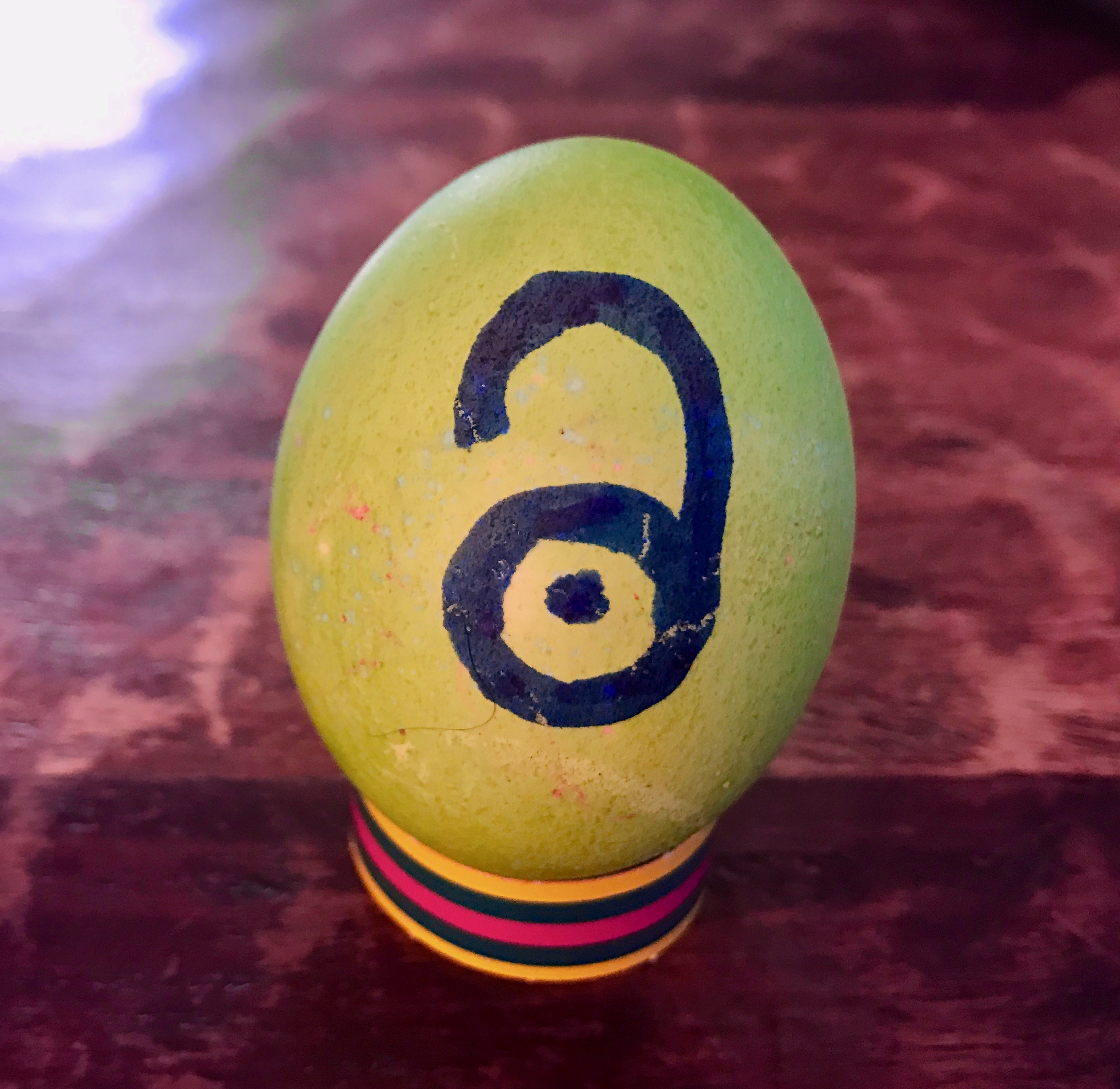
A Late 19th Century Camping Experience

A Late 19th Century Camping Experience

Do you remember summer camp as a child? Perhaps you went on a camping trip with your family or maybe you camped out in your own backyard. The
Trade Literature Collection
located at the Smithsonian Libraries and Archives holds a variety of catalogs. Some illustrate camping equipment. Have you ever wondered what it was like to camp over a century ago? This trade catalog might give us an idea.
The trade catalog is titled
Awnings and Tents, Signs and Banners
(1882) by
Murray & Baker
. Just as the title suggests, it includes tents, and as we will learn later, one style even had an awning. It also illustrates camping stoves and camp furniture as well as hammocks for that late afternoon nap.
Murray & Baker, Chicago, IL.
Awnings and Tents, Signs and Banners
(1882), front cover.
Murray & Baker, Chicago, IL.
Awnings and Tents, Signs and Banners
(1882), title page.
The Round Tent, illustrated below, varied between 8 to 11 feet in height and 10 to 16 feet in diameter. It was available in two designs. One design included a wall measuring two feet three inches in height before sloping inward to create a point at the very top. The other design did not include the wall. As shown below, ventilators were located near the point of these tents. This was likely a convenient and welcome feature as it provided air circulation. The Round Tent with a wall is pictured below, bottom right, while the Round Tent without a wall is pictured to its left.
The portable nature of this tent made it easy to pack for a camping trip. The center pole of the tent conveniently folded into two pieces and then all the poles and stakes were rolled inside the folded tent.
Murray & Baker, Chicago, IL.
Awnings and Tents, Signs and Banners
(1882), page 21, “A” or Wedge Tent, Round Tent without a wall, and Round Tent with a wall.
Those who wanted their own space might have preferred the Family Tent, illustrated below (bottom left). The common room was described as a Dining Room and located in the center of the tent. Two or four bedrooms surrounded the dining room. The bedrooms were separated by sheeting, six feet in height, attached by rings onto cords that stretched from the center poles to the sides of the tent. This tent also had a wall measuring 6 feet in height before sloping inward to create a peak at the top.
The Family Tent provided a handy built-in feature for the comfort of its occupants. It had an awning that was created by simply lifting one wall of the tent and supporting it with poles. As illustrated below, the addition of the awning created both air circulation and shade.
Murray & Baker, Chicago, IL.
Awnings and Tents, Signs and Banners
(1882), page 23, Oblong Tent with Square End and Family Tent.
In a
previous blog post
, we highlighted camp furniture such as folding tables, chairs, beds, and the combination trunk/cupboard/table. Now let’s take a look at camp stoves. The “Adams & Westlake Oil Stove” is pictured below and include…

Supporting Access to Zoological Literature: Article Definition in the Biodiversity Heritage Library

Supporting Access to Zoological Literature: Article Definition in the Biodiversity Heritage Library

This post was written by
Katerina
Ozment,
part of the
Smithsonian
Libraries’
50
th
Anniversary
2019
Intern Class, funded by the Secretary of the Smithsonian and the Smithsonian National Board.
At that
time
she was
an undergraduate at the University of Oklahoma, majoring in History and Biology.
Katerina
is now a graduate student at
the University of Tennessee,
College of Communication and Information,
School of Information Sciences. The internship program is now the
Smithsonian Libraries and Archives’ 50th Anniversary program
.
For zookeepers to most effectively care for their animals, they need access to zoological research, as well as a way to communicate with other zookeepers. One way for zookeepers to do this is through participation in professional organizations such as the American Association of Zoo Keepers (AAZK) and its publication,
Animal Keepers’ Forum
(AKF). AKF contains current research, husbandry techniques, animal enrichment activities, conservation news, and other topics.
Due to AKF’s role in facilitating this kind of communication, Smithsonian Libraries (now Smithsonian Libraries and Archives) requested permission from AAZK to
digitize the Libraries’ copies of AKF
and make them available through the
Biodiversity Heritage Library
(BHL). BHL is an open access digital library for biodiversity works. Smithsonian Libraries and Archives is one of the only BHL member libraries that supports an active zoo and therefore has a unique commitment to providing for this user community in BHL.
Although the publication was already available online, searching for specific articles remained difficult. This is because AKF was uploaded as whole issues as opposed to individual articles. It was uploaded this way because the metadata (data about the work) associated with the Libraries’ record applies to each issue, not each article. Descriptive metadata includes information such as the title, volume, issue number, or date of a work. This metadata ensures that BHL is searchable and that specific works can be located.
However, researchers are used to having article-level metadata and often search for a specific article or article topics. Currently, if a researcher searched for a specific article author in the name field, it would not bring up the articles written by that author for AKF. Similarly, if an article’s title was searched for in the title field, it would not be found. Without article-level metadata, such as article titles or article authors, these resources are much harder to find. It is possible to do a full text search and find articles by title or author that way; however, the OCR (optical character recognition) the full text search relies on is not corrected. If there are mistakes in the OCR, the search terms won’t be found. This is especially true when an article has graphic design elements, or text overlaid on a picture, as both…

How Yellowstone Was Saved by a Teddy Roosevelt Dinner Party and a Fake Photo in a Gun Magazine

How Yellowstone Was Saved by a Teddy Roosevelt Dinner Party and a Fake Photo in a Gun Magazine

A chill rain drizzled over guests arriving at Bamie Roosevelt’s midtown brownstone near the corner of Madison Avenue and East 62
nd
Street in December 1887. There weren’t many of them, but all had two things in common: they were New York’s most influential and rich social elite, and they all loved hunting big game. All were hand-picked by the hostess’s brother, Theodore Roosevelt, to facilitate his newfound interest in the conservation of the American West. That small gathering became the first domino in a long line that ended in the protection of Yellowstone, the first environmental advocacy group in the US, and the creation of the American National Parks system.
Teddy was in the nadir of his career. His 3
rd
place finish in the New York City Mayoral race foretold doom in the realm of politics. His North Dakota ranch was devastated by winter storms (later known as The Big Die-Up) and on the verge of collapse. His latest book on his Western adventures,
Hunting Trips of a Ranchman
,
received a middling review in the popular sportsmen’s magazine,
Forest and Stream,
which praised his prose but harped on “the author’s limited experience” (
Forest and Stream v.24, pg. 451).
T.R. was evidently so incensed at the aspersions on his Western manliness that
he showed up at the
Forest and Stream
editorial offices in New York
to demand to speak to whoever wrote the article. That very visit led to Roosevelt’s midtown dinner party.
Photograph of Theodore Roosevelt by Julius Ludovici, 1884.
Object number NPG.81.125
. Courtesy of National Portrait Gallery, Smithsonian Institution.
The evening may have gone something like this: first, he plied his guests with the rich bounty of his table and cellar with many toasts and courses. Roosevelt’s glass was unlikely to contain much alcohol (there was even
a later court case
about his abstention from drunkenness), but his hard-drinking younger brother Elliott and others may have partaken in
the bon-vivant cocktails popular at the time
. Then during the game course traditional to late 19
th
century gatherings, the conversation is adeptly steered by Teddy to their subject of common interest: hunting. Over yet another toast, Roosevelt proposes the formation of club named for America’s two most legendary hunters and committed to their shared values: fair chase, preservation of game, and “manly sport with the rifle.” Thus was formed the Boone and Crockett Club.
It could have ended there, with a private club whose members were required to have killed a large North American animal according to their own rules of engagement. But this group would grow in fame because of one of its founding members: George Bird Grinnell. At the time of this gathering, Grinnell stood out among the invited guests for his anonymity. He wasn’t a millionaire like Rutherford Stuyvesant or John Jay Pierrepont, or a famous man of the West like Albert …

Identifying Article Metadata in “The Avicultural Magazine”

Identifying Article Metadata in “The Avicultural Magazine”

This blog post was written by Taylor Smith,
the 2019
Kathryn Turner Diversity and Technology Intern
in the Smithsonian Libraries’ Web Services Department. At the time of her internship, Taylor was an undergraduate Computer Science student at Bowie State University. Her work in the summer of 2019 consisted of developing and coding a method for identifying article metadata in
The Avicultural Magazine,
a leading journal for the keeping of non-domesticated birds in captivity.
As a biology major with an interest in computer science, I had a curiosity for wildlife and a newfound love for coding. I kept the two in mind when searching for internships, and luckily for me, I was led to the Kathryn Turner Diversity in Technology Internship for the summer of 2019. When I saw that the internship would focus on working with zoo articles relating to botany and wildlife, I knew this was perfect for me.
I had never held an internship before, let alone one that involves coding (which I had started learning that year). I had no idea what to expect when coming into this internship, but I learned a lot more than I could have imagined. Throughout this internship, I learned what metadata was and why it was so important. I learned why having digitized articles available online was so crucial. I also learned that making information accessible took a lot more work than anyone would think.
In my first week, I was introduced to the
Biodiversity Heritage Library
(BHL), an online digital library designed to make biodiversity literature available to the public. In this library, I was specifically working with
The Avicultural Magazine
. This was a journal created by the Avicultural Society in 1894 with the purpose of spreading information, advice, and updates on non-domesticated birds. The volumes are digitized by Smithsonian Libraries and Archives and processed through optical character recognition (OCR) for the convenience of zookeepers and other zoo curators. The only problem with this is that it takes scrolling through endless pages of articles to find the specific item you’re looking for. My job was to create code that finds metadata for these articles to make them much more accessible and citable.
Below is an example of a page with the beginning of an article.
J. Lewis Bonhote, “Field Notes on Some Bahama Birds”,
The Avicultural Magazine
, volume 9, number 1
(November 1902): 19.
At first, I had to write code that would open up the directory of all the articles, open up one file at a time, and look for titles, page numbers, authors, etc. I set to work, but it was not long before we found that Penn State University and the National University of Singapore actually had
a project named ParsCit
that went through the files and searched for said data. The results are placed into an XML file, which was helpful to the process but not exactly as we needed.
My job then became loading and parsing the XML files us…

Vintage Furniture Finds from the Early 20th Century

Vintage Furniture Finds from the Early 20th Century

Before online outlets and a certain Swedish superstore, imagine decorating and furnishing a new home in the early 20th Century. What did your furniture look like? What curtains or window hangings did you choose? How did you communicate with your neighbors? The
Trade Literature Collection
at the
National Museum of American History Library
includes a few catalogs related to these very things.
One catalog is titled
Spring & Summer Catalog
(1915) by
John Wanamaker
. In previous blog posts, we learned about
library pieces like armchairs and sofa beds
as well as
dining room furniture and tableware
. Now, let’s explore a few more items from this catalog.
John Wanamaker
, New York, NY.
Spring & Summer Catalog
(1915), front cover.
Several pages focus on bedroom furniture such as these Bedroom Suites manufactured from solid mahogany. The Bedroom Suite shown below included several pieces of furniture, but each piece was priced individually. This included bedframes (top and bottom, middle), dresser with glass (top right), chiffonier with glass (top, second from left), and dressing table (top, left). The dressing table came with a triplicate mirror, but those preparing for a special occasion might have preferred a tall or full-length mirror, such as the Cheval Glass (bottom right). Another piece in the suite was the Table Desk (bottom, middle). Perhaps it was used for corresponding with family and friends via letters. The top of the desk included small compartments to store stationery and supplies.
John Wanamaker
, New York, NY.
Spring & Summer Catalog
(1915), page 106, Bedroom Suites (Dressing Table, Chiffonier, Bed, Dresser, Bedroom Table, Table Desk, Twin Beds, Cheval Glass).
John Wanamaker
, New York, NY.
Spring & Summer Catalog
(1915), page 111, Brass and Enamel Beds.
Other choices included brass and enamel beds. The brass beds, shown above (top and middle rows), were available with a polished finish and most also had the option of a hand rubbed, satin finish. White Enamel Iron Beds are also illustrated above on the bottom row.
As for mattresses, one option was the Kurly-Kotton Elastic Felt Mattress (below, top middle). No space age foam or fancy fillings here – this elastic felt mattress was filled with cotton sheets laid by hand. The Single Border Spring (below, middle right) had 63 spirals and was compatible with wooden beds.
John Wanamaker
, New York, NY.
Spring & Summer Catalog
(1915), page 119, Mattresses and Springs.
John Wanamaker also sold draperies and window hangings. Someone setting up their new home in 1915 could chose these Irish Point Curtains (below, bottom left). Measuring 47 inches wide and 3 yards long, these had a plain net center and decorative border. Other window hangings incorporated floral decorations, such as No. 4 Fine Soft Voile (below, top right). Described as having a “graceful floral pattern,” it was available in pink, blue, and yellow.
John Wanamaker
, New Yo…

Stewards of the Hungerford Deed

Stewards of the Hungerford Deed

When the Smithsonian Institution was founded “for the increase and diffusion of knowledge,” it was difficult to know how impactful this mission would still be 175 years on. To this day, the Smithsonian Libraries and Archives strives to further this goal, sharing our knowledge to make discoveries and expand our understanding together with you, our community of supporters. The Hungerford Deed, which quickly became a treasure of our collections, exemplifies this work, as does the special opportunity to become a close supporter of the Smithsonian Libraries and Archives by joining the Stewards of the Hungerford Deed. Read on to learn about how the Hungerford Deed illuminates the Smithsonian’s founding, and the impact you can make as a Steward.
The signature of Elizabeth Macie, James Smithson’s mother, on the Hungerford Deed, 1787, Smithsonian Institution Archives, Acc. 19-150.
The Deed is a 1787 property contract divvying up inherited lands between James Smithson’s mother and aunt. The insights shared by the Deed go beyond the legal decisions, illustrating a dramatic battle between the sisters and offering context via the family dynamics that shaped Smithson into the founding donor of the Smithsonian Institution. Like many archival discoveries, the Deed is an unpublished work that required
ample preservation
when it was anonymously donated to the Smithsonian in 2019. Preservation included carefully unfolding, stabilizing, and humidifying each
parchment page
so viewers can
examine the pages
, as interested parties might have three centuries ago. This process reveals and protects the original knowledge present in the Deed, contributing this knowledge to the collections that the Libraries and Archives safeguards as a resource for future generations.
The Hungerford Deed opened for the first time. Smithsonian Institution Archives.
Sharing knowledge often leads to exciting discoveries in collaboration with other scholars and curious minds. The Libraries and Archives is excited to facilitate this exchange through a virtual exhibition launching on August 10, offering a deeper dive into the Deed. Visitors near and far will be able to virtually turn the pages of the Deed and explore for themselves, with highlights of interesting facts and context right on the page to enhance their understanding. The Deed offers a wellspring of new information pertaining to the history of
women’s property rights
,
the British legal system
, and
Smithson’s genealogy
, and we are excited to make this knowledge available to
evolve understanding
alongside researchers.
The first page of the Hungerford Deed, 1787, Smithsonian Institution Archives, Acc. 19-150.
Our preservation, research, and outreach in connection to the Deed exemplifies just a few of the ways the Smithsonian Libraries and Archives protects and shares our collections. With scientific and cultural treasures ranging from oral histories to artists’ books, the Libraries and Arc…

Exploring Bias and Library of Congress Subject Headings

Exploring Bias and Library of Congress Subject Headings

I am currently wrapping up my first year as an MLS student at Emporia State University, with a concentration in archives. A sense of curiosity, a love of learning, and a passion for research led me to libraries and archives as a career. I am drawn to the idea of working for universal access to information and knowledge, and I intend to work to disrupt systems of oppression in our institutions. In Spring of 2021, I took a required course in my program that introduces students to basic concepts in cataloging and classification. While I had already chosen a concentration that fills most of my elective credits, I wanted to learn more about cataloging. The cataloging project, part of the
Smithsonian Libraries and Archives’ 50th Anniversary Internship program
, was the perfect opportunity to further develop my knowledge of descriptive work, while incorporating ethics of social justice.
For this project, I had the pleasure of working with Heidy Berthoud, Head of Resource Description, and Amanda Landis, Library Technician. We started with materials relating to ideas of diversity, equity, accessibility, and inclusion (DEAI) within Smithsonian Libraries and Archives library collections and examined the
Library of Congress Subject Headings
(LCSH) being used for those materials in library catalogs.
We then considered where there were gaps in the assigned headings which did not fully convey the meaning of these works, or where subject headings being used were inappropriate or outdated. We would then draft proposals for new subject headings, with the goal of improving accuracy and inclusivity within LCSH.
People working in Card Division, Library of Congress, Washington, D.C. [Between 1900 and 1920] [Photograph].
Library of Congress
.
As intern for this project, I conducted research needed to justify proposals and provided an additional critical eye as we searched for issues. I took particular interest in issues of gender and sexuality within LCSH, performing research to determine the relationships between terms as the hierarchy of LCSH exists at present. This led me to discover that a common sexual orientation, pansexuality, is currently absent from LCSH. I performed the research to draft a proposal for pansexuality as a new heading. I also performed research to support a change in the heading “sexual minority culture,” hoping to update it to “queer culture” (this heading exists in addition to “gay culture” and “lesbian culture”).
Mapping sexuality terms as present in LCSH [screenshot]. River Freemont.
Through this project, I learned a lot about the process and politics of proposing headings. There are an extensive number of complicated rules for constructing proposals, but it is also important to be mindful of how LC prefers things to be done, even if they are not requirements. Consistency within LCSH is a common factor in rejections, as well as the impact a change would have on the larger s…

Assessing File Format Risk for Born-Digital Preservation Planning

Assessing File Format Risk for Born-Digital Preservation Planning

This post originally appeared on the
Smithsonian Institution Archives’ blog.
Melissa Anderson’s internship was part of the Smithsonian Libraries and Archives’ 50th Anniversary Internship program, with funding provided by the Secretary of the Smithsonian and the Smithsonian National Board.
When I entered the MLIS program at the University of Alabama
School of Library and Information Studies
in 2018 and became interested in digital libraries, I was surprised to learn that the information we create and store digitally is just as, and in some cases even more, fragile than unstable media or paper. Physical damage, deterioration of digital storage media, and the technological complexity and dependency of electronic records make them uniquely vulnerable to loss,
corruption
, and alteration. As keepers of records with historical, cultural, and legal value, archival repositories have a responsibility to identify at-risk digital objects and take preemptive action to preserve them in a format that is accessible to the broadest possible public for the
longest possible time
. As a Smithsonian Libraries and Archives 50th Anniversary intern in born-digital collections, I’m learning how to do just that.
At present,
more than half of the Smithsonian Institution Archives’ annual accessions
contain born-digital materials, most of which are acquired in mixed collections alongside print and analog media. To document and serve the Institution, the Archives collects documents, spreadsheets, images, audiovisual (AV) material, email, databases, designs, data sets, software, websites, and social media content. These electronic records span more than 40 years and are stored in a variety of media formats, some of which require urgent preservation to avoid information loss.
Gif slideshow of Digital Collections information.
The Archives’ employs a multi-pronged
born-digital preservation strategy
that follows professional standards and best practices including the
OAIS Reference Model
and
trustworthy digital repositories
. The three prongs are: bit-level preservation, migration of at-risk files to stable preservation formats, and emulation for access to records locked in obsolete formats. The first strategy creates an exact copy of a file’s content information and data structure and is applied to all digital objects on accession. Having two (or more) identical copies of every file and storing them in different locations mitigates the risk of loss due to media, system, or human failure and disasters like
fire
and
flooding
, but possession does not automatically equal access. Our ability to even open and view a file during processing depends on hardware and software that can read and render it.
Obsolescence affects both the machines and the software we use to create, store, and access digital files. Advancements in power, speed, efficiency, and cost lead to
rapid obsolescence of computer hardware
. Th…

Packing for a Vacation in 1907

Packing for a Vacation in 1907

Imagine it is the early 20th Century and you are packing for summer vacation. What did your luggage look like? Did you pack your clothes in a trunk? What were your options? Today we are familiar with rolling luggage on wheels, but trunks and suitcases over a hundred years ago looked quite different.
Catalogue No. 101
(1907) by
Herr, Thomas & Co.
provides a peek into the past, specifically the year 1907. Flipping through this trade catalog, we will learn about the types of luggage available in that time period. A few other items illustrated in this catalog might also have made a vacation fun and memorable.
Herr, Thomas & Co., Pittsburg, PA.
Catalogue No. 101
(1907), front cover [page 1], explanation of benefits of buying direct from the company.
Packing is not always easy. What do you bring and what do you leave behind? Do you really need that extra sweater? Maybe it would be easier if you just brought your entire dresser along. That might not be quite possible, but in 1907 there was a piece of luggage called the Dresser Trunk (below, top left). It was described as “embodying the latest ideas of travel comfort” and “combining the uses of both a trunk and dresser.” The Dresser Trunk was composed of three-ply veneer bass wood, covered with canvas, painted, varnished, lined with cloth, and the frame was reinforced with hard wood strips. It also had hand riveted wrought iron clamps, corners, hinges, and fastenings.
A convenient feature was its ability to open on the side. Instead of lifting everything on top to get to something on the bottom, the drawers made it possible to go directly to the location of a specific item without interfering with the contents of the rest of the trunk. In other words, the Dresser Trunk functioned just like a dresser with drawers. There were three drawers, one large and two of medium size. The large drawer included two compartments. There were also other compartments beneath the large drawer and in the lid. Wondering where that mirror was located? Inside the lid was a French bevel mirror. A Yale lock safely secured belongings inside the trunk. The Dresser Trunk measured 32 inches long, 21 inches wide, and 21 inches high with the lid closed or 42 inches high with the lid raised.
Herr, Thomas & Co., Pittsburg, PA.
Catalogue No. 101
(1907), page 74, Dresser Trunk, Suit Case, Leather Suit Case, Cabinet Bag, Trunk, Steamer Trunk, Hand Bag or Satchel.
Maybe bringing a Dresser Trunk is not quite what you had in mind for a vacation. In that case, Herr, Thomas & Co. also offered other trunks, such as the Steamer Trunk (above, middle right). Its interior was composed of a tray divided into a large and small compartment with four additional large compartments beneath the tray. It also provided security by using a Yale lock.
Other options included a simple suitcase, such as the ones shown above (middle left). The Suit Case advertised for $2.85 in this 1907 catalog included a cloth-lined int…

Early 20th-Century Women Computers at the Smithsonian

Early 20th-Century Women Computers at the Smithsonian

This post originally appeared on the
Smithsonian Institution Archives’ blog.
Nell MacCarty’s internship was part of the Smithsonian Libraries and Archives’ 50th Anniversary Internship program, with funding provided by the Secretary of the Smithsonian and the Smithsonian National Board.
Some of the earliest women in science at the Smithsonian Institution worked for the
Smithsonian Astrophysical Observatory
(SAO). These women, often called computers, contributed immensely to SAO’s research by performing mathematical calculations on solar observations collected around the world. Through their mathematical prowess, these women greatly contributed to solar research.
SAO Staff, including Nancy Prichard, then referenced to as Miss McCandlish, and Gladys T. Bond, referred to as Mrs. Bond, 1941, by Earl S Johnston, Smithsonian Institution Archives, Record Unit 7005, Image no. 94-4430.
The earliest women computers worked with the astrophysicist
Charles G. Abbot
, fifth Smithsonian Secretary and director of SAO. Abbot adamantly believed variation in solar radiation caused the weather. Under this theory, Abbot thought trends in solar radiation could be used for long-term forecasting. Women computers contributed to the mathematical analysis to prove his theories. However, many scientists historically disputed SAO’s solar research and today, Abbot’s theories are considered mostly erroneous. Despite this, the work of these women still contributed to astrophysicists’ understanding of solar radiation.
Observatory at Mt. Montezuma, Chile, 1920, Smithsonian Institution Archives, Record Unit 95, Image no. MNH-33668.
In 1906, SAO hired the first woman computer,
Florence A. Graves’
(1872-1938). Graves’ career with the Smithsonian Institution is detailed in volumes 2-5 of the
Annals of the Astrophysical Observatory of the Smithsonian Institution
, yearly reports on the research and personnel of SAO. Graves is credited by Abbot for her work reducing solar observations from the Mount Wilson Observatory. Her computations specifically aided in research about the sun’s energy spectrum and temperature. Volumes 3 and 4 of the
annals
included her calculations. World War II put a year-long pause in Grave’s career when the Smithsonian furloughed her so
she could serve as a nurse in France for the Red Cross
. She returned in 1919 and worked for another year before retiring in 1920.
Gladys T. Bond
(1896-1951) worked for over 30 years at SAO, from 1918 until her death in 1951. As detailed in volumes 6 and 7 of the
annals
, her colleagues appreciated her devotion to the work and comprehension of solar research.
A figure from Periodicity in Solar Variation, 1932, by C. G. Abbot and Gladys T. Bond,
Smithsonian Miscellaneous Collection
vol. 87 (1934),
Biodiversity Heritage Library
.
In 1920 Gladys married Albin Bond. At this time in the scientific field, it was unusual for married women to continue working, so much so t…

Introducing Information Literacy Collections in Learning Lab

Introducing Information Literacy Collections in Learning Lab

Smithsonian Libraries and Archives wants to help you gain a better understanding of
information literacy
and further your skills in this crucial area. In an age where there are myriad sources of information, unending news coverage, and a vast, often unregulated digital world, how can you tell which sources to trust for reliable information? We’ve just launched a series of interactive, online collections on
Smithsonian Learning Lab
that are dedicated to helping users think critically about how they identify, find, evaluate, and use information effectively.
Information Literacy collections available on
Learning Lab
.
As we’ve arrived at the Smithsonian’s 175th anniversary, we felt this was the perfect time to kick off this series of collections. While we reflect on nearly two centuries as a
trusted source
, we invite you to examine how and why the Smithsonian has this reputable status and use it as a case study to help you consider what makes a source trustworthy.
Education and trust with the public have been at the heart of what the Smithsonian does from the start. Founding donor James Smithson wrote in his will that the Smithsonian Institution would be a place for “the increase and diffusion of knowledge.” For 175 years, the Smithsonian has worked to fulfill that mandate and become a reliable repository of history, facts, and information in the United States and around the world. Here are some interesting tidbits from the Smithsonian Institution Archives that provide insight into this development:
George Brown Goode, director of the United States National Museum (later known as the
Arts and Industries Building
) from 1881 to 1896 and a leader in museum theory and practice, believed that “inherent in its mandate was the notion that the Smithsonian had a broad responsibility for the use of knowledge for the public good.” He worked with
Secretary Spencer Baird
to transform the Smithsonian from a random collection to a trusted institution for exemplary objects, records, research, and education. Together, they, along with many other researchers and staff, established the legitimacy of the Smithsonian as a long-lasting, reliable resource.
Photograph of George Brown Goode. Smithsonian Institution Archives,
Record Unit 95, Box 9, Folder: 28B
.
Gaining the
public
’s trust
would come through
transparency
, like
making
things such as
datasets and annual reports accessible to anyone.
But beyond that,
the intention
was
to support
Smithsonian’s mission to increase and diffuse knowledge. From the outset, one of the Smithsonian’s primary purposes was to build access to knowledge through the mutual exchange of scholarly publications. In 1849, the Smithsonian and its fledgling library created the International Exchange Service to share resources between peer scientific and literary societies. By publishing lists of correspondents, the participating learned societies, and the periodicals rece…

Spotlight on Jessie G. Beach, Smithsonian Department of Paleobiology Staff Member

Spotlight on Jessie G. Beach, Smithsonian Department of Paleobiology Staff Member

This post was written by Lezlie Hernandez, a Summer 2021 intern at the Smithsonian Institution Archives, sponsored by the American Women’s History Initiative. Her project focused on researching the history of Smithsonian women in science.
Jessie G. Beach (1887-1954) worked as a museum aid for the Smithsonian’s
Department of Paleobiology
at the United States National Museum (now called the National Museum of Natural History) for over 30 years. Beach attended Baylor University but earned both her BS and MA from George Washington University.  After graduating, Beach began working at the Smithsonian as a typist in 1918, and on October 16, 1920,
she was promoted
to a museum aid and stayed in that position until her death in 1954. In her work, she completed a wide range of tasks that included labeling specimens, caring for exhibits, and assisting researchers with their manuscripts.
Jessie G. Beach worked with hydrozoan and specimens in the Department of Paleobiology.
Fossilized Cnidaria Hydrozoa, S. Jones, 1942, Department of Botany Collections, Catalog # USNM PAL 498530
.
Much of Beach’s involvement with the Smithsonian can be traced through the
Annual reports of the Board of Regents of the Smithsonian Institution
and the
Report on the Progress and Condition of the U.S. National Museum
. As Beach gained more experience, she took on more challenging duties.
Excerpt from
Report on the progress and condition of the U.S. National Museum for the year ending June 30
,
1923,
page 88, describing a trip by Jessie G. Beach. Biodiversity Heritage Library, Contributed by
New York Botanical Garden, LuEsther T. Mertz Library
.
In
1922
, she traveled abroad to consult museum workers on best cataloguing practices. On this trip, she visited France, Italy, Germany, Belgium, England, and Scotland.
In
1940
, she typed labels and numbered specimens from the biologic series of
Paleozoic invertebrates
, including the gastropod, sponge, and hydrozoan specimens.
In
1945
, she aided the head curator with updating many museum exhibitions. She cleaned and rearranged the exhibits. She also replaced and added labels of explanation to items.
In
1950
, she worked with the
bryozoan
specimens.
Beach was well known across the Department of Paleobiology. She was an aid for various department heads, including Charles E. Reeser,
Ray Smith Bassler
, and
William F. Foshag
. Beach assisted many researchers with their personal manuscripts. This was the case with Ferdinand Canu and Ray Smith Bassler with their work,
Bryozoa of the Philippine Region
published in 1929. In the introduction, they wrote, “The authors are greatly indebted to Miss Jessie G. Beach of the division of paleontology…” With her 36 years of experience, I would agree with the authors.  We are greatly indebted to Jessie G. Beach for all her wonderful contributions to paleontology and the Smithsonian.
Excerpt from “Bryozoa of the Phi…

Adventures in Advancement and Advocacy

Adventures in Advancement and Advocacy

This post was contributed by Martha Ball, who has served as the Advancement Intern during the Summer of 2021. Martha is currently pursuing her M.S. in Library and Information Science at Simmons University, where she is concentrating in Archives Management.  Martha’s
internship was part of the Smithsonian Libraries and Archives’ 50th Anniversary Internship program, with funding provided by the Secretary of the Smithsonian and the Smithsonian National Board.
Smithsonian Libraries and Archives Advancement Intern Martha Ball. Summer 2021.
During my undergraduate studies in Washington, D.C., I was fortunate to be surrounded by world-class museums and cultural heritage institutions, often meeting my art history class at the National Portrait Gallery or partaking in the Smithsonian Folklife Festival on weekends. As a visitor and eventually as an employee of such places of learning, I began focusing on the people who brought the collections and organizations as a whole to life. I often linger to read the donor wall in the lobby, take each visitor pamphlet no matter how personally applicable, and compare archives visitation policies. My inferences have informed my career as I now seek to learn what connects supporters to an institution, and how to strengthen this relationship to propel both parties into a future of increased impact.
I was first introduced to the concept of an advocate within the School of Library and Information Science at Simmons University. An advocate in terms of a library, archive, or museum is a supporter invested in the work of an organization, who shares our impact with others to organically spread the word. Smithsonian Libraries and Archives advocates are especially strong, as our supporters have connected with our mission so closely that they choose to focus on our organization out of the wide-ranging Smithsonian portfolio.
This opportunity to work with the Advancement staff at the Smithsonian Libraries and Archives has connected my interests, empowering me to explore what makes an advocate. My projects have focused on the channel of supporters, from inspiring interested audiences to become involved to sharing a purposeful path for them to engage further with the Libraries and Archives’ work. I have focused on new audiences by creating a plan to develop the Libraries and Archives relationship with virtual program attendees, allowing Libraries and Archives to share future events and opportunities that fit these guests’ unique interests. Planning and writing stewardship materials, including acknowledgments and our donor newsletter, has encouraged me to understand how to connect with and excite existing donors, building on a relationship that for some has spanned decades. The Stewards of the Hungerford Deed and an upcoming email welcome series are two projects that have particularly expanded my understanding of advocates and advancement as a whole.
One of my central projects was to…

New School Year, New Clothes, 1915 Style

New School Year, New Clothes, 1915 Style

The beginning of a school year brings many new things. New classes, new supplies, and perhaps new clothing. What did school outfits look like over one hundred years ago? Let’s take a trip back in time to the year 1915 to find out.
Trade catalogs provide a window into the past, sharing clues of what was available to consumers at a specific time. This particular trade catalog is titled
Spring & Summer Catalog
(1915) by
John Wanamaker
. At first glance it appears to primarily focus on women’s clothing, but with a closer look you will find a few pages illustrating children’s clothing.
John Wanamaker
, New York, NY.
Spring & Summer Catalog
(1915), front cover.
One page illustrates girls’ dresses. Several gingham dresses along with a party dress are pictured, but one dress is described as a “practical school dress.” It is worn by the girl carrying a doll (below, upper left). The dress was plaid with a pleated skirt and wide belt. Its front panel was trimmed with white braid and crochet buttons. Other decorative elements included a velvet bow at the neck and dotted Swiss collar and cuffs, both with scalloped edges. Sizes ranged from 6 to 14 years.
For a fancy occasion, the “party dress of white voile” might have appealed to a young girl. Shown below (to the right of the school dress), the party dress included lace trimmings along the collar, sleeves, and skirt which was pleated. To complete the outfit, a decorative pastel bow was attached to the side at the waist. It was available in sizes 6 to 14.
John Wanamaker
, New York, NY.
Spring & Summer Catalog
(1915), page 39, young girls’ dresses.
Now let’s take a look at girls’ school and “best” coats. Shown below (upper left), the “practical coat for school wear” was available in black and white check, navy blue, or Copenhagen blue serge for sizes 6 to 14 years. Decorative details included slashed pockets and turned back cuffs with a wide belt buttoning on the side.
John Wanamaker
, New York, NY.
Spring & Summer Catalog
(1915), page 37, Girls’ School and “Best” Coats.
Another page illustrated school boys’ outfits, such as Norfolk suits. One of these Norfolk suits is illustrated below (bottom left). The suit had three patch pockets and came with extra knickers. It was available in brown, gray, or tan mixtures and for sizes 7 to 18 years. A matching hat was available in gray, brown, or tan tweed or cheviot. For those rainy days, the tan raincoat and hat, illustrated below (bottom right) may have come in handy.
John Wanamaker
, New York, NY.
Spring & Summer Catalog
(1915), page 95, School Boys’ Outfits.
John Wanamaker
also sold playtime clothing for younger children who might not yet be school age. This included a worsted sweater available in rose, white, or Copenhagen blue for sizes 1 to 6 years (below, bottom, second from left)
Several dresses were also available. A bloomer dress with separate bloomers is shown below (top middle). Made of checked gingham a…