LMU Library News

Discovering the Works of Robert Redford

Discovering the Works of Robert Redford

Today’s post was put together by Chan Harris, library events manager.
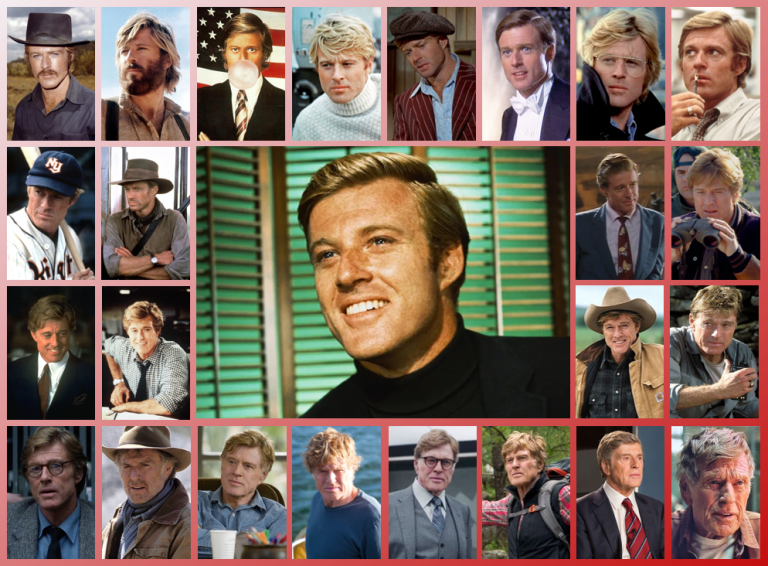
Actor, director, producer, Oscar-winner, BAFTA-winner, Golden Globe-winner, and co-founder of the Sundance Film Festival, Charles Robert Redford Jr. recently passed away at age 89.  With a career in film, television, and stage spanning more than four decades, he leaves behind an unforgettable body of work, some of which LMU students, faculty, and staff can revisit through our collections at the William H. Hannon Library.
Streaming Media
The Great Gatsby
(Swank)
The Natural
(Swank)
Out of Africa
(Swank)
The Sting
(Swank)
The Way We Were
(Swank)
Physical Media
All the President’s Men
(DVD)
Butch Cassidy and the Sundance Kid
(DVD)
The Candidate
(DVD)
Tell Them Willie Boy is Here
(DVD)
Three Days of the Condor
(DVD)
Databases
Academic Video Online
, has PBS titles, documentaries, newsreels, films, and interviews, which include “The Company You Keep,” “Truth,” “Forever Wild,” and “The Iceman Cometh.”
Gale OneFile on Fine Arts
, has magazines, academic journals, books, news, and images for drama, music, art history, and filmmaking.
Not only did Robert Redford direct films like “A River Runs Through It,” “Quiz Show,” and “The Horse Whisperer,” he also portrayed F. Scott Fitzgerald’s Jay Gatsby (“The Great Gatsby”), Bernard Malamud’s Roy Hobbs (“The Natural”), and Bob Harras and Paul Neary’s Alexander Pierce (“Captain America: The Winter Soldier”). This barely scratches the surface of the wealth of information on the life and times of Robert Redford available in our collections. To learn more, explore the
library catalog
for additional resources.
The post
Discovering the Works of Robert Redford
appeared first on
LMU Library News
.
Faculty Pub Night with Joaquín Noguera: What You Missed

Faculty Pub Night with Joaquín Noguera: What You Missed

Today’s post was written by library student assistant Judite do Bem Sampaio. Judite is an international student from Portugal double-majoring in economics and entrepreneurship.
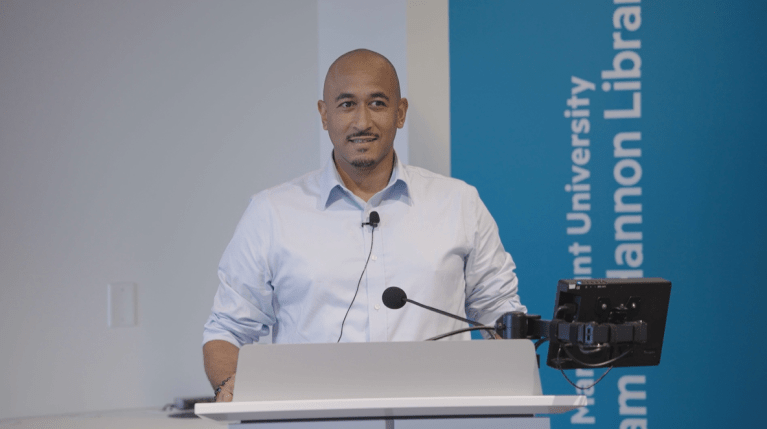
From the start, Joaquín Noguera’s passion for educational equity and his ability to tell stories filled the room with warmth and energy. He opened by sharing the Greek myth of Prometheus—who gave fire to humanity despite being punished for it—as a metaphor for the resilience of Black communities in their ongoing pursuit of education and justice. Building on that, he took us through U.S. history, from Reconstruction to
Brown v. Board of Education
, showing how moments of progress have often been followed by backlash. Still, he reminded everyone that the fight for educational justice continues today, especially as schools face resegregation, inequitable funding, and the effects of decisions like the 2023 Supreme Court ruling on affirmative action.
The heart of his talk focused on his ethnographic study of Roses in Concrete Community School in East Oakland—a school rooted in community healing and self-determination. Drawing from years of fieldwork, he described how Roses aimed to cultivate “warrior scholars,” students who would go out into the world, bring resources back to their communities, and push for transformation through love, knowledge, and cultural pride. The school’s model, he explained, was built on a desire-based approach that centered hope and aspiration instead of focusing on deficits. Even though Roses closed in 2020, Noguera emphasized that its legacy continues through partnerships that focus on student wellness and empowerment.
What stood out most was how accessible and grounded Noguera made his ideas feel. He spoke honestly about the emotional labor of educators, the limits of policy-driven reform, and the importance of preparing teachers who come from and understand the communities they serve. Referencing Paulo Freire’s idea of “limit situations,” he encouraged the audience to see obstacles not as permanent barriers but as moments that can lead to transformation. “We are the answers we’re looking for,” he concluded, connecting back to the story of Prometheus and the ongoing struggle for educational freedom.
Audience reactions reflected just how deeply the talk resonated. One attendee shared, “Such an engaging speaker. I’ve only ever been to events at the School of Education, but this one stood out.” Another said, “The Zoom recording made it accessible for more people to join and learn,” while someone else added, “Live streaming events like this are so important for building connections.” Many described the event as both intellectually and emotionally inspiring. “It reminded me that we are not alone in this work,” said one guest. Another left saying, “We can do this—we can take on the challenge to redefine education.”
Joaquín Noguera’s Faculty Pub Night didn’t just highlight the inequities …

The Changing Landscape of Academic Search and Connected Papers

The Changing Landscape of Academic Search and Connected Papers

Today’s post was written by library student assistant Judite do Bem Sampaio. Judite is an international student from Portugal double-majoring in economics and entrepreneurship.
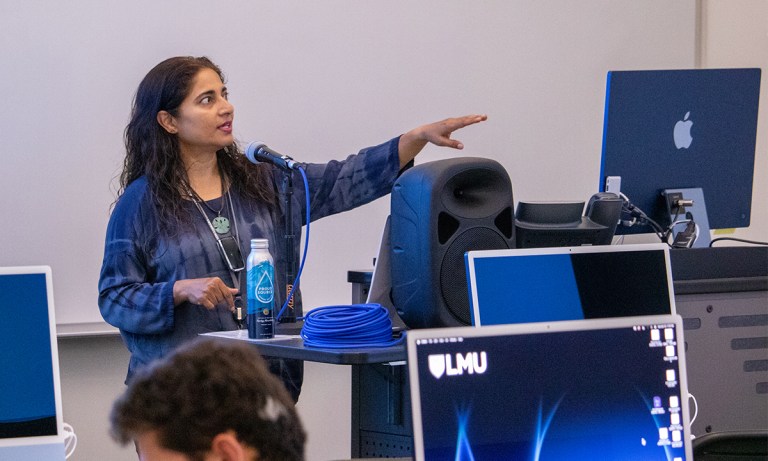
On October 16, 2025, the William H. Hannon Library hosted a workshop entitled “AI-Generated Tools for Academic Research: Featuring “Connected Papers.” The workshop showcased the way artificial intelligence is transforming how academic works are searched, evaluated, and represented.
The presentation began by contrasting historical modes of academic searching with new AI systems. Academic databases previously performed either Boolean or lexical searching: i.e. searching results relied on finding literal phrases or words. The presenter explained that such a constricted approach could ignore existing studies using a different terminology. In contrast, contemporary AI-based tools use semantic and natural language searching, allowing users to find information by meaning and not only word-for-word. These new tools are shaping a more natural, integrated, and insightful research process.
The session identified several key tools that are spearheading this change.
OpenAlex
was launched as an open-source, free index of scholarly publications aimed at open access and transparency.
Semantic Scholar
is an AI-powered search engine that uses machine learning to identify conceptual connections between papers rather than being mere functions of citation counts.
Crossref
was also noted as essential infrastructure for scholarly integrity as it offers stable Digital Object Identifiers (DOIs) that make enduring links between scholarship outputs possible. Together, these sites provide the foundation for a modern, AI-facilitated research ecosystem.
Most of the conversation was about citation-based literature mapping tools, including
Connected Papers
,
Litmaps
, and
ResearchRabbit
. These platforms use citations and algorithms to map the relationships between research studies and return insights to researchers about how ideas evolve over time. The concept of backward and forward citation searching was explained: backward citations identify prior work that a paper builds on, and forward citations identify newer papers that reference the original. Using this approach, researchers can follow the scholarly conversation historically and forward.
The presenter continued on to explain in more detail how Connected Papers works. Powered by Semantic Scholar data, the software builds a force-directed graph: a visual map that clusters papers based on similarity. Each node in the graph is a research paper, with color representing more recent publication dates and node size representing the number of citations. Relative line thickness between nodes indicates strength of similarity between papers. The system reads around 50,000 papers per field to display the 40-50 most applicable to a chosen “seed” paper, allowing users to browse related…

New E-Resources: Fall 2025

New E-Resources: Fall 2025

For a complete list of all our online databases and e-resources, go to
OneSearch, the library’s catalog
. We’ll update this page as new resources are added to our collection.
Girlhood: Magazines and Print Culture
is a collection of graphic and illustrative annuals, comics, magazines, and periodicals that facilitate the study of print culture aimed at young and teenage girls throughout the twentieth century. The collection focuses on publications produced in the UK, Australia, and U.S., representing some of the most popular titles aimed at teenage girls during this era.
Latin American Histories in the United States
is a multi-archive resource compiled from archival collections located in the United States, providing users with access to primary sources describing the experience of Latine communities across the country, with a focus on underrepresented identities, including Latinas, LGBTQ+, and Afro-Latine. Focusing on grassroots and community-generated content, this resource provides users with records of everyday life, as well as how individuals and communities fought for their rights and cultural freedom during the Civil Rights era, the growth of movements, the exchange of ideas, the development of distinct political identities, and expressions of self through art and culture during the mid-to-late twentieth century.
Independent Publishing in America
Independent Publishing in Americ
a is a collection that explores the origins of the American book trade through the archival records of US-based presses, bookstores, printers, booksellers, and more. The collection comprises material from both mainstream and small independent presses, the latter of which emerged predominantly in the second half of the twentieth century and often served authors and readerships from marginalized communities.
The post
New E-Resources: Fall 2025
appeared first on
LMU Library News
.

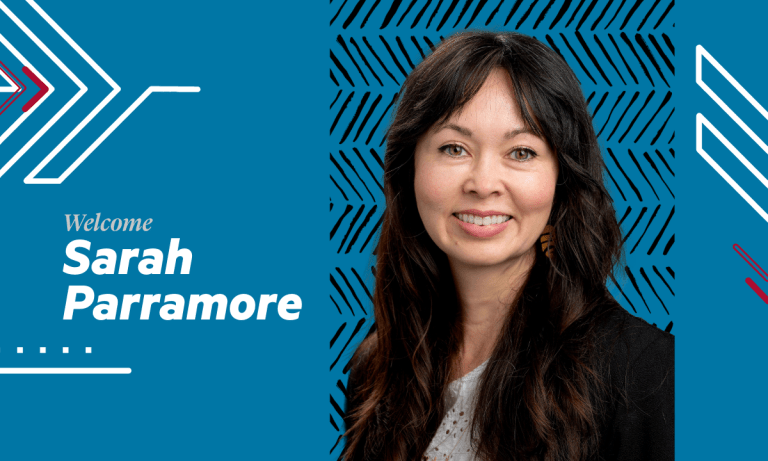
Welcome Sarah Parramore

Welcome Sarah Parramore

This month, we welcomed Sarah Parramore as the new associate dean for the William H. Hannon Library. In this role, Sarah participates in all aspects of library-wide planning, personnel management, plans for new services, assessment and evaluation, and oversight of daily library operations. Sarah comes to us from Occidental College, where she led
both the teaching and learning department and special collections and archives. In order to get to know Sarah a little more, we asked her a few questions about this new position and her past experience.
Tell us a little bit about your background in libraries.
I started in libraries in 2008 as an elementary school librarian (honestly, one of the most fun jobs you can have). From there I moved to Dubai and spent six years as an academic librarian. That’s where my focus on teaching and learning really took root. My education background made instruction a natural fit for me, and it’s been the thread running through most of my career.
My first leadership opportunity came at Cal State Fullerton, where I led the library instruction department. That role taught me a lot about sustainability. Our librarians had heavy teaching loads. I realized I needed to think not just about what we were doing, but how we were doing it and whether it was sustainable for the people doing the work. So I focused on building systems and structures that could support the program without burning everyone out.
From there I went to Occidental College, where I took on both the teaching and learning department and special collections and archives. That’s where we saw participation in research instruction more than double. But what I’m most proud of isn’t just the numbers, it’s that we built something that genuinely served students better while also being sustainable for staff. Taking on special collections and archives was a stretch in the best way. It pushed me to understand different corners of library work and think more holistically about how all these pieces connect.
I think what I’m best at is creating environments where people can do their best work. I’ve mentored a number of early-career librarians, and watching them grow, publish, present nationally, step into leadership: that’s the work that energizes me. I also get really into the design side of teaching. How do you make learning stick for adults? Whether I’m teaching, mentoring, or leading a team, I’m happiest when I’m helping people become the professionals they want to be.
Tell us about your research interests.
Most of my research comes from questions I’m working through in my day-to-day work: things around adult learning, mentorship, or how we design instruction that actually makes a difference. One project I’m particularly proud of came out of a mentorship program I created with a colleague for tenure-track librarians. We started noticing patterns: how structured support helped people develop not just skills, but confidence and a sense o…

Chart Crimes: How to Catch Data Visualizations in the Act

Chart Crimes: How to Catch Data Visualizations in the Act

Today’s post was written by Ashley Freeman, a first-year environmental science major and library outreach student assistant.
“Chart Crimes: How to Catch Data Visualizations in the Act” was the William H. Library’s most recent workshop in its fall 2025 “Digital Citizenship” series. The workshop, held on Nov. 6 on Zoom, was hosted by three of LMU’s reference and instruction librarians, who demonstrated techniques for identifying the credibility of data visualizations.
The librarians initially polled attendees on their confidence in their ability to spot data manipulation in visuals, such as charts, graphs, and figures, and even in wording and interpretations of data. However, spotting biased or misleading data visualizations in the real world proved to be more complex than the participants may have believed. Data visualizations are useful tools for communicating statistical evidence, but the factors that make data easy to communicate are easily manipulable to distract viewers and misconstrue data.
Data can be uniquely displayed to highlighting key information for the viewer. Attributes such as colors, shapes, sizes, trends, patterns, and more all affect which aspects of the data the viewer’s eyes are drawn to. After going over some of the common types of graphs, their individual attributes, and the kinds of data they display the best, the librarians drew attention to the necessary chart elements that are critical for the clarity and effectiveness of the data visualization. Identifying missing elements is one of the steps of critically thinking about data and helps viewers know which visualizations are safe to trust. But not all chart errors are as easy to spot as missing axes or citation information.
The workshop presented the “D.I.G. for Data” framework as a tool observers can use to evaluate the credibility of a figure. The acronym stands for “Data source,” “Interpretation,” and “Graphics and Gauging validity.” Step one, “Data source,” requires the viewer to identify where the data was collected, how the data was collected, who collected the data, and who is represented in the sample (and conversely, who isn’t represented in the sample). The “Interpretation” step asks the viewer to question if there are any biases, assumptions, data blind-spots, or unsupported claims in the figure. This includes exploring the context of the data presented, such as the political, historical, cultural, and social. A good tip: Always ask yourself if the chart is implying any cases of “correlation equals causation” or other fallacies. Finally, the “G” in “D.I.G. for Data,” “Graphics and Gauging validity” asks the viewer to examine the design choices in the chart and if those choices accurately represent the data. Looking at figure elements like layout, scale, axes, proportion, titles, and error bars is an essential step for determining if the chart’s conclusions and presentations of data are reput…