Noticias

Celebrating Newbery’s 100 Years!

Celebrating Newbery’s 100 Years!

By Suzanne Hawley, MLS
Did you realize that there have been over 400 titles selected as Newbery honors and winners since the medal was established in 1922? Remarkable, isn’t it? According to
information from the Association for Library Services to Children (ALSC)
, the award’s “terms, as well as its long history, continue to make it the best known and most discussed children’s book award in this country.”
Newbery medal winners and honors are chosen annually. Frederic Melcher, the founder of the Newbery, had one request for the decision-makers: the process of selecting the books must remain top secret. Every year, a Newbery Committee is established, consisting of 15 members: Eight are elected by members of ALSC, and a chairperson and six members are appointed by the ALSC President. Members can only serve on the committee every four years.
The award is based on the text of each book. Other components, such as illustrations and overall design, may be considered when they make the book less effective. The books must be original works, first published in the United States, and written in English by an author who is a U.S. resident. Also, they must have been published during the previous year. Only the books “eligible for the award” are to be considered. The entire body of work by an author or the fact that the author may have previously won the award should have no bearing on the discussion. The
John Newbery Award Committee Manual
– Formatted August 2015 is available online if you are interested in more detail.
Who is on this committee? Back in the dark ages,
I was
! In 1992, I was selected to be on the 1993 Newbery Committee. It was the experience of a lifetime. My appointment came as a jaw-dropping, gob-smacking surprise! One day as my son retrieved the mail from the mailbox, he said, “Mom, here’s something for you from ALA.” I assumed it was a notice to pay dues and asked him to open it because I was busy eating an apple. Excitedly, he said, “Mom, you’ve been appointed to the Newbery Committee!” Astonished, I immediately spit the apple onto the back of his neck. Something soon to be forgiven, but never forgotten!
I called ALA to make sure there was no mistake and that I was on the committee. Once we got that straight, the fun—and I do mean fun—(but also lots of work) began.
I was impressed but worried when I saw who else was on the committee: all well-known figures in the children’s library field. And then there was me, a school librarian with little ALA committee experience. Our first meeting in January 1992 was a “getting-to-know-you” event. The Chair asked us to introduce ourselves, and I was grateful that I was last so I could listen to everyone else first while thinking of something brilliant to say. Instead of something brilliant, I blurted out that I was completely awestruck by the committee members and totally intimidated. At least that elicited a laugh, and then others admitted that they felt t…

Librarians Stare at Their Phones, Too!

Librarians Stare at Their Phones, Too!

By Gwen Vanderhage, MLIS
Just kidding… It’s true, though, that libraries of all kinds have gotten into the social media game, particularly during the period of COVID-19 closures.
Your library may have had a Twitter or Facebook account for years. Most public libraries have at least a small presence on these platforms for sharing information about press releases and library events. While many libraries were previously only using them for marketing, during the pandemic Facebook became one of the platforms for hosting virtual events. Storytime, genealogy presentations, summer reading program performers — these are all examples of events I attended virtually via Facebook during shut-downs. The best part for me? I was able to attend programs at libraries in other cities!
YouTube and Instagram, both so visual, have become platforms where patrons can go to find all kinds of things related to books and libraries. YouTube has a wealth of videos on any topic under the sun, including adults and kids recommending books, illustrators demonstrating their artistic process, and libraries posting about their resources. The
Seattle Public Library’s YouTube channel
posts author talks, job skills workshops, and general library information in many languages. The New York Public Library has created series called
“Library Stories,”
talking to their local patrons about the library’s impact on their lives. Wake County Public Libraries (South Carolina) update their storytime offerings on YouTube throughout the week on their
“What’s Happening in Wake?”
channel.
Source: Brooklyn Public Library’s Instagram Page
Instagram content from libraries really runs the gamut. Since Instagram is mainly photos, it gives libraries an opportunity to market themselves and their content in ways that are still somewhat traditional. The Free Library of Philadelphia @freelibrary account is a nice mix of promoting programming, sharing random trivia, recommending books, and issuing public announcements. Instagram is a good place to promote new library services; Salt Lake City Public Library @slcpl shared several attractive posts about their seed library this summer. Some libraries take a more playful approach and get involved in trends like #BookFaceFriday. The video capabilities on Instagram are a popular place for staff to recommend books or to post short video tours. Brooklyn Public Library @bklynlibrary has posted entire cooking programs on Instagram in their “Community Cooking” series.
Children’s authors and illustrators, in particular, really took to Instagram and its Instagram Live feature during the pandemic. Instagram is a great place to follow authors, publishers, and other librarians to keep up with new books and ideas. They often cross-promote, and you can get a real sense of what is trending.
Speaking of trends, TikTok is the hottest social media platform right now. TikTok is an app for very short video content. It is often under a …

Featuring Social Emotional Learning in the Library

Featuring Social Emotional Learning in the Library

By Gwen Vanderhage, MLIS
Children’s books have always served as both entertainment and education. Whether characters are transported to a joust during King Arthur’s rule, exploring the Arctic, or experiencing the unique solutions offered by Mrs. Piggle-Wiggle, there are sprinkles of history, science, and social skills throughout most stories.
Picture books for the youngest have especially focused on making friends, sharing, and gaining mastery over emotions. Over the last several years, school districts in 29 states have adopted Social Emotional Learning standards as part of their curricula. As my son’s first grade teacher said, “I’m focused on teaching kindness.” Authors and publishers are rising to demand, with more books than ever that focus on these topics.
Social Emotional Learning, or SEL, has become a buzz-term. What exactly does it include? SEL equips children to:
Manage emotions
Collaborate with others
Communicate effectively
Make responsible decisions
Librarians can support community efforts to help kids with these skills by featuring titles on emotions, growth mindset, and inclusion in displays and book lists.
As the 2021 school year opens to continued stressors caused by the ups and downs of the COVID-19 pandemic, teachers and parents will be looking for resources to help kids revive dormant social skills and deal with anxiety, grieving, and life changes. Understanding and coping with the current social upheaval in our country also falls within the SEL framework. How can libraries help? Encourage staff to face-out attractive titles that focus on diverse experiences from around the world and around the neighborhood. These include not just racial or religious diversity, but also poverty, neurodivergence, and different kinds of families.
Those of us who love and use children’s literature in our work are so fortunate that books continue to entertain and educate, no matter our circumstances.
After spending many years as a children’s librarian and collection development specialist at Denver Public Library, Gwen joined Brodart to share her passion for children’s literature with as many different libraries as possible.
Click here for more.

Diversity on Display

Diversity on Display

By Gwen Vanderhage, MLIS
Recently, I sat down with a group of Collection Development librarians to talk about pressing issues in their work. All of them have been spending a great deal of time and energy examining the diversity of their collections, or performing diversity audits. (If you are unfamiliar with diversity audits, there have been many articles and webinars from ALA, Library Journal, and School Library Journal on the subject. Check out some sources below.) One of the concerns they brought up was that once a team has gone through all the work to balance the collection and purchase new materials, how might front-line staff become engaged in championing and promoting a more diverse collection of titles?
This question lit a fire in my brain. I spent several years on the Display & Marketing team at my public library, where we worked on encouraging face-out displays, shelf-talkers, and diversifying bookmarks and book lists. What would be some creative ways to give diverse books exposure all year long, not just during African American History Month or around Chinese New Year?
The most obvious suggestion is one I already mentioned — make sure that book lists include diverse authors and characters. Include titles about mixed religion families in Hanukkah or Christmas displays. Include characters of different races and sexual orientations in a “Cooking Up Romance” display. Feature some of the many lesser-known book awards like the
Schneider Family Book Award
, which honors books that “embody an artistic expression of the disability experience for child and adolescent audiences,” or the
Anisfield-Wolf Book Awards
,
which “recognizes books that have made important contributions to our understanding of racism and our appreciation of the rich diversity of human cultures.”
Does your library empower all staff members to fill displays and write up recommendations? Encourage them to give suggestions about books to feature. Our staffs are full of diverse experiences, tastes, and perspectives. Get them excited by taking some ownership of promotion.
Since that conversation with librarians, I have had fun brainstorming book lists and displays a library could pull together to incorporate many diverse groups, authors, and experiences. Here are some to get you started that incorporate some of the trends I’ve seen in publishing this year:
Gender-Flipped Classics
Alternative History
Advocates You Never Knew
Pandemic Fiction
Behind-the-Scenes at the Theatre
Sizzlin’ TV Chefs
Magical Realism
Classic Tales Re-told
Horror
Social Emotional Learning
Immigration Experiences
Popular Crafts from Around the World
Space Opera
Reawakened Mythology
Up-and-Coming Detectives
Cooking Up Romance
Bookish Romance
Books Set in Our State
Unreal World Building
Reality is More Diverse Than Fiction
What are some ways your library gets front-line staff involved in promoting diverse titles? Share your suggestions of other great display and book list idea…

Women Travelers

Women Travelers

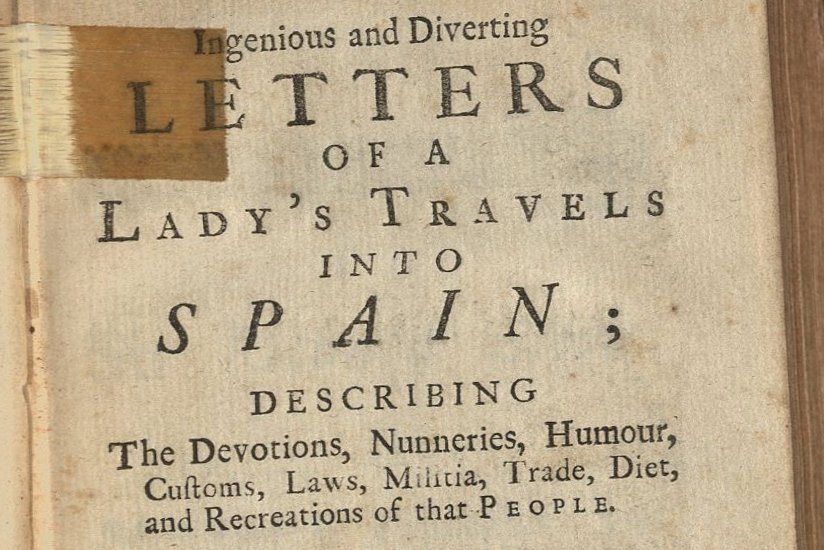
Tales from far-off cultures and lands have always captivated the human imagination. From Marco Polo to Jules Verne’s Around the World in 80 Days, both true, exaggerated, and fictionalized accounts of global adventures have had a lasting appeal for the reading public.

“I can always come back”: Supporting Undergraduate Experiences in Special Collections with the Bu…

“I can always come back”: Supporting Undergraduate Experiences in Special Collections with the Burns Library First-Year Writing Pilot Program

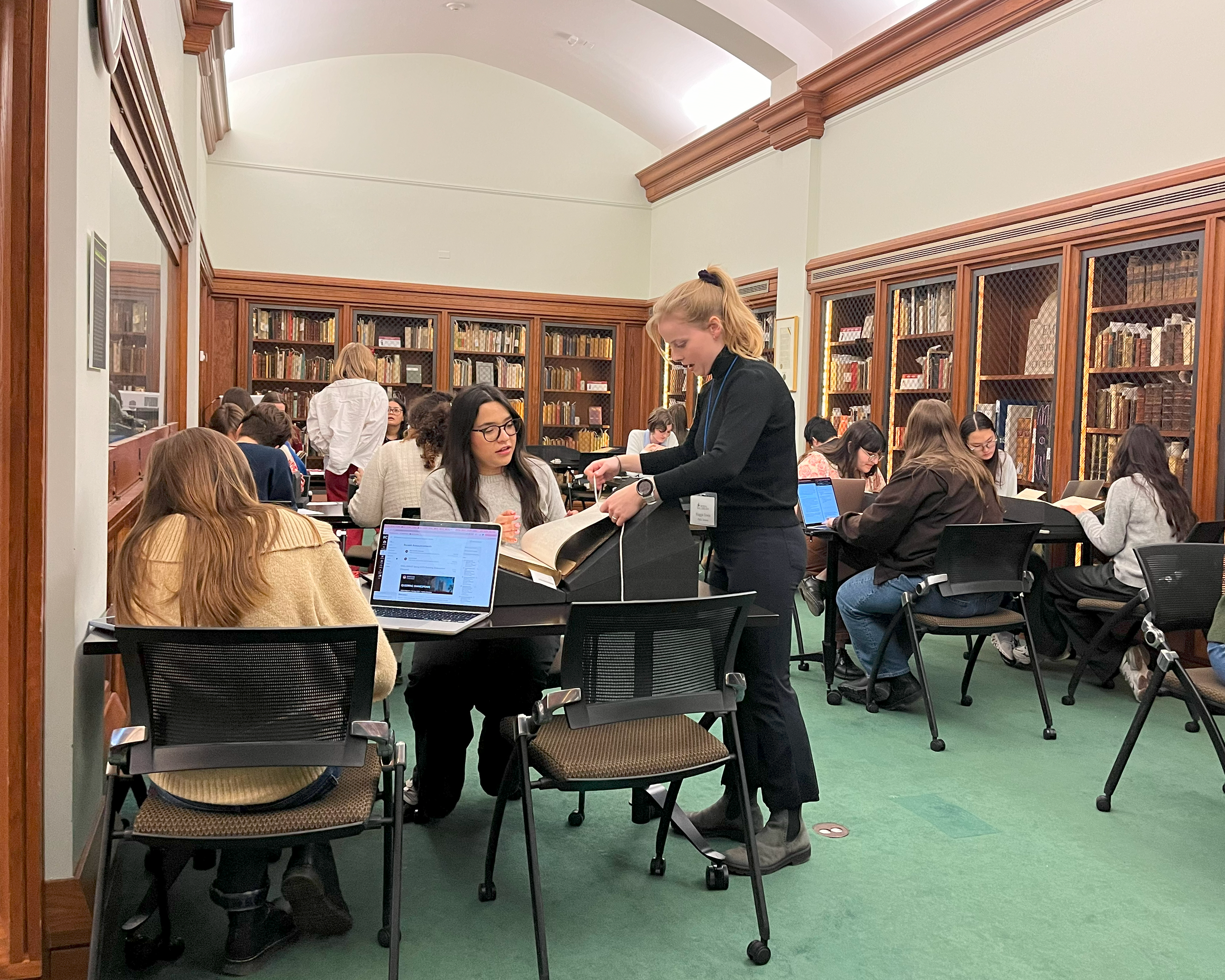
Beginning last fall, Burns Library hosted a new instruction initiative for first-year writing classes. Collaborating with the First-Year Writing seminar program (FWS) and O’Neill librarians, the Burns FWS Pilot Program welcomed first-year undergraduate students to Burns Library and encouraged hands-on engagement with rare books and archives.

Exploring the Palm Leaf Manuscript of Ignatius’ Spiritual Exercises

Exploring the Palm Leaf Manuscript of Ignatius’ Spiritual Exercises

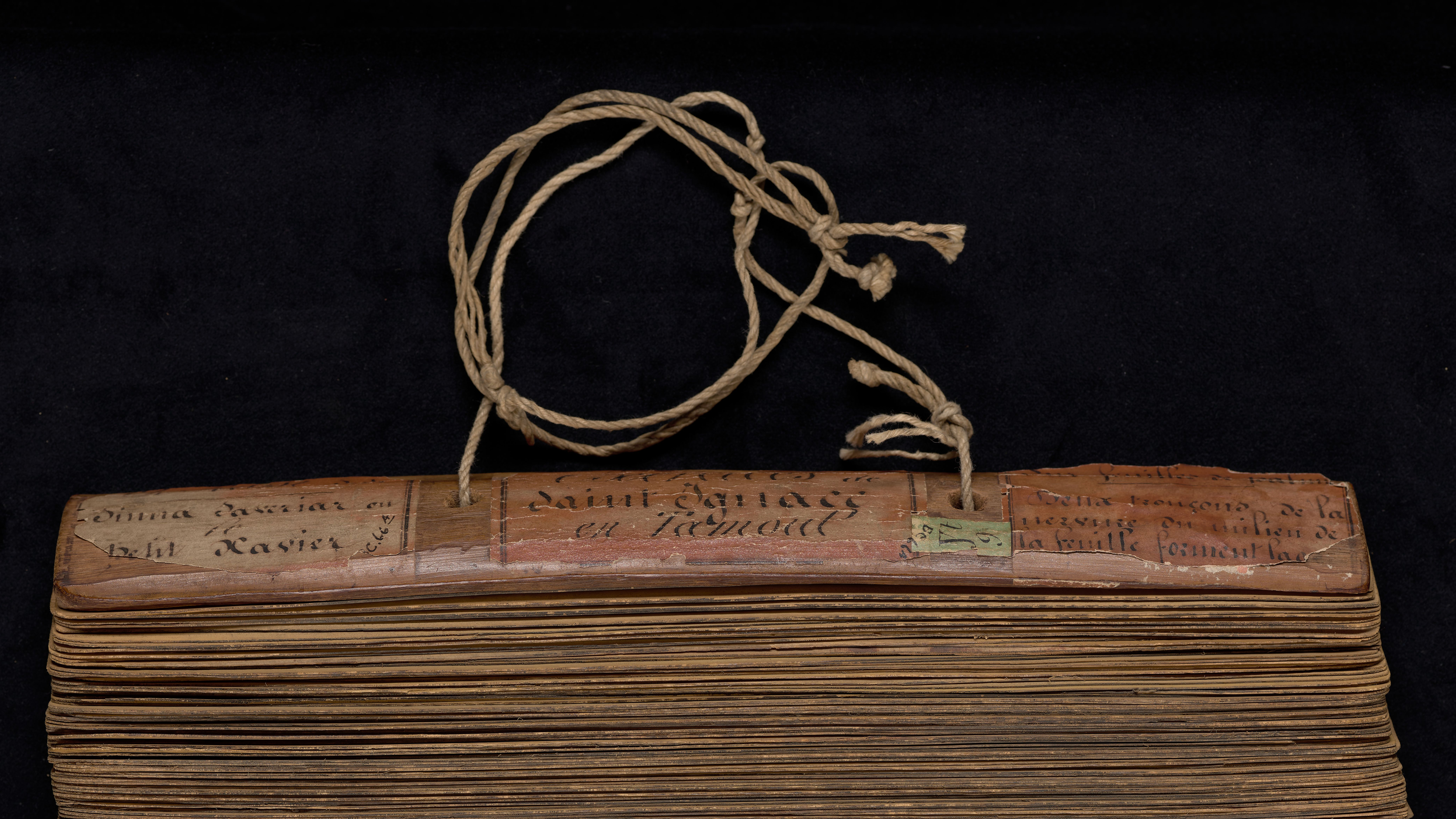
In Spring 2024, students from Professor Pheme Perkins’ Perspectives class visited the Burns Library to explore some of the historical materials living in our collections. Some students wrote a rhetorical analysis of an examined item. We’re excited to share one of those analyses by Michael Tran ‘27 on the Burns Library blog!

Rediscovery, Realization, and Reframing The Roman Baths

Rediscovery, Realization, and Reframing The Roman Baths

The city of Bath, England, is aptly named for the Roman Baths, constructed about 70 AD. By the fifth century, however, the Roman reign over England was drawing to a close and Bath’s infrastructure largely fell into obscurity. The country town remained quiet and quaint throughout medieval and early-modern times, but by the year 1700, a significant change was on the precipice.

Shirley and Jamila Save Their Summer

Shirley and Jamila Save Their Summer

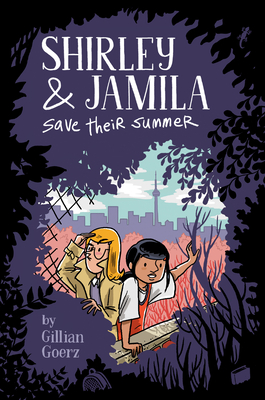
Shirley & Jamila Save Their Summer
by Gillian Goerz. Grades 4-7. Dial, 2020. 224 pages. Review copy provided by publisher.
Jamila’s pretty sure that her summer is ruined. Her mom wants to send her to camp, but all Jamila wants to do is shoot hoops. When Jamila meets Shirley at a neighborhood yard sale, the girls strike up a tentative friendship and convince both their mothers to let them hang out together this summer. Jamila will get all the time she wants at the b-ball court, she just has to hang out with Shirley, who is nice, even if she’s a bit odd.
When a neighborhood kid shows up asking for Shirley’s help in finding his missing pet gecko, Shirley is on the case and Jamila finds herself helping, too. But when Shirley starts taking the case too seriously and their new partnership hits a rough patch, Jamila’s not sure that their new deal is working out.
Enola Holmes meets Shannon Hale in this graphic novel mystery that will please detective fans as well as fans of contemporary friendship stories. Shirley is a Sherlock-Holmes-ian detective and kids will enjoy looking for clues and learning about how she solves her cases. Middle grade readers will also relate to the girls’ struggle to figure out a new friendship. I really enjoyed getting to know both characters and the realistic Toronto setting.

#LibFaves20, Reading Challenges, and Other Goings On

#LibFaves20, Reading Challenges, and Other Goings On

It’s a wonderful time of year – the time to celebrate all the amazing books that have come out over the past year and look forward to what next year’s reading will bring.
One thing that’s been bringing me joy this past week is the annual LibFaves voting on Twitter. Follow the hashtag
#LibFaves20
to see library workers’ top 10 books of 2020. Since December 7, library workers have been shouting about one book a day with volunteer tabulators keeping tallies of the titles that have been mentioned. While it’s centered on adult books, some folks are including YA and children’s books, too.
I’m eagerly following the hashtag because I have two Audible credits I need to use in the next month and I’m in need of great audiobooks to motivate my morning runs in the cold, so I’m keeping my eyes on what everyone is loving best this year. The fully tabulated list will be posted on
EarlyWord
when it’s ready, so keep a look out for that!
Another wonderful thing about this time of year is that the 2021 book challenges are starting to come out. I haven’t participated in a book challenge in awhile and I doubt that 2021 will be the year for me. But I still love to see the prompts and challenges that others are undertaking. Do your patrons know about and participate in reading challenges? This might be a fun thing to share with them, especially this year when everyone’s looking for socially distanced things to do. Challenges I love to spy on are:
Book Riot’s Read Harder Challenge
(I completed the Read Harder Challenge one year and one year only and I’m still proud of it)
POPSUGAR’s 2021 Reading Challenge
(and I love their focus on tackling your To-Be-Read list!)
I have a January blog post for our staff blog devoted to highlighting some reading challenges because I think some of our patrons might enjoy them. Reading challenges might not be on their radars, so I like to spread the word.
And it’s not reeeeally a challenge (although it does have challenge elements this year!), but
Everyday Reading’s printable 2021 Reading Log
was just released this week. If I could picture a place in my house where I could spread this out and color it (and if I could picture myself actually devoting time to keeping up with it), I would be ordering a large print of this gorgeous reading log. If you’re in need of some stress relief coloring, I highly recommend checking it out! I’m almost convincing myself to give it a shot here. Maybe.
Also not really a «challenge», but another exciting reading thing happening right now is all  the Mock Newbery discussions. I won’t say I’m HAPPY about this because I hate the reasons behind it, but my favorite Mock Newbery run by the Allen County Public Library in Fort Wayne is going virtual this year on Zoom. It’s 4 hours away from me, so I wasn’t going to make it in person this year, but once they pivoted to virtual, I signed myself up. I’m approaching it with excitement and anxiety – what wil…

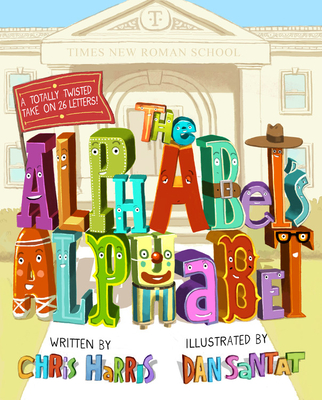
The Alphabet’s Alphabet

The Alphabet’s Alphabet

The Alphabet’s Alphabet
by Chris Harris, illustrated by Dan Santat. Ages 5-8. Little, Brown Books for Young Readers, 2020. Review copy provided by my local library.
This is not your toddler’s alphabet book. Designed for an older set who are already familiar and comfortable with letter shapes, this book plays with how letters can look like other letters, imagining creative ways to connect them. In rhyming text, the book goes through every letter of the alphabet, explaining how it’s related to another letter. Dan Santat’s bright, expressive artwork really brings this book to life and makes it so much fun.
Most of these connections are super clever and readers could easily imagine them even without the illustrations to guide them «A B is a D with its belt on too tight» Some depend more heavily on the illustrations, like «An R is a K with a mask where its face is», which shows a K wrestler wearing a luchador mask that covers the top part of its «head». Overall, this book is really great fun and kids will enjoy puzzling out the shapes of each of the letters and then coming up with their own ideas for connecting different letters. While I think kids already comfortable with letters will get the most out of this book on their own, it might be fun to read it with younger children and help them see the different letter shapes in the illustrations.
I would hand this to elementary age picture book readers who enjoy other books that play around with letters like
E-Mergency
by Tom Lichtenheld,
Al Pha’s Bet
by Amy Kraus Rosenthal or
Every Little Letter
by Deborah Underwood.

Happy Merry!

Happy Merry!

I’m not gonna lie, one of the nicest things about having a more «behind the scenes» job is being able to schedule time off basically whenever I want. There are a lot of things I miss about being a front-lines children’s librarian, but having to work at least part of every Christmas or New Years due to winter break coverage and allowing my staff time for vacations is NOT one of the things I miss.
So I take advantage of that most years now and I’m currently off work until January 4. Honestly, for us it’s a good time of year to be off as our business office is busily closing up the books, lots of my vendor contacts are also home with their families, and our ordering is paused until next year anyway.
Of course, I’ll be working here and there on committee work and side-gig stuff, but I’m also trying to take some time to relax and unwind. The next two weeks I’ll be playing Animal Crossing, reading books, probably doing some writing, hopefully cleaning out some closets and dressers, doing lots of cooking, and just generally puttering around.
I hope you have a holiday season as happy and restful as can possibly be expected and I’ll see you here around the new year to talk about some reading resolutions.

Reading Resolutions

Reading Resolutions

Happy 2021! It’s definitely a year like no other. Maybe you feel like this is a year to give yourself some grace and take it easy. Maybe you feel optimistic about changes you want to make. Are you planning on making some reading resolutions this year?
As you can see, I’m already late to the game, but part of my plan for the year is to practice grace for myself. If 2020 taught me anything it’s that being uber-focused on productivity and optimization is not the best. Sometimes you need some space to take a breath, to rest, to refocus, or just to get through your day.
That said, I do have some reading goals for myself this year, and I’m curious what yours are (if you have any – it’s totally fine if you do not!).
But first… deep breath and
let’s look back at last year’s reading resolutions
…
40% of the books I read will be own-voices by diverse authors.
Okay, as far as I tracked, I read 122 books by diverse authors, which is only about 23%. Part of this resolution was to be more intentional about tracking and I absolutely did not do that. If I had tracked and checked on myself each month like I had intended, I bet I would have done better with this.
500 books read and tracked on GoodReads this year.
Yes! I did this! I started tracking picture books to help with my NoveList work and even though I got super way behind in the spring, I caught back up by the end of the year and finished with 529 books tracked in GoodReads.
Continue my
romance project
for another year.
Okay, I did read nine romance books in 2020, most of them romcoms. I did not do anything to track them or log them or really review them (outside
GoodReads
), but I read a bunch of books I really enjoyed. I’m calling that success. And I may revisit the romance project in 2021.
Read at least two pre-pub titles each month.
Hahahaha, no way. I’ve been really bad at this. I absolutely did not make this goal. I miiiight have read 24 pre-pub titles over the course of the year, but honestly probably not.
So, let’s look ahead to 2021 (as scared as we might be about that…)
My biggest thing this year is giving myself grace. I realized what it’s like to live through trauma this year (very privileged trauma, yes). And although I love reading, it’s not important enough to be something to stress out about. I’m going to set some goals for myself because I like to have projects to work on, but I also have some non-reading projects going on this year and we’re striving for balance and reasonable expectations. I have already hit library book bankruptcy where I just return ALL my checked out books and start over with a clean slate once this year.
Read more teen books
.
Now that I have turned over adult collection responsibilities to my new collection development librarian, I can let myself more fully concentrate on youth materials. And one area that I know I need to step it up is teen literature. According to GoodReads, I read 28 teen books in 2020 and I’d like to do bet…

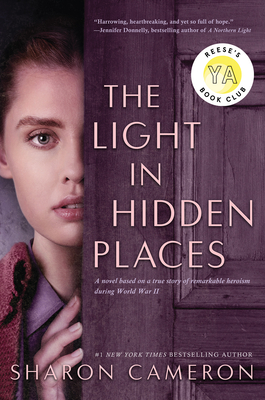
The Light in Hidden Places

The Light in Hidden Places

The Light in Hidden Places
by Sharon Cameron. Grades 7+ Scholastic, 2020. 400 pages. Review copy provided by publisher.
If someone needed your help, would you give it? Even if it could cost you your life? Stefania Podgórska was a teenager when she started hiding Jews in her tiny apartment in Poland during WWII. It started with a close friend and as more and more people needed her help, she ended up with 13 Jews hiding in her attic. It was a life or death situation for them and a life or death situation for Stefania – she would be shot by  the Gestapo if anyone ever found out. She worked night and day to keep everyone fed and safe. And then the Nazis showed up at her door and commandeered her apartment. Two Nazi nurses who worked at the hospital across the street were moving in to her second bedroom. Stefania had no choice, she had to let them stay there. And she had to hope that they never discovered the 13 Jews living right above their heads.
This absorbing historical novel is based on a true story about a real woman and it was Reese Witherspoon’s December YA book club pick. It is definitely a fascinating story and if you love historical fiction that you can really sink your teeth into, this is a great one to pick up. It takes place over a number of years during WWII as Stefania moves to the city from her family farm and starts working for a Jewish family running a shop. As the war moves in and her employers find themselves in increasing danger, Stefania has to grow up quick and make a lot of decisions about what she will do. The hook in this booktalk doesn’t happen until about three quarters of the way through, but I was so interested and invested in Stefania’s story that I found myself completely absorbed.
Author Sharon Cameron has done her research and includes a section at the end with photos of the real Stefania and information about what happened to her and her family after the war. This is a story about a little-known hero of WWII that needed to be told. It’s teen, appropriate for middle school and up, and has a ton of adult crossover appeal. I added a short booktalk of this title to my Wowbrary email this week and it immediately got 5 new holds, even though it’s not a new book.
Readalikes:
Pick this one up if you’ve enjoyed immersive historical fiction like
The Book Thief
by Markus Zusak or
The Girl in the Blue Coat
by Monica Hesse.

ACPL’s (Virtual!) Mock Newbery

ACPL’s (Virtual!) Mock Newbery

Last year, I had the immense pleasure to travel to Fort Wayne, Indiana (about a 4 hour trek from my home in Southern Indiana) to attend the Allen County Public Library’s Mock Newbery discussion. I had been one time before and it’s always been a really great program. It’s such a fun experience to get together with like-minded book lovers and talk in depth about some of the best books of the year.
This year, due to COVID, the discussion is taking place virtually, mirroring the work the actual committees are doing right this very moment. I’m very excited that I get to take part in the discussion once again and I’m really excited to see how the discussion will work virtually.
These are the titles that we’ll be discussion on Saturday afternoon this year with links to any that I’ve blogged about. I have some personal favorites that I’ll be discussing a bit on Wednesday, and I’d love to know your top contenders for the Youth Media Awards!
All He Knew by Helen Frost (Indiana author!)
Before the Ever After
by Jacqueline Woodson
Black is a Rainbow Color by Angela Joy
Black Brother, Black Brother by Jewell Parker Rhodes
The Blackbird Girls
by Anne Blankman
Box: Henry Brown Mails Himself to Freedom by Carole Boston Weatherford
Echo Mountain by Lauren Wolk
Fighting Words
by Kimberly Brubaker Bradley
From the Desk of Zoe Washington
by Janae Marks
A Game of Fox and Squirrels by Jenn Reese
Go With the Flow by Karen Schneemann & Lily Williams
Kent State by Deborah Wiles
The List of Things That Will Not Change by Rebecca Stead
Prairie Lotus
by Linda Sue Park
Show Me a Sign by Anne Clare LeZotte
Snapdragon by Kat Leyh
The Summer We Found the Baby by Amy Hest
Ways to Make Sunshine by Renee Watson
When Stars are Scattered
by Victoria Jamieson and Omar Mohamed
When You Trap a Tiger by Tae Keller

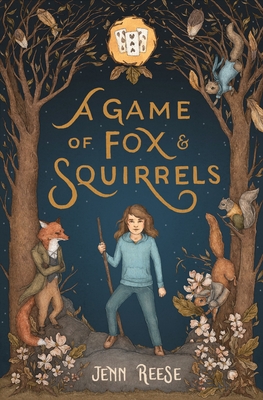
A Game of Fox and Squirrels

A Game of Fox and Squirrels

A Game of Fox and Squirrels
by Jenn Reese. Grades 5-8. Henry Holt, 2020. 224 pages. Review copy provided by my local library.
Eleven-year-old Sam and her older sister Caitlin have just arrived in Oregon to stay with their aunt and her wife after an incident shattered their family in California. Sam misses her parents and is desperate to get back to her life in LA and start school with all her friends. She knows things weren’t always the best with her family, but she was managing fine, thank you, and she doesn’t want to be here in Oregon.
So when a talking fox appears to her with a deal, Sam agrees. She’ll do what the fox asks in order to earn the Golden Acorn that will grant her one wish – a wish for things to go back to how they were before. But somehow the rules keep changing and Sam will have to figure out how far she will go to please the fox and what she is willing to sacrifice.
This is a dark magical tale about a girl navigating life with a foster family after being removed from her abusive home. Sam’s game with the fox and his squirrel emissaries mirrors the game she played for years with her abusive father. She never know when the rules will change or what will set him off or what she might have to sacrifice next. This isn’t an easy read, but it’s a powerful read and could be a necessary read for some. I don’t have a ton of knowledge about foster kids, but I have a little bit and what I read rings true with my experiences (such as they are).
Readalikes:
Pair this with another stellar book that came out this year,
Fighting Words
by Kimberly Brubaker Bradley, which offers a similarly searing, but realistic take on abuse and foster care life.

How to Get Permission for StoryWalks

How to Get Permission for StoryWalks

This post originally appeared on the
ALSC Blog on April 7, 2021
. It is reposted here with permission.
You can read my other posts about my library’s StoryWalk here:
Our First StoryWalk
Hot Chocolate StoryWalk
Capitalize on Your StoryWalk During Social Distancing
Does your library have a
StoryWalk
®? Are you thinking of adding one? My library added ours in 2019 and our patrons LOVE IT! One question I get all the time is how to get publisher permission for StoryWalks®. Today, I’ll share what I’ve learned in the past 2 years.
The first stop on our StoryWalk! Photo by Luis Munoz, used with permission.
What is a StoryWalk®?
A StoryWalk® is just what it sounds like. It’s a picture book presented on posts along a walking path or trail so that you read the story as you walk along the path. Started at the
Kellogg-Hubbard Library in Montpelier, VT
, you can now find StoryWalks® all over the country. There are many posts about StoryWalks® on the ALSC Blog – check out the
StoryWalk® tag
to see them all! I’ve written more about the
Floyd County Library StoryWalk®
on my personal blog, so feel free to check that out, too. The original StoryWalk® calls for books to be physically disassembled and the pages laminated and posted to avoid violating the title’s copyright. But if you would like to scan or screen capture and reprint the book (which is a lot easier if you have someone who knows how to do it), you’ll need permission for StoryWalks®.
How do I get permission for StoryWalks®?
Ask the publisher! The first step is figuring out what company has published the title you want to use. Check the copyright information in the book and it should list the publisher. Be aware that many larger publishers have multiple imprints, so Google is your friend. You want to find the parent publishing company. That’s who you’ll need to ask for permission. Once you’ve determined the publisher of the title, check their website for a page titled Permissions. I have sometimes found this under a Contact Page. If all else fails, you could do a web search for [publisher’s name] + permissions and hopefully that will get you to the right place.
I have also had some success with contacting the library marketing contact I have at a publisher. That’s something you can try if you’re having trouble figuring out who to ask. They likely can’t grant you permission for StoryWalks® themself, but they often will be able to quickly get you to the right person. And the blog Early Word has a really handy list of
children’s library marketing contacts
if you need it.
Every publisher treats StoryWalks® differently
Some publishers will have an online form you can fill out. Some will ask you send your request in writing by email. If you’re sending in your request, it’s helpful to include the full title and author’s name, the ISBN of the book, and the publishing imprint. The publisher may also need to know the address where the book will be displayed and the …

So, I’m Not Really Here Anymore…

So, I’m Not Really Here Anymore…

It’s been awhile. And I’m probably not posting here anymore. I don’t have plans to delete this blog, although I will say that a lot of the stuff here is pretty darn dated (so use at your own risk, I guess!).
I haven’t stopped writing. I’m just mostly writing for places that pay me now, to be honest. If you miss me, you can find me on the
ALSC Blog
or
School Library Journal
occasionally. If you use NoveList, you may see my name pop up in there sometimes, too.
Or feel free to follow me on
Twitter @abbylibrarian
(although I am not super great at Twitter either, honestly) or connect with me on
GoodReads
(don’t judge me for how behind on my reading goals I am and I promise I will never judge you for yours).
Blogging’s been fun! It has helped me develop my writing and connect with the bookish community so much. It was a beloved hobby for many years and it’s part of my professional foundation. It led to many cherished friendships and cool opportunities and I’ll always, always be grateful for that.
Thanks for reading.